
Translated material
The city of Zero
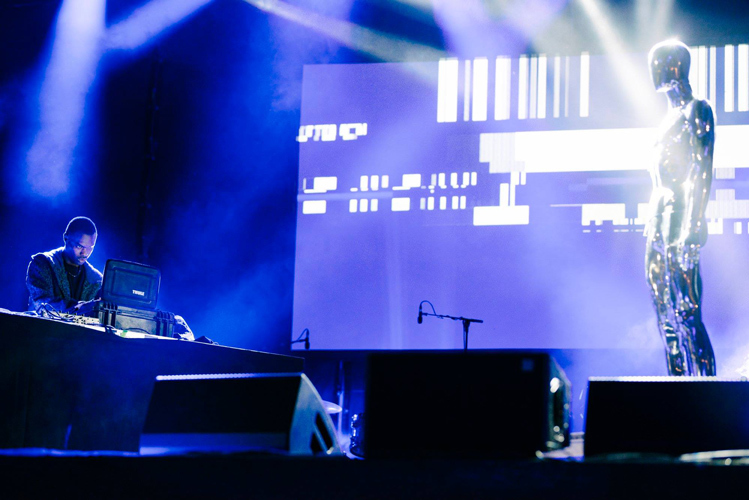
Last week, in the Estonian city of Narva, located on the border with Russia, the first Station Narva music festival was held, which was performed by Echo & The Bunnymen Veterans, Triki, Avangard British Actress Electric Power, as well as many musicians from Russia and Estonia. Egor Antoshchenko went to Narva to study the city claiming the title of European capital of 2024.
Behind the back is a river, in front - several deserted streets with typical housing and leisurely car traffic. On the day of the festival, an amazing calm reigns in the city. A rare flock of teenagers goes somewhere under the song 5sta Family “I will”.
In Narva there is something from the Shahnazarovsky city of Zero, a kind of post-Soviet Twin Pixe: life looks so measured that it seems that she must have a secret, mystical side and a woman with a log is about to appear on the threshold of the hotel, and in one of the condo restaurants they will offer to try a dessert in the form of her own head.
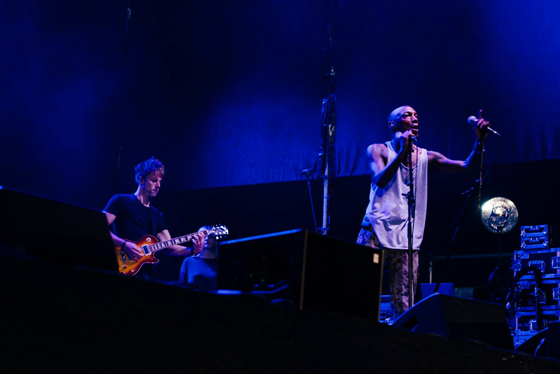 © Patrik Tamm Tricky (UK)
In economic terms, Narva is a chronically depressed city, which in the European press since 2014 is persistently predicted to become the “next Crimea” due to the weak integration of the Russian-speaking population. Helen Sildna, founder of Tallinn Music Week , a showcase festival, which became the most important cultural event of the Estonian capital, undertook to change this image. The Krenholm Manufactory should be the center of Renaissance of Narva: at the time of its foundation in the 19th century, weaving production at the Narv waterfall was considered the largest in the world, in 1900 its products were awarded the Grand Prix at the World Exhibition in Paris, and in the 1970s 13,000 people worked here, but in the 2010s it was recognized as bankrupt, although small production was functioning until the same way por.
“Many officials and representatives of the private sector understand that Narva does not pay sufficient attention at the country's level,” says Helen Sildna, “oddly enough, not everyone is obvious to the idea that culture is the most logical means of uniting different people. Last night I saw how people gathered and played the guitar, tried to speak any language to understand each other ... You can pronounce the word “integration” many times, but if there is no real content behind it, the desire of different people together to spend time, it costs nothing. ”
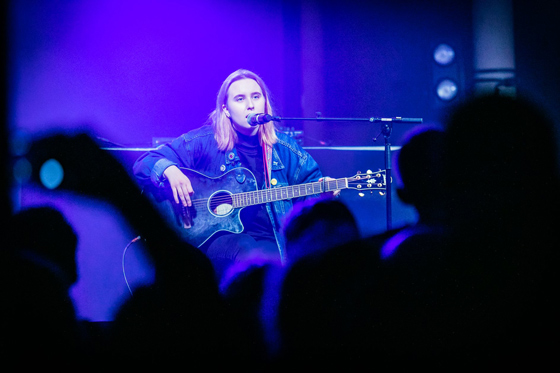 © Tanel Tero Grechka
The program of the festival (with rare exceptions like a buckwheat), however, did not consist of those artists whose songs are performed together for the guitar - the LineP fully justified the wording of the Butteric Festival. The impressive experience of European performances and gathered a lot of compliminal reviews of the Petersburgers Shortparis with their neuro-manner art punk sounded confident and powerfully-their concerts are not accidentally received by enthusiastic reviews from a wide variety of people. The avant -garde British electrician Actress , which is accompanied by a metal mannequin, deconstructed dance genres from technology to Dabstep on separate samples and noise effects. The most interesting local discovery was the young Estonian musician Avi, whose vocal manner resembles a cross between Scott Walker and The Associates leader Billy Mackenzie, among the luggled columns of an abandoned factory corps, his decadent aesthetic art-pop sounded amazingly organically and appropriate.
Mart avi
The exemplary concert was played by the secret genius of the Finnish independent indie music of Mikko Yoensuu and his Joensuu 1685 group, which was successful in their homeland, but criminally underestimated beyond its borders. Confessional lyrics, blessed in a charming-banged Richard-Eshcroft manner, psychedelia and kraut-Cro Croat, framing tenacious and memorable melodies- Joensuu 1685 would have woned on the stage of any major European festival. But outside Finland, the group turns out to be infrequently-either due to the lack of penetration management, or because of the characteristics of the character of its leader.
Joensuu 1685
Against the backdrop of many other participants, the headliners Station Narva Echo & The Bunnymen , responsible for the several immortal post-tank hits of the 1980s, looked perhaps too phlegmatic and statier. Almost without moving on stage and stood the whole concert with a microphone compressed in a confident right hand, the vocalist Ian McCallokh performed “Lips Like Sugar” , “Bring on the Dancing Horses” , “The Cutter” and other imperisales, inserting several purchases from Take A Walk on The Wild Side » Lou Read. Well, Echo & The Bunnymen has long been necessary for anyone and to prove anything - and especially a warm welcome on Station Narva was a confirmation of this.
Echo & The Bunnymen
“The more I think about our linap, the more he reminds me of the soundtrack for Krenholm - gloomy, romantic, strange,” says Sildna, “I think that if they shot cinema about these places, such music would have sounded there.” Among those who came to the festival there are many recognizable types like a Tallinn hipster or an intelligent connoisseur of rock in fifty, but not enough of the same teenagers who listen to Russian hip-hop and r'n'b on the streets from the speakers of smartphones. “To lure local ones is more difficult than people from abroad,” Sildna complains, “on the other hand, I was pleased that the very first person who bought a ticket for Station Narva and became the main character of our photo reports from the festival was a local grandmother, who was over 80.”
At the beginning of this year, Estonia President Keresti Kaliulaid visited Narva to nominate the city to the title of European capital of 2024. The Station Narva team, therefore, has six years to make the festival a kind of business card and a tourist bait of the city. Judging by Tallinn Music Week , this is quite possible. “This year, 2000 tourists arrived at Tallinn Music Week , on average each of them spent 2.5 days in the city and spent 700-800 euros. Our indicators grew by about 20% every year, ”she says. -As for Narva, we have another task: to make people from Kingisepp, Ivangorod, and St. Petersburg come to the festival. Therefore, we have headliners in the program, this is not a showcase festival like Tallinn Music Week . If Station Narva helps the cultural development of the city and new restaurants, museums, other “places of power” will appear here, then the statistics will also be good. ”
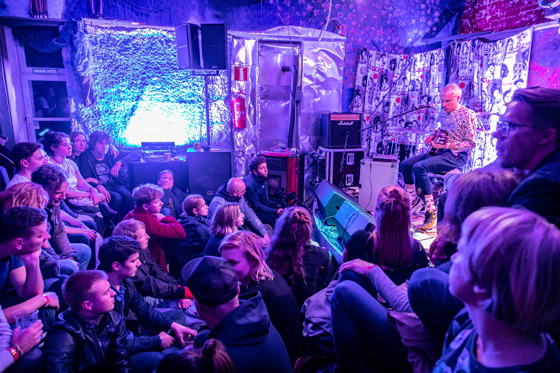 © Tanel Tero
We are talking in one of these "places of power" where the AFTERPARTY festival is taking place-a cozy art club RO RO on the river bank. Sunday takes place under the sign of multiculturalism: Arab breakfast in the center of informal training, Finnish street food on the Narva Rowing base and an evening of stand -up in three languages: Estonian, Russian and English. The Australian Louis, living in Estonia, is joking that if the sun rises in the West in Australia, then in Estonia it rises only in its fantasies, and there are so few migrants here that Donald Trump should make the slogan of the next campaign “we will make America Estonia”. And it is surprised why some Estonians are afraid to go to Australia because of snakes, spiders and crocodiles: “You have Russia under your side! I saw a lot of spiders in Australia, but they do not drive tanks. And crocodiles do not write in Fake News newspapers. ” But the audience reacts to this humor with restraint - it seems that on both sides of the Narva River they understand that between the great politics and relations of people, the distance is much wider than this very river.