
Translated material
Recognition of images
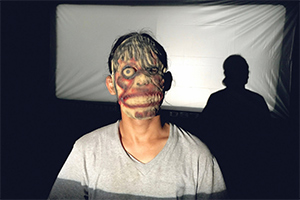
From July 20 to 23 , the II Moscow International Festival of Experimental Cinema will be held in the Moscow Electr theater Stanislavsky. In addition to the cinema and video art in his program-multimedia events like the performance Dmitry Volkostralov or the Vije-Set of the Dutch researcher Esther Uldrus, who is engaged in the reconstruction of fossil technologies for the manufacture and processing of the film (in the "Stanislavsky" she will create a video company on four 16-mm projectors). In general, the festival program is very extensive (there are four retrospective here). Vasily Koretsky - about which cinema cannot be missed on Mieff under any circumstances.
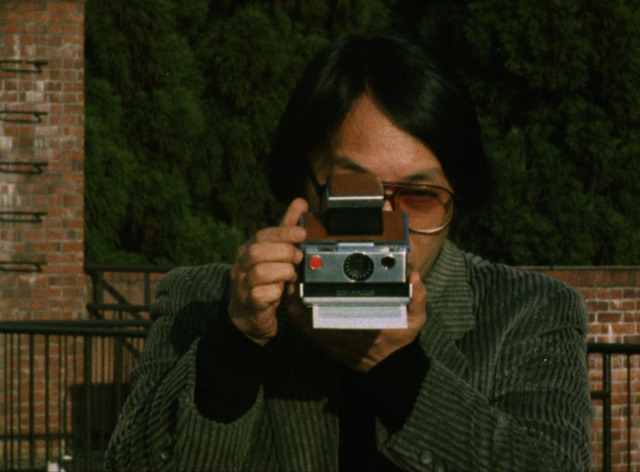 Retrospective Tosio Matsumoto
Tosyo Matsumoto, one of the important figures of the Japanese “New Wave” of the 60s, is known, first of all, with its films “The funeral procession of roses”-a rather scandalous (at one time) picture describing the world of Tokyo Bohemia and Semiwell (the main character of the expressive “procession” is a transvestite prostitute). In addition to the “procession” in the filmography of Matsumoto - three more full -length paintings; However, the director’s experiments in big cinema had a character, rather, sporadic and inconsistent. Exercises in the tight framework of the film format are only weak reflections of Matsumoto experiments in a video art and a multimedia theater. His video works, on the contrary, demonstrate meaningfulness of the method and integrity of the reception. In the first half of the 1960s, he is a documentary who is trying to give social documents a poetic, not a journalistic form (similar black-and-white chronicles of the working people “The weaver of Nisizin” and “Song of the Stone”; color-film expiration “Mother”, shot on creative business trips to the United States and France). By the end of the decade, Matsumoto switches from poetic realism to pop art-parody of Dyushan and Warhol (“metastasis”) using the latest SCANIMATE visual synthesizer or mounting a party of parties into a chaotic likeness of a musical video. In 1973, Monu Lisa was brought to Japan from Louvre, and Matsumoto takes his most well -known video work - Monu Lisa, composed of a series of all kinds of reproductions of the portrait processed on Scanimate .