
Translated material
"Do not be orthogonal in search in the dark"
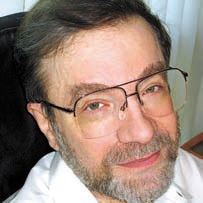 Interview with the Russian-American biochemist, professor of cellular biochemistry Caltech (California Institute of Technology) Alexander Warsawsky . In 2014, he became the laureate of the Breakthrough Prize of the Yuri Milner fund for research in the field of life sciences. Talked by Alexander Ershov .
- Please tell us about the presentation ceremony at Ames Research Center. Did you manage to talk with the organizers of the award: Yuri Milner, Sergey Brin, Mark Zuckerberg and others? If so, what impression did you create from this communication?
- The ceremony of presenting these awards was similar to other ceremonies of this kind of ritual nature. Short speeches and inevitable common words. The difference, in the case of Breakthrough, was on the scale of what was happening. A huge hall with the number of dining tables close to infinity. Among the guests are the leaders of the largest Internet companies, leaders of leading scientific institutes and laureates of Breakthrough prizes of the previous (i.e., the first) year of these awards.
Hollywood cinema star, which were invited to the role of mass-workers, are trying to joke on stage, present prizes to laureates and bravely pretend that they (stars) have some idea of what these extremely large awards are given specifically.
Laureates - people are not the first or even the second youth - rose on stage, already several stunning (in my case) from an excess of impressions. The organizers of the ceremony spent a lot of time, money and effort on the script of what happened around me, including short films about six laureates. In these professionally made mini-films, the laureates “popularly” explained their work and from time to time thoughtly looked at test tubes, flasks and devices.
My words of gratitude to the founders of the award and colleagues in the premium committee were absolutely sincere. How not to be grateful to people who could build a yacht or buy a plane for this money, or lose the same Batley in a roulette, and instead they took and established the largest scientific award in the world!
The idea of the Breakthrough Award belongs to Yuri Milner, a famous Russian-American entrepreneur and investor. In early youth, Yuri was engaged in theoretical physics, and a deep interest in science did not leave it. For the first time, Breakthrough was financed by the Breakthrough Prize. This year, his colleagues joined him, including the founder of Facebook, Mark Tsu-Kerberg and one of the founders of Google Sergey Brin.
Premium ceremonies are not the best place to talk. Short dialogues between me and Sergey Brin (I did not talk to Zuckerberg) were secular, that is, predictable. Fortunately, the next day, at a dinner for laureates and other guests in the house of Yuri Milner, my wife Vera and I sat at the same table with Yuri and his family. My conversations with Yuri were not at all secular and therefore interesting, at least for me.

- You received a prize for work in the field of regulated protein degradation. Now it is a huge area, primarily associated with oncology and immunology, but not only. It seems that in general terms in this area everything is more or less known, and now only the clarification of certain privileges is happening, such as determining the mechanism of regulation of the next transcription factor. Do you agree with such a look? And if not, then what can now be called the largest white spot in our understanding of the regulation of intracellular proteolysis?
- The Breakthrough Committee decided to award one of the prizes for the work of my laboratory due to the fact that we discovered and proved that the regulated degradation of cellular proteins is much more important in the life of cells (and mechanically more complicated) than it seemed to those who dealt with this problem before us. We began to study the degradation of proteins more than thirty years ago, when this problem was far from the "main" areas of biological research.
Over the years, partly thanks to work in my laboratory, the situation has changed radically. The discovery and decoding of the so-called “N-Contain rule”, as well as the discovery of the first biological functions of the “Curlykitin System” (this system controls protein degradation) in our works of the 1980s were a significant part of the detailed and deep understanding of the mechanisms of the decay of proteins in living cells.
The killing system of degradation (and other aspects of biology) of proteins is extremely important in the life of all organisms, from man to yeast. Now this area is so huge that my colleagues and my colleagues are not able to “know” all of it in detail for a long time.
The first drugs have already appeared, the action of which is based on the understanding of protein decay mechanisms. Such medicines can extend the lives of people with some forms of cancer. One of these drugs is the “inhibitor” of the enzyme, which selectively destroys cell proteins and is called “Proteasoma”. This medicine and its analogues are only the beginning. Dozens of pharmaceutical companies are now working on the creation and clinical check of new drugs in the field of the Kurvitin system, including the largest of them, such as Merck and Novartis. I hope that in the next 5-10 years, medicines will be created that, with the help of the killer system, will selectively destroy “undesirable” proteins, thereby normalizing their concentration in the cage.
Despite the surprisingly deep and continuing progress, there are still a lot of unresolved problems (including the problems of medical applications). It is already known that the mechanisms of long -term memory, mechanisms and sleep functions, tissue regeneration mechanisms and the aging process, not to mention diseases (cancer, neurodegeneration, immunity defects) are very much associated with the activity and specificity of the killer system. But the essence of the matter, as always, is in detail. Their decryption continues. It is impossible to predict the exact time of the appearance of medical applications of these new knowledge, but I am completely sure that these applications will appear and will be useful.
The details of partially deciphered mechanisms are extremely important, but I will also not be surprised if one fine day a completely unforeseen, unexpected aspect of the Kurvitin system is opened, about which we have not yet the slightest idea. This huge field of knowledge is still very far from complete clarity and continues to present surprises.
- You realized quite early that biology in the USSR has a very provincial character, in contrast, say, from mathematics and physics. Nevertheless, even at the university you firmly decided to engage in biology, why?
- I will return to a direct answer to your question at the very end, after two deviations related to the case. Both short stories are about times almost half a century ago. In the first of these stories I am 16 years old. I studied at high school and already knew that I wanted to engage in science, most likely molecular biology, and was going to enter the chemical faculty of Moscow State University.
In the yard 1962. The film “Nine Days of one year” with beautiful, then young actors Alexei Batalov and Innocent Smoktunovsky had just released on the screens of Mikhail Romm. They played physicists, one of whom makes an important discovery, while receiving, in the course of action, a deadly (or almost fatal) dose of radiation. The film was a huge success. I looked at him, appreciated the game of the actors. And I was surprised that I did not like the film - a feeling of falsehood for reasons that I understood then vaguely at best.
One day of the same year, I turned on the TV and saw on the screen the wonderful actor Rostislav Plyatt. He was the host of the programs, where films and theatrical performances were discussed within the boundaries of the permitted (in those days, to video recorders, broadcasts went directly on the air). On this unfortunate evening, he decided to discuss the “nine days of one year” for the evening and invited Arkady Midal to the studio of a wonderful theoretic physicist. The Plyatt, most likely, called not only Midala, but the opinions of the other invited remained unknown for reasons that did not force themselves to wait.
Having introduced the guest to the audience, Plyatt made a highly laudatory speech about the “nine days of one year” and gave the floor to physics. “Unfortunately, I do not agree with you, Rostislav Yanovich,” Migdal said. The mentioned Rostislav Yanovich only began to be surprised at such an unusual answer when he had to be surprised even more.
“Nine days of one year” is not just a bad movie. This film is monstrous. And according to the degree of misunderstanding of what modern physics of elementary particles is, and by unusual freedom, with which Mikhail Romm turned scientific work into Shakespeare's drama with the upcoming removal of the body, ”continued Migdal.
The face of the dancing on the TV screen was the focus of all emotions, except for positive ones. Arkady Benediktovich continued, not paying attention to his face. “The main goal of a person who wants to become a scientist is not a discovery, not the idiotic self-expression of your Erzatz-Physics in the film. The main, almost the only goal is to enter the subject, understand it as detailed and deeper as possible. There will be discoveries, of course. Where to go. But they will occur as a side result of understanding the essence of the matter.
The level, importance of these discoveries will depend on the scale of the talent of a person entering the subject and, of course, on good luck. The element of chance, good luck, helps (if it decides to help) even the most insightful among us. The fact that in nine days of one year, the main character makes for the sake of discoveries one crazy thing after another is unimaginable stupidity. In modern physics, opening is made in another atmosphere and simply differently. Without the madness that the film is full of. "
I listened to Midal, not looking up. He also listened to the dancing dance, as well as the one whose functions included censorship. The censor invisible to me came to his senses, and the transmission was interrupted, which happened extremely rarely. Midal's face disappeared, a big watch lit up on the screen.
“It is interesting what will happen next,” I thought, not yet realizing that the minute of the free monologue of the present, non -working physicist will remain in my memory forever and will affect me extremely.
And then this was what: the clock on the screen disappeared. Instead, I saw bewildered dancing. He understood that because of this Migdala, not an easy take him, there would be troubles and tried to hide the alarm from the curious viewers. Midala on the screen was no longer and could not be. The conversation turned to some other film. I lost interest and turned off the TV. But the words of Midal about the “entry into the subject”, about the central importance of this and nothing else, remained in my grateful memory. The correctness and accuracy of these words continued to be confirmed by everyone that I learned about scientific work in the next fifty years.
In the second story, I am 21 years old, I am a student of the Himfachas of Moscow State University and sit in the library, reading the “Success of Physical Sciences”, a journal of reviews and comments, as well as, from time to time, biographical notes. In those days, my love of physics still helped me find time to read professional physical magazines. The farther in the forest of biology and chemistry, the less time it remained for such pleasures.
Among the articles read on that day, there were biographical memoirs of the then relatively young Vitaly Lazarevich Ginzburg (1916-2009), a wonderful theoretical physicist and student Lev Davidovich Landau (after a car accident in 1962, Landau could no longer engage in physics; he died in 1968). Ginzburg recalled scientific and unscientific conversations with Landau.
Reading the notes of Ginzburg, I suddenly saw an excerpt that struck me and influenced the “direction” of my attempts to engage in science (this, of course, could only happen if the “susceptibility” to such influence, that is, provided my genetic predisposition to the direction and “style” that Ginzburg wrote about).
This is what I read (lowering the details). Ginzburg wanted to understand why such an extremely strong theoretical physicist, like Landau, made “less” in physics (from the point of view of “depth”) than theorists less gifted mathematically than Landau. Such, for example, Heisenberg and Fermi, not to mention their senior contemporary Einstein, who saw himself as a relatively weak mathematics.
Having gained “courage” (Landau could be impolite), Ginzburg asked this question even before the unfortunate catastrophe of 1962. This is followed by the text of Ginzburg in 1968, as it remained in his memory:
“I asked him this question, asking why he did not do“ even more ”. Dau (Landau) answered briefly and almost instantly: “This is wrong. I did what I could. " The instantry and unambiguity of his answer meant that Landau himself asked himself this question. Continuing to think, I saw that the reason, perhaps, was that the pioneers mentioned above did not repel, but on the contrary, poorly defined, “confusing” problems were attracted, inside which, as it turned out, the most deep results were hidden. Whereas in the case of Landau, his sober mind of a highly educated physicist-theoretic was somehow orthoned by searching in the dark. ”
The last phrase of Ginzburg struck me. Orthnogonal to search in the dark! “In that case,” the brave hare of Warsaw said to himself, “if you didn’t, in no case should it be orthogonal to searches in the dark. Look for it there, choosing the darkest nooks. ” I remember that I left the library in a state similar to intoxication. “My God, searches in the dark,” I repeated, trying not to forget.
More than forty years have passed. All these years, I have always been particularly attracted to areas of fundamental biology, in which the main subject, not to mention the details, is not clear enough, sometimes it’s simply poorly defined. Provided that the central problem is clearly worth solving - for example, the problem of tissue and organs regeneration. Such examples were especially forty years ago. There are fewer of them now.
This meeting with Orthogonalism to Search in the Dark in 1968 and the short monologue of Migdala, heard thanks to the Zhratt error in 1962, influenced me especially strongly.
Since I am interested in almost everything that I see as a science, my work in one specific, although very large biological field (degradation of intracellular proteins) is the result of several “focusing” causes at once. Firstly, “all living things to appear, must limit yourself” (Talmud). In other words, the brevity of life and the limits of real (including mental) opportunities. Secondly, an unusually high concentration of problems from the class of “searches in the dark” in my field of molecular biology even now, not to mention biology forty years ago. Thirdly, the lessons of the story of Ginzburg and the monologue of MIGHdal.
- Do you follow what is happening with Russian science now? Are there interesting biologists in Russia or, after a mass departure in the 90s, our “provincial” biology became “missing”?
-Alas, with the exception of two or three old friends in Moscow, I have practically no direct contacts with Russians in Russia, including scientists. Since emigration in 1977 (I was then 30 years old), I visited Russia (in Moscow and St. Petersburg) only once, in 1996. There are two main reasons: reluctance to change of places (i.e., the syndrome opposite to Onegin) and chronic, daily time deficiency.
About twenty -five years ago I traveled several times a year (scientific conferences, lectures), but these movements were reduced to almost zero over time. Partly due to the fact that my wife is faith and I live where my California Technological Institute (Caltech) is located, in Pasaden, in Southern California, with her extremely pleasant climate. And also because I am much more interested in doing craft in the laboratory than to sit at conferences or give lectures about my work, which I already know.
As for the current Russian “molecular biology” (i.e. biochemistry, cellular biology and genetics), the position of these scientific fields in Russia, unfortunately, could be much better. The main reasons are the same as in the past: the lack of financial support by the state and the insufficient dependence of the laboratory of the laboratory on the quality of science that it (the laboratory) creates. In other words, the system of Russian grants, which are “reproducible” awarded to laboratories that most deserve these grants in the future. So I tell me colleagues who know the current system of scientific grants in Russia is much better than me.
I am sure that the situation will gradually improve, because It is already immeasurably better than in the former Soviet Union, where, in addition to lack of money, good reagents and so on, and so on, scientists, with rare exceptions, could not get permission to go to the conference to Western countries. The Russians of my generation in Russia and abroad are remembered by those terrible times, in comparison with which the current (very real) difficulties seem to “a couple of trifles”.
- The organization of science in the USSR was fundamentally different from the organization of science around the world. It was not necessary to serve grants, mess with pieces of paper. There were stable scientific schools. In general, the scientific environment was significantly less competitive. Many of those who work in the USA are now nostalgic for that system. Was there anything to nostalgic?
— Отсутствие грантов в советской системе организации молекулярной биологии было тем, что по-английски называют «irrelevant» (не имеющим отношения к делу). Не было собственной (советской) системы производства достаточно чистых реактивов, «серьезного» оборудования, и не было (за редкими исключениями) достаточно долларов для покупки всего этого на Западе. Поэтому какой бы ни была система распределения скудных ресурсов в те времена, результат был предсказуем (печален) почти независимо от этих обстоятельств.
В ответе на предыдущий вопрос я упомянул об исключительной важности (даже сильнее — абсолютной необходимости) системы грантов, позволяющей лабораториям, наука которых лучше, чем наука других (аналогичных) лабораторий «воспроизводимо» и предпочтительно получать деньги на продолжение работы, даже если это затрудняет работу лабораторий менее высокого класса. Более «равномерное» распределение ограниченных средств, без сильного (максимально сильного) акцента на качество науки как главный критерий выбора, раньше или позже (как правило, раньше) приводит к понижению среднего уровня исследований, даже в странах, где денег на биологию отпускается значительно больше, чем когда-то в СССР.
Одна из иллюстраций — это молекулярная биология во Франции, где существуют гранты, но большая часть денег дается непосредственно университетам и научным институтам. Конкуренция лабораторий за эти деньги происходит «локально», с неизбежным увеличением влияния политики, личных связей и взаимных одолжений, т.е. критериев, не имеющих отношения к качеству лабораторий. Не вся молекулярная биология во Франции организована именно так, но, безусловно, значительная часть ее.
Результат очевиден без статистики и микроскопов. Во Франции работает немало первоклассных молекулярных биологов, но их «процент» среди французских биологов, по сравнению с США, ниже настолько, что французское правительство уже несколько раз пыталось реформировать методы финансирования науки. Увы, попытки эти разрушаются, как правило, успешными забастовками протеста и умелой демагогией людей, которые боятся открытой, некоррумпированной системы. После многих лет практики выдачи грантов с «пониженной» конкуренцией, таких научных работников во Франции «по определению» большинство.
В США, моей второй родине, система грантов на биомедицинские исследования функционировала сравнительно хорошо (т.е. с умеренным, терпимым уровнем политики и коррупции и с приматом качества в оценке грантов), начиная с 1950-х годов до примерно 1990. С тех пор система эта находится под постоянно возрастающим стрессом.
В основном потому, что количество молекулярных биологов, конкурирующих за гранты, возросло в 10-20 раз, а Конгресс уже давно не в состоянии (по целому ряду причин) продолжать увеличивать количество долларов на биомедицинские исследования. Сложная и печальная проблема, за пределами обсуждения в этом интервью. Я упомянул ее только по одной причине: даже сейчас, в период серьезного кризиса системы биомедицинских грантов в США, этот способ финансирования науки неизмеримо эффективнее, чем все альтернативы. Конечно, если главный критерий — поддержка лучшей, более глубокой, оригинальной и точной науки.