
Translated material
"In the eternal struggle against life"
The Oral History project, with the support of the Mikhail Prokhorov Foundation, continues to digitize and publish archival and new conversations with representatives of science and culture of the 20th century. On June 18, 1969, Viktor Duvakin, one of the pioneers of Oral History in the USSR, spoke with Bronislav (Vladimir) Bronislavovich Sosinsky (1900-1987) and his wife Ariadn Viktorovna Chernova-Sosinskaya (1908-1974). Colta.ru publishes fragments of conversation with Sosinsky, dedicated to Marina Tsvetaeva. The material is completely available on the Oral History website .
About a duel in defense of Tsvetaeva
Bronislav Sosinsky: That's when I met Marina Tsvetaeva. After long trouble, Olga Eliseevna Chernova-Kolbasina, my mother-in-law, was able to call Marina Tsvetaeva to Paris from Prague. It was quite difficult in the sense of material.
Victor Duvakin: Excuse me, I don’t understand you, she was not your mother -in -law yet!
Sosinsky: Then not yet, I was a groom.
Duvakin: And, therefore, you met her ...
Sosinsky: And I met in the 24th year.
Duvakin: That's what! Well, yes, she said that you were a groom for four or five years and Vadim Leonidovich Andreev in Paris introduced you to you.
Sosinsky: In Paris.
DUVAKIN: So, and, therefore, Olga Eliseevna Chernova-Kolbasina was busy about moving ...
Sosinsky: ... Marina Tsvetaeva from Prague to Paris. And she succeeded. And in the sense of visas, because one of her distant relatives was the Minister of Health in the French government.
Duvakin: Whose?
Sosinsky: Olga Eliseevna.
Duvakin: Yes?
Sosinsky: Ernest Lyafon. And, therefore, also in the material sense: moving and so on. Even the matter came to the point that she, upon arrival of the Efron -Flyateeva family, arranged them in her house, where there were three rooms: one room left Tsvetaev. In the meantime, we are Vadim Leonidovich Andreev, visited the Chernovs, and, of course, there we immediately met Marina Ivanovna.
<...>
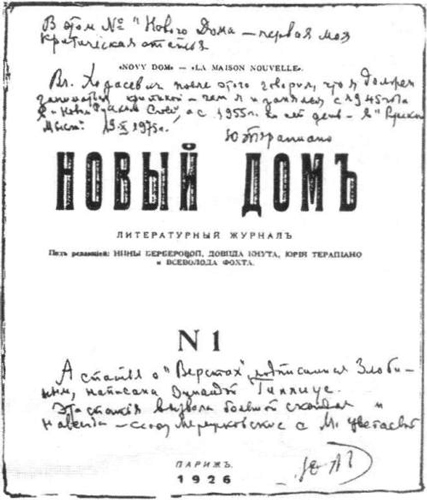
The fact is that it will somehow be easier for me to talk about her if I tell you one story that happened after, say, a three-year acquaintance with Marina Tsvetaeva. There was such a month -old “New House”, then they renamed him to “New Ship” edited by Merezhkovsky, Gippius, Khodasevich, Berberova - Marina Tsvetaeva was offended in this magazine.
Duvakin: What is offended?
Sosinsky: Well, she was called almost a prostitute.
Duvakin: Is this a specially review?
Sosinsky: Review [1] .
Duvakin: What was the reason?
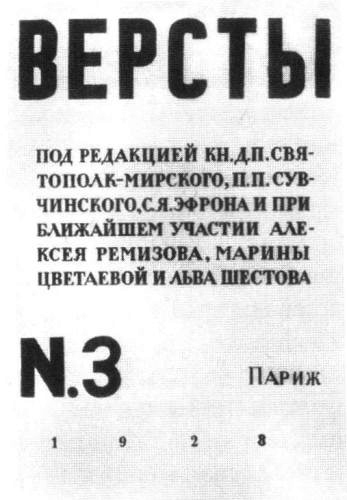
Sosinsky: The reason was the release of her wonderful book “Craft”, and the author of the article, paraphrasing and rearranging phrases, made a public house from her one poem. And also in this article he also fell upon Alexei Remizov. I felt ...
Duvakin: Excuse me, I interrupt you, but I still want to understand the essence of the accusation. What is there - immorality or meant, so to speak, political prostitution, that it is, maybe ... there are poems about Mayakovsky ...
Sosinsky: No, not political, but in the sense that it is, it means, well, or something, erotic in love ... Here, say, “Poem of the Mountain”, “The Poem of the End” is a poet in love, which allows herself to write such things. Moreover, two or three lines from her poem were torn out, in which ... in which indecency turned out-this is the meaning of this article ...
Duvakin: It was composed of dumped lines ...
Sosinsky: Yes.
Duvakin: ... some kind of installation with a obscene shade.
Sosinsky: with a obscene shade.
Duvakin: I correctly formulated?
Sosinsky: Exactly, exactly, right.
Duvakin: Yeah, I did not know anything about this episode.
Sosinsky: And Alexei Remizov, they simultaneously there, in another article ... fell upon him for being “robbing” that he is engaged in plagiarism, that he “robs” the dead. In general, they made such a maraudian and scoundrel from him, as if he had robbed the protopop Avvakum, robbed Russian fairy tales, Afanasyev and so on. In general, I considered my duty to join, of course, for Marina Ivanovna, and at the evening, which was arranged on a different reason ... such a union of young poets ...
Duvakin: called “Koll” ... something like that ... said Ariadna Viktorovna.
Sosinsky: No, "Nomad."
Duvakin: "Nomad"?
Sosinsky: “Nomad” - it was another organization, it was Mark Elume and Andreev and Andreev created a “nomad” as opposed to the “green lamp”, which was at Zinaida Gippius and Merezhkovsky, here.
Duvakin: Are you saying now? ..
Sosinsky: And the union of young poets was such a special group that also arranged its concerts almost once every two weeks. It was such a rather professional organization - to help each other.
Duvakin: In Paris?
Sosinsky: In Paris.
Duvakin: And these concerts had a character ...
Sosinsky: Literary concerts, of course.
Duvakin: Well, yes, literary evenings. Were they open?
Sosinsky: open.
Duvakin: tickets were sold on them? Or is it also closed?
Sosinsky: No. It was done by the type of French. We went to the cafe in the basement, sat at the table and paid for the beer or for the wine that you order.
Duvakin: That's it?
Sosinsky: That's it.
Duvakin: And what, for this they received some interest?
Sosinsky: No, no one received anything.
Duvakin: What kind of professional is it? .. I realized that this is a professional <nrzb>?
Sosinsky: No, the union of young poets was professional in the sense that if any young writer was in a difficult situation, he was helped.
Duvakin: What? From what funds?
Sosinsky: They ran through the rich people of the Russian colony ...
Duvakin: Ah, just like that. I thought it was paid evenings in favor of young poets.
Sosinsky: No, no.
Duvakin: I thought so.
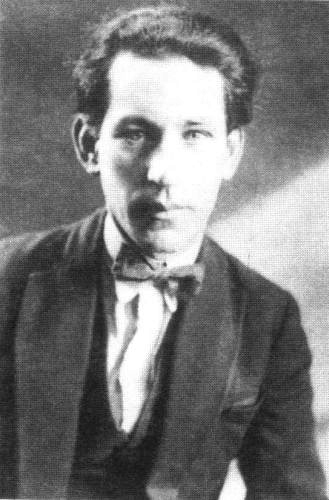 Bronislav Sosinsky
Sosinsky: And now at this evening I made a statement that I give a slap in the face, public slap in the face, editorial office of the New Ship magazine. Well, then a scandal broke out. The chairman, such an Antonin Ladinsky, who recently died in the Soviet Union, extinguished electricity. Well, in general, this scandal had a great response.
Duvakin: What, did they want to beat?
Sosinsky: Yes. In the next evening, where I, of course, came, of course, there was a continuation of these events. The young, the youngest, representative of the editorial office - of course, is not Merezhkovsky, not Gippius and not Khodasevich, but Yuri Therapiano, later a very famous critic abroad - he gave me not a public slap in the face, but physical. And we had a fight.
Duvakin: That is, you gave him change, and ...
Sosinsky: Well, a fight in which it still turned out ... I have the impression that I was placed in the face, despite the fact that, of course, there was a fight, but <NRZB>. And I called him to a duel. Then we were still all ... still lived in such traditions of the XIX century.
Duvakin: You were all former officers?
Sosinsky: Yes. I was ... no, I was a non-commissioned officer.
Duvakin: Have you been an officer?
Sosinsky: No, he was not an officer. And here ...
Duvakin: But then he was entitled to refuse, under the Officer Code of the Old. What will he fight ... After all, you are a nobleman?
Sosinsky: A nobleman, of course, is a baron, but that is not the point. The matter is very piquant ...
DUVAKIN: If according to the Code, then refuse - that's all.
Sosinsky: But the funniest here is that they suddenly called me to the police department at the place of residence. And the commissar, smiling, handed me the text of the statement to the general prosecutor of France, signed by Merezhkovsky, Gippius, Khodasevich, Berberova and other people - the editors of the "new ship" - with a proposal to send Sosinsky from France, which behaves unworthy, causing to a duel, long banned in France ...
Duvakin: prohibited in France?
Sosinsky: Yes. ... Yuri Therapiano. So you understand that the police commissar smiled at me, laughed: "Have you read?" I read, signed up, this ended. And this case was not given a move. But I still did not allow Yuri Therapian to slip away from me in this sense and every time when he met (laughs) I gave him a slap in the face [2] . So it was a whole year. Marina Ivanovna, having learned about this, sent me as a gift a silver ring, which has a very funny drawing - the coat of arms of Vandei, because then in our minds a symbol of nobility and honor was Vandeus [3] .
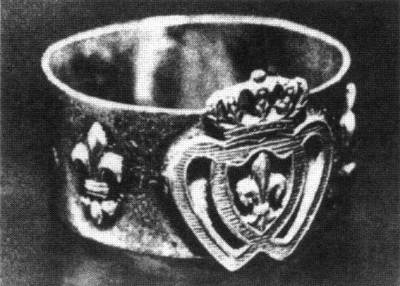 Silver ring with the coat of arms of Vandei, donated by M. Tsvetaeva V. Sosinsky
Duvakin: Woom like!
Sosinsky: So.
Duvakin: So, you, in the French Revolution, were on the side, so to speak, the royal Vandea, understandable.
Sosinsky: Yes.
Duvakin: All this is a long story, of course.
About the relationship of Sosinsky and Tsvetaeva
Sosinsky: And in one of the letters that Marina Ivanovna wrote to me, I remembered such words: “That's when I am not on Earth, then you judge me not by my actions, but by the intent. Acts will disappear, and desires and intentions will remain. And do not forget that there I will radiate much more than I am radiating here, because there will be no notebooks, especially notebooks that eagerly look at me with empty pages and require endless food. There I will be free from notebooks. And then you will understand that I was better than you can actually imagine. ” Why did she write to us? Because we were with Vadim Leonidovich [Andreev] and with another hero of our epic of Paris - Daniil Georgievich Reznikov, who married three sisters [Chernovs] ...
Duvakin: This photograph that you showed me.
Sosinsky: Yes, <NRZB> in forty years. We were ... loved Very Tsvetaeva and very differently approached her at different times, but we did not have a novel, and there was no friendship between us and Marina Ivanovna, because, no matter how we admired her verses, no matter how we loved her work, personal contact was disappointed with us every time. How? The sharpness of some of her, mocking sometimes, and sometimes just on her part actions ... Well, those that we call in everyday life unseemly.
The fact is that, of course, it is necessary not to talk about actions, on her advice, but only think about what this friendship could be. Well, let's say, she treated Daniil Georgievich Reznikov with a large one, I would even say, not with sympathy, but with some love. The fact is that she loved many very much, and corresponded with very many, and was explained in love to many, inventing from every person what she wanted to imagine.
She was very, so to speak, greedy for people, especially for men younger than her, and this was very characteristic of her entire behavior that we did not like a little .... And on the other hand, we somehow, paying her due, respecting her and protecting her, if you can ... as you can see, I recently defended her, so to speak, with a gun in my hands, although <NRZB>. If you look now ... If you now pick up the “Anthology of Soviet Poetry” [4] , published in New York edited by Olga Carlisle, who recently scolded Pertsov in the Literary Gazeta ...
Duvakin: Metchenko!
Sosinsky: Pertsov.
Duvakin: Pertsov is it?
Sosinsky: Yes, in the Literary Newspaper May 28 ... There, the article about Tsvetaeva ends like this: "We were so close to Tsvetaeva that even my uncle called one critic to the duel, who insulted Marina Tsvetaeva."
Duvakin: This uncle is you?
Sosinsky: This is me.
Duvakin: So Olga Carlisle ...
Sosinsky: This is my niece dear, daughter of Vadim Leonidovich Andreev. Here, I want to say where it is all about Tsvetaeva with us. And one more circumstance. So I will tell you a small episode that I never told you anywhere. But this will show it, well, such a strange Marina Ivanovna, who is unknown to anyone. Here she, Marina Ivanovna, asked terribly, wanted to meet Alexander Fedorovich Kerensky. Alexander Fedorovich Kerensky then edited the newspaper “Days”, and I was the secretary of the Socialist -Revolutionary publication “The Volya of Russia”. And I drove to him and agreed that he would come to us, at the Chernov house, to get acquainted with Marina Ivanovna. Alexander Fedorovich Kerensky is also a very original personality ...
Duvakin: Alive?
Sosinsky: Alive yet. He was driving with me in the subway. We arrived there, Marina Ivanovna, along with Olga Eliseevna, like two housewives, met him at a common large table, where there was wine and so on. And on such a day, when everyone was prepared so, suddenly a call-my old comrade, a taxi driver, enters. He did not find me at home and decided: then where can I be? That's just the Chernovs - and went in. Well, of course, it was impossible to refuse him, to escort him, and he also sat with us at the table.
I must say that the conversation was the most unusual. I have the impression that if Alexander Fedorovich Kerensky spoke some kind of stupidity, then Marina Ivanovna immediately picked up this stupidity, made her wisdom and returned him back with stupidity. It was something completely unbelievable: two short-sighted people said God knows what!
Finally stopped at Bunina. And suddenly my friend Selivanov, a taxi driver: “What? What is Bunin? Give me a bottle of red wine, and I will write you the same story as Bunin wrote the last time in the “Last News” - no worse! ” Of course, such assurance had no power, but Marina Ivanovna perceived everything seriously. “Alexander Fedorovich! Think about what he says! If he gave him a bottle of red wine, he would have written a story better than Bunin! After all, this is amazing! " And now Alexander Fedorovich says: “Yes! Let's give him a bottle of red wine. ” And, in general, you understand, again, what seems to us by humor was erected into some kind of masterpiece, to wisdom and in some kind of such, you understand, serious ...
Duvakin: It is very characteristic of that environment.
Sosinsky: Yes. And yet - this already applies more to Alexander Fedorovich ...
Duvakin: phantasmagoria.
Sosinsky: Yes. Alexander Fedorovich, for example, suddenly - also drank a little - began to talk about what youth is growing and developing in exile now: “The devil knows what! More recently, one idiot told me that in the Soviet Union wonderful poets and writers and that we should be attentive to the Soviet Union, and so on, so on ... ”and repeats the words that I spoke to him three hours ago, went to the meeting with Marina Tsvetaeva.
Duvakin: That is, this idiot - you?
Sosinsky: So, this idiot was I, sitting at this table. That is, it all shows you together and what Marina Ivanovna was, and what was Alexander Fedorovich.
And then the very next day, Svyatopolk-Mirsky, a wonderful young critic, came to our house, then he thundered in Oxford, in England and in general all over the world.
Duvakin: Then he became a Marxist.
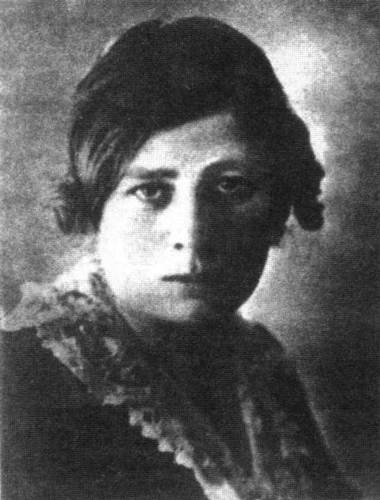 Olga Chernova-Kolbasina. 1920s
Sosinsky: Then he became a Marxist, returned to his homeland. He, then, enters, Olga Eliseevna opens the door, she shows him where Marina Ivanovna lives. He enters Marina Ivanovna in the room, and Olga Eliseevna hears a conversation behind the door. The prince asks: "Tell me, Marina Ivanovna, who is this interesting lady who opened the door to me?" “Oh,” he says, “do not pay attention, this is my apartment mistress.”
Duvakin: That is, about ...
Sosinsky: Marina Ivanovna talks about Olga Eliseevna, who took her out of the Czech Republic, settled in her apartment, does not take a penny for her in the house and therefore is considered an apartment mistress! Here is the attitude of Marina Ivanovna to her best friend. These little things, youth, were very annoyed.
Duvakin: You see, now we can say: this is a disease, this is a disease. This is not ... It is very good that you told.
Sosinsky: I talked about this, because it will never be said publicly, and so, even if someday in the future ...
Duvakin: In the spiritual plan, she is right - judge by intentions, and in historical - you, of course, did absolutely correctly what you said. And in the human, so to speak, in the soul, I would tell you ... Now I somehow had to deal with a question about borderline spiritual states and so on. My daughter is a psychiatrist; What you said is a disease. This is not the moral quality of the personality, but this is the facet of psychiatry in this focus, and so we must relate to this, and the poet Marina Tsvetaeva, whom we all, so to speak, are very highly appreciated, regardless of personal tastes and addictions, this, of course, does not flaunt in any way. Thank you, it’s right that you ... understand ... and you can tell about Dostoevsky.
Sosinsky: The same thing.
Duvakin: The same thing is also on the verge, and the same antics ...
Sosinsky: Absolutely.
Duvakin: And about Mayakovsky, to whom my whole life is dedicated, I can also tell similar moments, and this is on the verge. Mayakovsky had them less often, but they ... because usually in everyday life he was terribly polite and, so to speak, charming. He was harsh on the stage - this is different, but it happened so. So I recently recorded several completely unjustified, so to speak, things. So, continue.
On the attitude of Tsvetaeva to children
Duvakin: Excuse me, do not add anything else about Marina Ivanovna?
Sosinsky: About Marina Ivanovna?
Duvakin: So, from the actual side. You do not intersect at all, you just complement your spouse remarkably.
Sosinsky: No, I wanted to say that here is Marina Ivanovna - she was always in such a constant trouble. Moreover, this trouble was always her life ... Well, the character is such that people should help her. So she received help without much gratitude.
Duvakin: how granted.
Sosinsky: for granted. And in this sense, the fate of her daughter ... I do not know if Ariadna Viktorovna spoke about Ale.
Duvakin: She said, but ...
Sosinsky: Marina Ivanovna exploited it.
Duvakin: No, I don't know that.
Sosinsky: She believed that Alya should deal with Mur, because Marina Ivanovna should write poetry.
Duvakin: I see.
Сосинский: И вот девочка десяти, двенадцати, четырнадцати лет, которая росла на наших глазах, была очень замучена своей мамой, потому что она не только должна была быть нянькой своего младшего брата, но и вести зачастую хозяйство, которое ей было не по силам, и тоже для нее это была жертва такая: она нигде не училась, ни в одной школе.
Очень талантливая девочка, которая писала стихи с семи лет, которая великолепно рисовала и которая имела все права так же, как Марина, получать образование, она никакого образования не получала, потому что мать ее в этом смысле, зная, что это нехорошо, но что там это зачтется или не зачтется — это не так важно, важно то, что она должна писать стихи. А заниматься Муром она не может. И Муром занималась Аля.
Вот несколько слов об Але нужно сказать, потому что это был необыкновенно талантливый ребенок. Во-первых, она всегда…
Дувакин: Она стала образованным человеком.
Сосинский: Потом она стала очень образованным человеком, но она, понимаете, необыкновенно была симпатична, ласкова и необычайно очаровательна в своей игре. Она вечно играла. Она играла либо то, что она теленочек, косолапый, неуклюжий теленочек, либо что она не тот, за которого ее принимают другие люди. Но, играя вот так, она доигралась до некоторых провокаций, шантажей, издевательств и тоже в этом смысле была и есть не очень легкий человек. В этом смысле у нее много от Цветаевой осталось.
Вот это, если так задуматься над тем, кто был Мур, который даже на похороны своей матери не пришел, представить себе, что такое была Аля — жертва Марины Ивановны в смысле воспитания Мура, самого любимого.
Если она кого-нибудь любила кроме поэзии, то только Мура — не Сергея Яковлевича, мужа, не Алю, а именно Мура, на которого она молилась и который отвечал ей черной неблагодарностью всегда. Так до конца жизни, до последнего часа ее жизни, Мур был несправедлив к ней. Вот я хочу сказать, эта сторона дела, которую мы чувствовали еще в Париже, нас очень огорчала, и мы всячески старались, конечно, ей помогать. Но помогать ей было очень трудно, потому что, во-первых, она часто скрывала настоящее положение дел. Она любила страдать молча. А с другой стороны, вызывала все время отрицательное отношение к себе в редакциях журналов и у людей, которые имели кое-какие средства и желание ей помочь. Ну вот, видите, это я вам просто говорю…
Дувакин: Это все очень интересно и страшно важно, потому что биография Цветаевой не написана.
Сосинский: Не написана.
Дувакин: И когда-нибудь должна быть написана.
Сосинский: Должна быть написана. Ну, я вспоминаю, например, такую вещь. Она жила на берегу океана в Вандее своей любимой. Она без Вандеи жить не могла! И письма, которые писала она мне тогда из Вандеи, — необыкновенные! Море описывалось потрясающим образом и в прозе, и в стихах. Она мне посвятила целое стихотворение о море и писала его — не знаю, мне или просто для меня переписано. Этот автограф у меня особо хранится до сих пор. И потом она говорит о хозяевах своих, которые влюблены в нее необыкновенно. И вот как любопытно: через несколько недель эти хозяева, которыми она восхищалась, эти вандейцы — с необыкновенно высокой точки зрения, она буквально возносила их до небес — как быстро-быстро они таяли в глазах ее самой и в глазах человека, которому она писала эти письма. Они превратились в колдуна и ведьму, в самых подлейших людей на свете — все те же самые герои-вандейцы. И в конце концов, понимаете, она, рассорившись с ними, плюнув на них и до скандала, который с милицией где-то кончался, уехала оттуда. Это вот типичная картина привязанности, любви и конца этого романа. Это у меня сохранилось целиком в письмах: весь этот роман с вандейскими рыбаками-моряками. Но в общем…
Дувакин: Это были простые люди?
Сосинский: Да, абсолютно простые, и люди, которым она успела очень надоесть своей нерегулярной жизнью, неумением ни сварить блюдо какое-нибудь (кухня, наверное, была общая), ни сделать то, что надо, ни убрать свои комнаты и вообще неумением… в общем, тем, что как раз характеризовало Марину Ивановну в быту — в вечной борьбе с бытом за бытие.
Дувакин: Да, как это грустно и страшно, что она должна была это делать. Но все-таки, по-вашему, Аля-то ее любила?
Сосинский: Аля ее? В то время трудно было сказать, любила ли она. Но сейчас она ее обожает. Аля ее обожает так, что не пускает в свой дом ни одного поклонника Марины Цветаевой из новых поклонников в Советском Союзе. Она не может разделить с кем-нибудь любовь к матери в такой степени, что недавно с Урала приехал молодой человек и привез камень, чтобы поставить в Тарусе на том месте, где Марина Ивановна хотела быть схороненной, — этот камень, который вез с Урала человек, — она его выгнала из своего дома и пошла к секретарю райкома, похлопотала, чтоб этот камень не ставили. Она в этом смысле чудовищно относится к тем людям, которые влюблены в Цветаеву. Откуда это у нее? Все оттуда. Она позволяет любить Марину Ивановну только… только чтоб она любила, а другие не должны любить Марину. Потом, у нее другая тенденция: Сергея Яковлевича сделать, в общем, примером семьи, самую примерную семью — отец, мать, дети, никого больше, а был кто-то еще.
Дувакин: А у Сергея Яковлевича?
Сосинский: У Сергея Яковлевича тоже, возможно, был. Это я не гарантирую, во всяком случае, семья была далеко не примерной, но…
Дувакин: Все-таки была семья, что вообще все-таки…
Сосинский: Да, была семья, и она борется сейчас за то, чтобы это не осталось нигде в истории — герой «Поэмы Горы» и «Поэмы Конца», что это была фантазия. И я боюсь за судьбу этого… я хочу вам сказать, пусть это у вас останется…
Дувакин: И никуда не пойдет.
Сосинский: Да. Я хочу сказать, что я из Парижа привез пачку — пятьдесят писем, совершенно исключительно талантливых, может быть, самое интересное, что написала Марина Цветаева из прозы, — письма к Родзевичу Константину, автору «Поэмы Горы» и «Поэмы Конца».
Дувакин: Как — автору? Герою.
Сосинский: Как — герою? Герою.
Дувакин: Вы сказали «автору».
Сосинский: Герою. Когда он узнал, что я еду в Советский Союз, он приехал в Париж — он живет где-то в провинции, Константин Родзевич, — в 1960 году, в начале этого года, и передал мне эти письма для Али Цветаевой, причем передал мне открыто, как передают в архив, поэтому я эти письма прочел, потому что меня это в высшей степени интересовало. Я не жалею, что я прочел, потому что это был документ совершенно потрясающий, чисто литературный, художественный и фактически уникальный, который был сильнее, чем «Поэма Горы» и «Поэма Конца», сильнее, я утверждаю это точно. Я с болью в сердце передал эти письма Але Цветаевой. Мы уже знали, что она их сожжет.
Дувакин: И не сняли копию?!
Сосинский: Нет. Я не имел права. Предназначалось это ей, а не кому-нибудь.
Дувакин: Простите, а в ЦГАЛИ вы передали письма к вам?
Сосинский: Письма, адресованные мне, — их около тридцати — я в открытое хранение оставил, а письма, которые она писала Ольге Елисеевне Черновой-Колбасиной и Ариадне Викторовне Сосинской, — на них наложено вето на двадцать пять лет Алей Цветаевой [5] .
Дувакин: Она вправе это сделать.
Сосинский: Как дочь.
Дувакин: Да, ну, это, слава Богу…
Сосинский: И у меня есть документ, что на двадцать пять лет…
Дувакин: В общем, уже пять лет прошло.
Сосинский: Пять лет уже прошло.
Дувакин: Ну, это хорошо. <нрзб> наши архивы, соблюдение таких правил.
Сосинский: И эти письма, между прочим, для будущего историка биографии Марины Ивановны имеют огромное значение. Ни с кем она не была откровенна, ни с кем она так не делилась своими горестями и злословием о других людях. Как ни странно, такой грешок у нее был — она очень любила злословить, это уникальные тоже письма. Они дают очень выпукло весь облик Марины Цветаевой. Причем, понимаете, учтите, что это говорит человек, который беззаветно предан ее музе и который любит ее стихи, как редко какие. Для меня в русской поэзии существует только несколько поэтов, она входит именно в число этих нескольких поэтов.
Дувакин: То есть вы говорите о себе?
Сосинский: Я говорю о Цветаевой, да.
Дувакин: Ну да, вы говорите «человек», имея в виду себя. Это и дает вам право говорить о ней, потому что, если будет говорить чужой человек, это выглядит гадко, а если говорит человек любящий, то это его право.
Сосинский: Тем более, если так можно выразиться, я немножко выстрадал эту любовь к ней, такого порядка.
Дувакин: Понятно, да. Это очень, очень… какой замечательный для истории материал! Ну, а она вам тогда читала свои стихи?
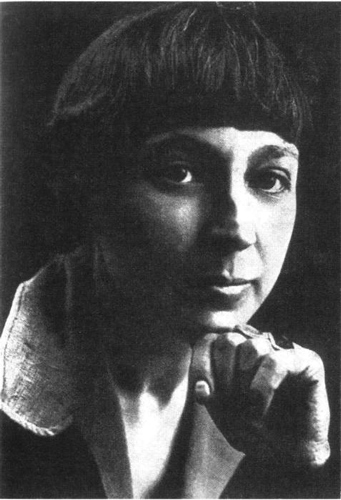 © Фото П. И. Шумова Марина Цветаева, 1925 г.
Как Цветаева читала стихи. О ее внешности
Сосинский: Очень часто. Если что-нибудь напишет новое, обязательно прочтет. Читала она чуть-чуть нараспев, но почти каждый… я бы не сказал — каждую строку, но каждый абзац делая паузу, причем закрывая иногда глаза (чаще всего она на память читала, а не с листка) и слегка покачиваясь.
Она была в смысле такой фигуры своей сидящей — неизменно на стуле и прикасаясь локтем к колену — всегда для художника интересна в смысле резких угловых линий. Не было ни одной линии в Марине Ивановне мягкой, в ее внешнем облике, даже носик был заостренный, даже щеки как-то слегка скуластые и шея, так сказать, с нашим адамовым яблоком, чуть-чуть выступающим, — все было в ней резкое, угловое и… как бы сказать, заостренное против мира и против людей. Такое впечатление складывалось — не в ладу с миром она. Была ли она красивой? В молодости, наверное, была красивой, но она быстро-быстро теряла свою красоту. К тридцати пяти годам она была уже старше своего возраста.
Дувакин: Тяжелая жизнь.
Сосинский: Да. И уже не было никакого женского обаяния в женщине возраста Бальзака, когда фактически…
Дувакин: Расцвет.
Сосинский: …наиболее обаятельна женщина, да. Вот почему и мы чувствовали некоторое такое оттолкновение от этих углов, от этих шпилек, от этого острого язычка, потому что она очень зло над многими шутила, над людьми, которые…
Дувакин: «Мы» — то есть молодые люди?
Сосинский: Да. Она о том же самом Александре Федоровиче Керенском, которого она так радушно и мило встречала и так много они смеялись, хохотали и говорили глупости, буквально глупости, — она уже на следующий день нам рассказывала то же самое невозможное, как она это понимает. «И этот человек мог управлять Россией! Это курам на смех!» — говорила она.
Дувакин (усмехаясь) : Так оно и было.
Сосинский: Так оно и было.
Дувакин: Впрочем, куры смеялись и потом.
Сосинский: Да, куры смеялись.
Дувакин: Да... А вы ее еще с какими-нибудь людьми видали? Вот эта ваша сцена с Керенским — потрясающе интересна.
Сосинский: Да, забавная сцена была. Я ее видел… Дело в том, что я как раз этим горжусь, потому что я все-таки приложил руку к тому, чтобы «Крысолов» был напечатан в «Воле России». «Крысолова» боялись печатать и Марк Слоним, и другие редакторы. Среди редакции «Воли России» были и такие лица: Василий Васильевич Сухомлин, который недавно умер в Москве, член II Интернационала от России, затем… очень известный журналист во Франции, потом Владимир Лебедев, который очень сильно разорялся на Балканах во времена Стамболийского в Болгарии, был правой рукой Стамболийского, эсер, прославился еще в Гражданскую войну на Волге тем, что передал золотой запас чехам, затем был сталинский такой и единственный литератор Марк Слоним, один из самых блестящих ораторов зарубежья русского, который до самого последнего времени читал лекции. На любом языке он может читать, по-итальянски, по-французски, по-английски, по-русски, по-немецки, блестящий в этом смысле человек. Вот с ним у меня всегда были стычки по линии Марины Цветаевой и Ремизова. Я просовывал Ремизова и Цветаеву в «Волю России». Я же (тоже я ему это говорил, он подтвердил это) ему открыл Бориса Пастернака, Осипа Мандельштама, которых он недопонимал. Так что в этом смысле, понимаете, я довольно много сделал в редакции «Воли России» для появления вещей.
И Марина Ивановна так поэтому и относилась ко мне — в высшей степени хорошо, я должен сказать, что такого, что я сегодня говорю о Марине Ивановне, иногда немножко злого, она бы обо мне не сказала. В этом смысле я знаю хорошо, что она ко мне очень хорошо относилась, писала мне: «Володя! Мы потому не вместе, что ни у вас, ни у меня нет времени для того… а любовь — это требует и времени, и… — она еще добавила, — и больших усилий. А вот этих усилий мы и не делаем» <нрзб> игра словами. Главное, надо помнить, что она в высшей степени тянулась ко мне и очень была благодарна… Я помню, как она была мне благодарна. Она хотела видеть портрет на фотографии своего любимого Мура. А для того, чтобы сделать Мура по-настоящему, надо было обратиться к хорошему профессионалу. И у меня был такой друг большой, фотограф Петр Шумов, и он снял этого Мура в десятках видов, и она в восторге была от этих фотографий, которые остались, и вот, кстати, Марину Цветаеву он очень хорошо снял. Этот снимок я привез в Советский Союз, и его напечатали на программе того вечера, который был посвящен ей, — в Союзе писателей в последний раз — фотографию Петра Шумова, лучшую фотографию Марины Цветаевой.
[1] Речь идет о рецензии Владимира Злобина на альманах «Версты», в котором были опубликованы тексты Цветаевой и Ремизова. Подлинным автором рецензии, по позднейшему свидетельству Ю.К. Терапиано, была З.Н. Гиппиус (Злобин В. Версты [Рецензия] // Новый дом, 1926, № 1, с. 36—37). - approx. Ed.
[2] Был и другой эпизод, связанный с этой несостоявшейся дуэлью. Однажды Б.Б. Сосинский пошел в парикмахерскую стричься, и там сидел человек с намыленным лицом, которого брили. Заметив Сосинского, тот, как был, намыленный, выбежал из парикмахерской. Это был Довид Кнут, поэт. Сосинский не собирался с ним драться, но тот дружил с Терапиано и считал, что он тоже может быть бит. Уже после возвращения Б.Б. Сосинского в Россию стало известно, что Терапиано оказался «недуэлеспособен» не по своей воле, а ему запретил Ходасевич, сказав, что нас мало и русской интеллигенции не пристало стрелять друг в друга. Уже после того, как было записано это интервью, Сосинский встречался с Терапиано в Париже. Они с удовольствием выпили, вспоминая юные годы. - approx. A.B. Сосинского.
[3] Здесь: Вандейский мятеж (1793—1796) — контрреволюционное восстание на западе Франции, закончившееся поражением восставших и унесшее жизни около 200 000 человек. - approx. Ed.
[4] Poets on Street Corners: Portraits of Fifteen Russian Poets. By Carlisle Olga. — New York: Random House , 1969. XIV, 429 pp. - approx. Ed.
[5] Письма Цветаевой к О.Е. Колбасиной-Черновой и А.В. и Н.В. Черновым ныне опубликованы. См.: Письма Марины Цветаевой .