
Translated material
This is fine?
How our ideas about time and space have changed: sociologists summed up the results of the pandemic
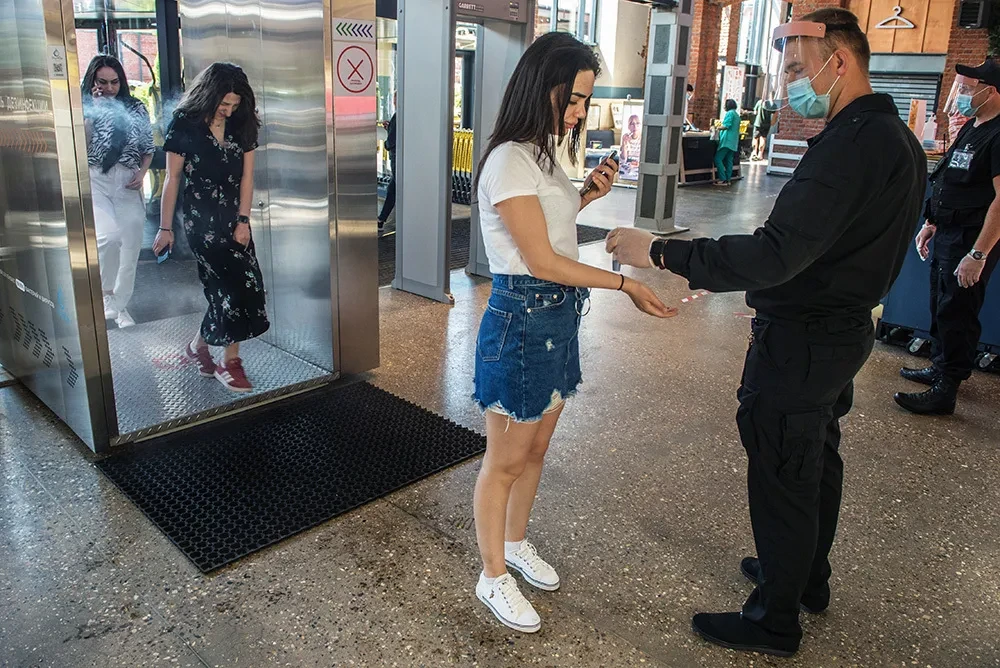
There is no way to hear music in the headphones: on the left is a stormy stream of cars, on the right - the musical rhythms of cafes, shops and bars and the waves of laughter of the elite who are resting with each other, merging with each other. On the New Arbat, everything is the same, the pre-quarantine, and nothing reminds of a strict three-month regime-the city returned to normal life. Or did not return? Marking on the floor of stores; thermal imagers at the entrance to Auchan; Frequent, but unsuccessful calls from loudspeakers in parks and metro wagons observe a social distance; Boxes with an antiseptic in all public places. It seems that all these and many other quarantine attributes have become part of our new “normality”. And how this new city normality looks, scientists around the world have become interested in.
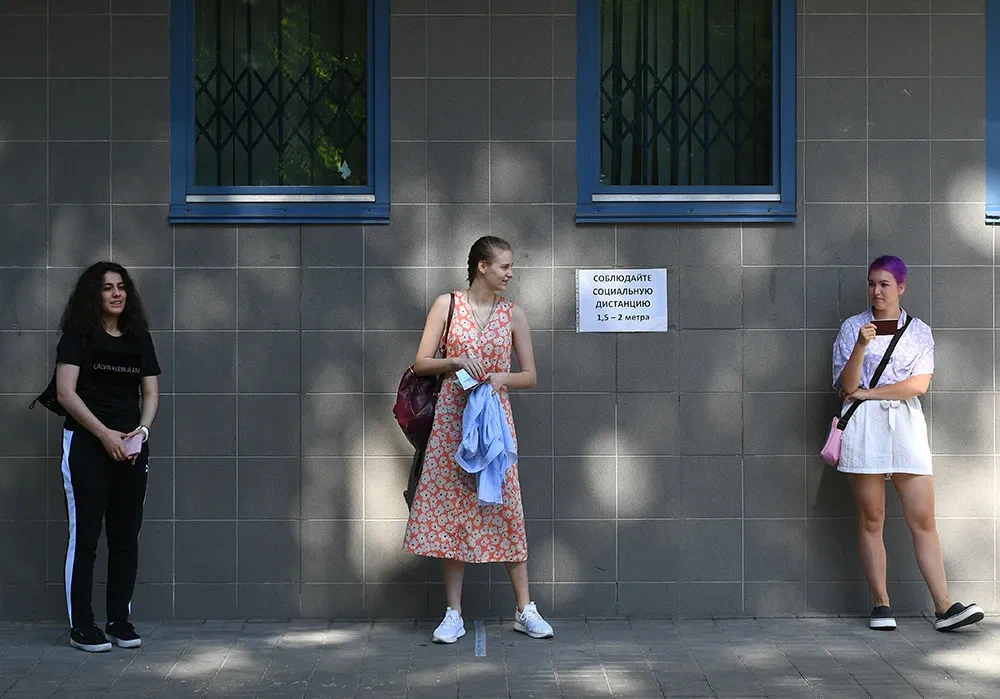
In the first decade of July, the Center for Humanistic Urbanism UP of the European University in St. Petersburg organized a series of discussions and lectures on the topic “City in the face of Pandemia” together with the French Institute in Russia. Architects, city planners, designers and sociologists from France, Russia, the Netherlands, Spain, Germany, Italy and the USA discussed the reaction of cities to epidemics and other external factors that change urban life. In the general opinion, the global crisis, which the world has just experienced, has spread to all levels of society, and understanding its consequences goes beyond the framework of one knowledge, one experience. Remote work, rigid separation of public and personal and complete control over both, responsibility for its physical presence somewhere-this is our new norm. It will not be possible to forget about all these phenomena that have entered our life during the isolation regime, and the question is not to get rid of some manifestations of this new life, but that we actually want to return from the past. During the discussions, the conversation now and then returned to several manifestations of the city reality, and if we generalize the conclusions that the conference participants came to, then it will look something like this:
Cities: Architecture and Life
As the insulation mode with its empty avenues and lanes showed, architecture as such does not yet make the city the city. The quarantine clearly divided the space of our life in two: the conditional interior and the conditional exterior, that is, on what is inside, and what is outside. The interior began to designate security, the exterior - on the contrary. Three months - an insignificant period of time, but sufficient to ensure that the idea of such a division is fixed in the heads of the townspeople. Now you have to spend a lot of time to restore the status of a public space as no less safe place than your own house. Although the problem of domestic violence sharply came to the fore shown that often the house cannot be considered a safe refuge.
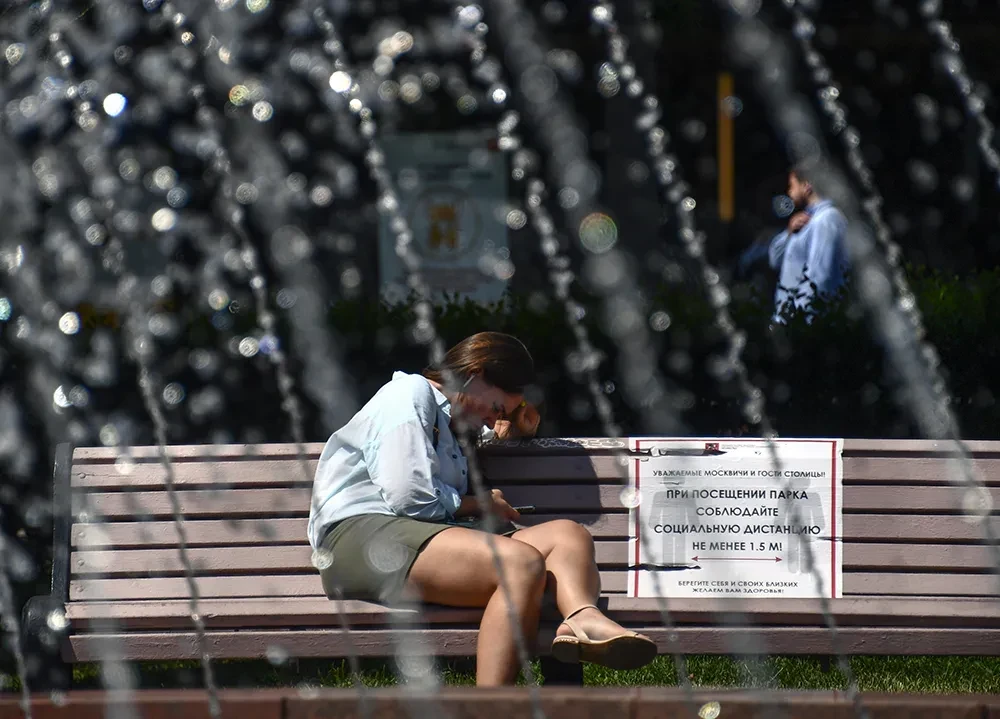
Recently, the thesis began to be voiced every now and then that "it is possible to officially state the death of public space." This thesis is usually explained by the fact that people who are frightened by the threat of infection will no longer want to be present in public places. Life shows that this, of course, is not so, but one radical change in the perception of these places still happened: wanting to feel safe, people want to know who is next to them. In other words,
For a new consciousness, it is preferable that public places cease to be public - would become “not for everyone” spaces.
Moreover, these same “everything” also automatically began to be divided into “dangerous” and “safe”: many decided that close friends, neighbors, relatives were a priori are safe, that is, “their own”, and the rest (unfamiliar, passers -by or couriers) are dangerous “strangers”. And since only relatives living together could receive permission for joint walks or trips in a car, the family became the only legitimate unit that could more or less freely move around the city.
Moreover, everything related to information and personal data finally lost the boundaries between personal and public. In general, the scale of another phenomenon-an infustodia-developed in parallel with the pandemia Covid-19, was, perhaps, even more significant than the scale of the spread of the virus itself. Against the backdrop of mass isolation, the absence of another agenda, the absence of one hundred percent information, at least something was extremely difficult for people to keep an uncomplicated look at the news agenda.
Political manifestations and law and order
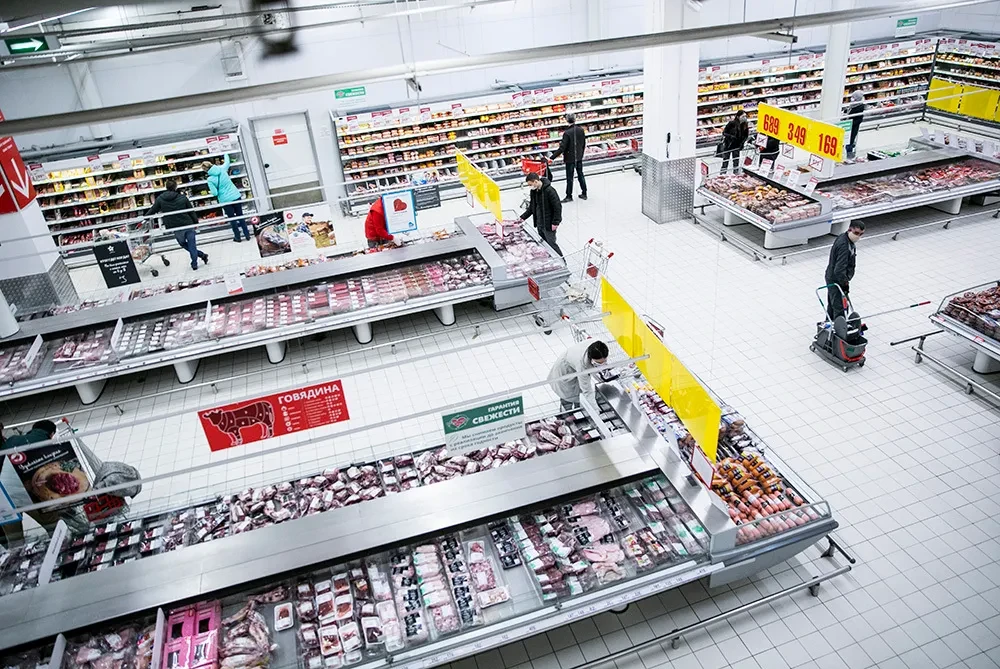
Partially, quarantine has changed our self -identification: now, in order to feel like a violator of the law, a dissident, it has become sufficient to simply cross the threshold of his own apartment. It suddenly turned out that in the context of the struggle for security, some human and civil rights turned out to be more priority than others, and each state ranked priority in its own way. In Russia, the rights to freedom of movement and to protect personal data were secondary, segregation imperceptibly returned: by age, in fact and place of work. In Hungary, the law on the emergency adopted by Prime Minister Viktor Orban, which gave the government the right to rule the country directly through decrees, without approval in parliament, called the next step to the construction of an authoritarian state. And Belarus received the nickname of the country of official Covid dissidentism. And in all countries, in general, the same thing happened: the government took advantage of the moment to expand the sphere of its influence on the life of citizens, selectively compromising democratic principles.
The politicization of society has reached a degree that has not reached many years.
“Humanity fought for its rights and freedoms for centuries,” said Daniyar Yusupov, architect and teacher of the St. Petersburg Architectural and Civil Engineering University, during the discussion. - At the end of the twentieth - beginning of the 21st century, it seems to have finally gained this freedom, but immediately quickly began to lose it again. First of all, we lost part of our freedom in exchange for public safety - in the context of the fight against terrorism, etc. Now we are taking another step to losing part of the freedom - in exchange for public health. The next step can be expected in the context of financial security or something like that. And personally, I can’t imagine how we should act in this situation. ”
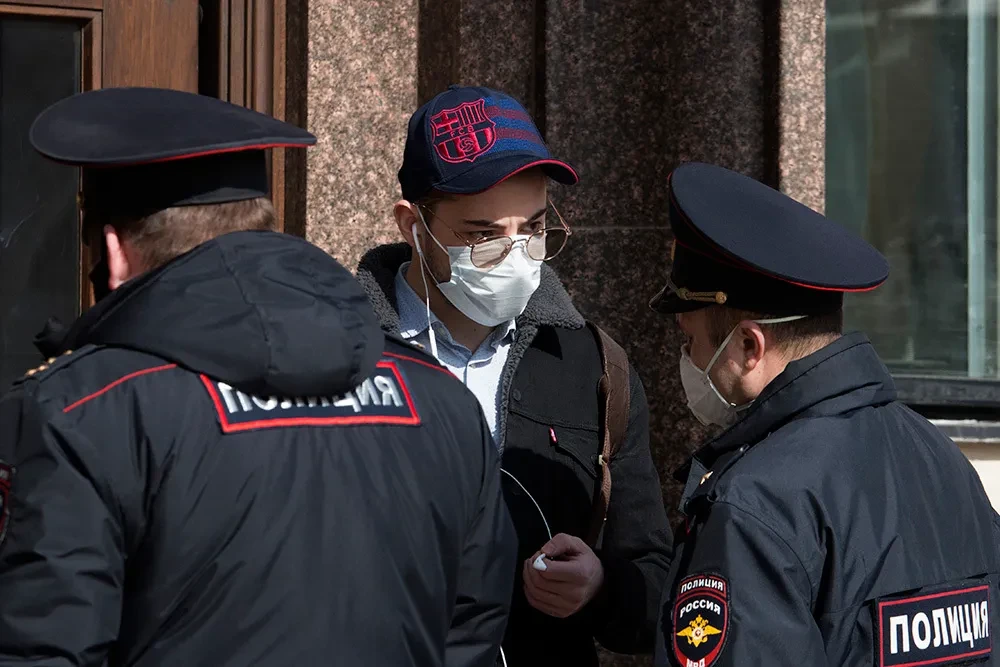
The issue of using data, the issue of lack of confidentiality is that which will definitely not go into the past with the abolition of the latest quarantine measures. Eduard Moro, an architect from the Orchestra Bureau, claims that in the sense of using digital and non -cyphatic technologies in Russia, as in the situation with Covid, two scenarios: “The first, quite provocatively I will name it, is Asian. This is the way of using technologies for full control, supercontrol over people, for building additional boundaries. The second, European path is to use technologies in order to give the opportunity to receive information for training. This is a way to convey to each responsibility for the independent use of these technologies. Russia now stands somewhere in the middle, and only the choice depends on which way to go. The danger is that one of the two options has already taken place in its past. In any case, it must be remembered that the separation of people is against the principle and idea of the modern world, against the idea of the city, which is the opposite - in the association. ”
City industry
The story told at the conference by the scientist and activist Anastasia Khalaneva from the University of Amsterdam, at first glance, has nothing to do with the pandemic - but this is only at first glance. One girl had an allergy to the bow. Once, going to McDonald's, she ordered a burger, adding one simple phrase to the order: "Do not add onions, please." Then she waited for her order for 45 minutes, watching how others get their burgers instantly. What was the problem? In the inflexibility of the system. There is a certain type of infrastructure that cannot deal with anything that goes beyond the standard - simply because it was not created for changes. Such systems can be not only service in McDonald's, but also, as shown in recent months, social security and medicine. For the majority, especially in Russia, this is an example of the “normality” of a past life, but the inconsistency between needs and what the standardized system can ensure, at the beginning of the epidemic cost many lives.
The same can be said about the public transport system, especially in the largest cities. Varvara Kobsch, a sociologist from the Higher School of Economics, shared the results of the draft Laboratory of Social Research of the city, which eloquently demonstrated a simple truth: there can simply be no social distance in the subway, despite all preventive measures. Public transport is not able to meet the sanitary requirements that the epidemic presented to him. And again-due to the inflexibility of the system. And-partially-due to the irresponsibility of the passengers themselves.
Another question asked by Pandemia and remaining unanswered: should we wait for the mass outflow of people from the largest cities, since most of us realized that we can work remotely? Obviously, the distant tested in three months has many advantages. But since the main argument against home work is always “not the same atmosphere”, “homework interferes with working”, then
The main requirement for a new format of jobs is to be “at home”.
The sociologist Alexander is from QLAB believes that people living in sleeping areas or in the province would prefer to work not in offices, but in COWORKINGS-space, and large companies-for example, from Moscow or St. Petersburg-it would be even more profitable to build these spaces with a capacity of up to ten people, where they could work without wasting time on the road and not worrying about their health.
Perception of time and space
Over the three quarantine months, not only our lifestyle has changed, not only the idea of our rights, not only the way of work. As it turned out, our perception of time and space has changed. People around the world wrote about this change in their diaries, and the sociologist and professor of European University Anna Temkina recorded him in the project “Diaries of the virus”. The project lasted three months - from mid -March to mid -June. More than 30 scientists from 10 countries have academic diaries with a description of their impressions from each day. The practical part of the study has just ended, but the preliminary results are extremely interesting. In almost every diary there was a record: "Something is happening over time."
“I don’t understand how much time”, “I don’t know where my time had gone,” “I can’t organize my time”, “I do not control my time.”
The time unstructured, not tied to space turned out to be interrupted, inaccurate, uncertain, meaningless - in short, uncontrolled. But the opposite occurred with the space: subordinate to the requirements of the social distance, it suddenly became as fragmented as possible, torn.
Waiting for reverse integration is unknown. Whether to wait for our consciousness to regain the usual coordinate system, too. It is possible that it is time for us to answer all the questions asked during the isolation period: “Yes, this is normal. Now - so. "