
Translated material
You can’t conceal bags
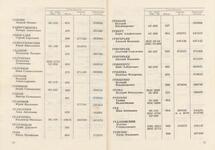
The National Archive of Latvia published in the public domain of the KGB agents, called in the country "CHC bags". It is reported by DELFI.LV.
The cards are filled with hand, in most cases in Russian. The alphabetical cardboard of agents has 10,612 cards. It includes both the agents acting as of the late 1980s and the former. Persons who did not cooperate with the KGB were included in the same file cabinet, but were considered as candidates for recruitment, as well as citizens who were going on trips abroad.
Among those, there are cards in the archive - Metropolitan of Riga and all of Latvia Alexander, former Prime Minister Ivar Godmanis (the court already admitted that he did not cooperate with the KGB), deputy of the Sejm from the Consent party Igor Pimenov.
Fantast writer, member of the Writers of Latvia, Nikolai Gudanets, honoring the card also in the card index, admitted that he was in contact with the KGB in the 1980s. "In the fall of 1981, they began to invite me to conversations with the KGB officer, who asked me about his colleagues and brothers on Peru. I answered questions, trying not to give anyone out and not harm anyone. Already at that time I hated Soviet power and KGB. After several meetings, I was offered to give a subscription, and I agreed, out of curiosity and tendency to adventures, I was a fool, not a fool. I understood that I have been called up to his games for about once every six months. The Russian community of Latvia, with a smile, asked if they would give me a parabellum, and since then for many years has been a mile away for many years. "
In another file cabinet - statistical accounting of agents - 4141 cards. It includes the same names as in the alphabetical file cabinet, but they are grouped in accordance with the affiliation of agents to the territorial divisions of the KGB. This card file was used to prepare reports.
The third file cabinet entered the "Foreigners of the KGB" - persons who helped the secret police in "counterintelligence activities at transport, industrial facilities, as well as individual institutions of the Ministry of Defense". It has only 75 cards. Pseudonyms were not assigned to freelance operatives - instead, abbreviations from the initials of surname, name and patronymic were used instead.
There is an assumption that the most valuable part of the KGB archive after the fall of the USSR was taken to Moscow.
Disputes regarding the need to open the KGB archives continued all the years after the restoration of the independence of Latvia.