
Translated material
In the service and to the liking
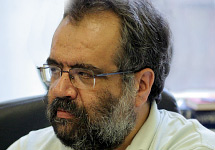
It all started with the fact that Vladimir Vladimirovich Pozner watched the film "Good Night and Good luck" - about the American television journalist Edward Murrow, fearlessly opposing McCartism. Vladimir Vladimirovich liked the picture, and he completed his next program on Channel One, with such a felt speech:
- What do we do, for whom do we work, who are we working for? For yourself, for your career, for earnings, to please the boss in order to please the authorities in order to express their personal point of view? In general, as far as we think about the very viewer who expects from us actually a balanced, objective, honest and timely information? .. There are many questions that you could ask and which we, of course, should ask ourselves. These questions are posed in this film. In general, it would be worthwhile to think about them all.
The television critic Irina Petrovskaya took this civilian "farewell" as a "scream of a wounded soul - especially in contrast with a completely service and completely safe program that the respected Vladimir Vladimirovich has just conducted." And she asked: "Who is addressed to this passionate message and who, if not the most authoritative political journalist of the country, maybe and should answer the questions that sounded?"
The former “prince” of domestic television, and now the working “radio gas workshop, Yevgeny Kiselev, responded to the Poznerov appeal. Giving a tribute to Mr. Pozner as “the figure of the sign, the main television of the country” and also “a person of liberal views, while sometimes sharply critical,” Evgeny Alekseevich allowed himself to notice that Vladimir Vladimirovich was inclined to compromises: his program is being recorded; There are people whom he does not invite on the air, and the topics that he avoids, so as not to create conflict situations.
Accusations of excessive filed fussiness, albeit flavored with compliments, were pretty angry with the "chief television of the country." Finishing his new “times”, he sharply stated that the critic “did not understand anything” and that “we determine the topics of the program, that is, the“ time ”team, without asking anyone and, in general, speaking without talking about anyone.” And in order to dispel all doubts about his independence, he added: "No one has ever imposed anything on me." And as for the lyrical "farewells", then no one reads them in advance, does not know and does not see them. "
Well, everything seems to be clear. On Russian TV, not everything is safe with the truthful and balanced presentation of information; There is an earnestance to the authorities, neglect of professional and public debt for a career. However, these vices have nothing to do with Vladimir Vladimirovich himself Vladimirovich himself. He outlines the topics for himself and determines how to cover them without experiencing any extraneous influence. Almost according to Pushkin: "The poet himself chooses objects for his songs; the crowd has no right to manage his inspiration."
However, if you follow the performances of Mr. Pozner not only on TV, but also in the means of not so much the media, the picture is somewhat different. In a recent newspaper interview , the host of "times", having heard a reminder that some opposition politicians were on the air were undesirable, not without bitterness:
- Elections are an important topic. When the election year was on, Konstantin Lvovich (Ernst; CEO of Channel One. - N.P.) asked me: "Vladimir Vladimirovich, difficult time, I ask you softer." I went to meet him. That year was extremely unsuccessful ... It's a shame.
And after the angry renewal of the incomprehensible critics, Mr. Posner met with them at the Echo of Moscow - and the "complete non -resistance of the parties" unexpectedly designated. When the interlocutors asked if he was ready to make a program about the consequences of the abolition of the governor’s elections, about the Chechen war or about the political future of Khodorkovsky, Vladimir Vladimirovich with disarming sincerity answered:
- I absolutely agree with you that there are topics that, in particular on the Channel One, are unrealistic. Absolutely. I do not argue at all.
“So I am talking about a compromise in these categories,” Mr. Kiselev remarked with satisfaction. “Well, of course, of course,” Mr. Posner willingly confirmed.
So, when the "main television officer of the country" broadcasts from the screen, he says one thing about himself and his work; When he speaks out in other media, turning to a narrower audience, is completely different. Once again, you are convinced of the deep sense of the principle of The Medium is the Message ("The means of transmitting information defines information").
However, the story does not end there. Vladimir Vladimirovich answered opponents who reproached him for compromise evasion of acute topics, not only in words, but also in practice. The last "times" were devoted to one of the most painful problems of our social life - a rampant violence on the basis of national and racial hatred. To make it boring, Mr. Posner invited bright characters to the studio: the universal soldering of Zhirinovsky, the Black-Hundred master of Prokhanov and the organizer of the Yudofobsky “Letters of 500” Krutov. And they were self -exposed, as they say, in full. Vladimir Volfovich was especially trying: he will fed millions of spectators a disgusting lie that the family of a Tajik girl killed by Nazi scum supposedly traded drugs, will recall the Soviet propaganda legend about the American plans for the destruction of the Russian people. One of the participants in the program, lawyer Mikhail Barschevsky, was forced to notice that the debate translated throughout the country partially fall under the criminal article about inciting national enmity.
But what about Vladimir Vladimirovich? “A man of liberal views,” of course, was not neutral - he gracefully dive with Zhirinovsky and did not hide that his sympathy was not on the side of aggressive xenophobes. Yes, and professional ethics seems to be with him: if there is a discussion of a controversial problem, you need to let both parties speak out. True, disputes with racists and anti -Semites in a decent society have not been taken for a long time. Yes, and it will not be remembered that Mr. Pozner at least once provided on the air the word, say, opponents of the Chechen war or the defenders of the persecuted in the Yukos case. But Vladimir Vladimirovich has already explained the reasons for such inconsistency - in newspapers and on the radio.
Or maybe the "main television of the country" had a certain calculation? Maybe he deliberately provoked in his program an ugly phrase, so that in the future he would not be accused of academism and isolation from the anger of the day? Like, you do not want unhurried ministerial conversations about reclamation and electrification - so here you are? Only Vladimir Vladimirovich Pozner himself is able to answer this question. And it is possible that he will answer. But not on TV. The Medium is the Message.