
Translated material
The IOC helped
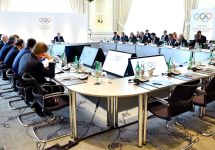
The International Olympic Committee supported the decision of the International Association of athletics federations on the extension of sanctions against Russian athletes. This is stated in the declaration of the Olympic summit, published on the IOC website.
Due to the decisions of the World Anti-Doping Agency against Russia and Kenya, the IOC casts doubt on the presumption of the innocence of athletes from these countries, the document is noted. “Each International Federation must decide on the acceptability of the speeches of these athletes on an individual basis in order to ensure equal conditions in their sport. When deciding, the absence of positive national testing for doping should not be considered sufficient. This means that other reliable adequate testing systems should be taken into account in addition to the National,” the IOC notes.
The IOC doubled the budget to the pre-Olympic doping testing program for the game-206 in Rio de Janeiro. Samples saved from the 2008 and 2012 Olympic Games will be especially carefully checked.
"The summit does not make decisions, he can give directions to further work. The summit was familiar with the report of the IAAF inspection commission. The IOC respects, approves and fully supports the IAAF council not to cancel the disqualification of the All -Russian Athletics Federation," said the President of the IOC Thomas Bach Bach. He emphasized that IAAF should make a decision on the admission of athletes in Russia and Kenya individually.
"Russian athletes admitted to the games will take part in them, as members of the Russian team, of the Russian Olympic Committee," Bach said. This means that they will speak under the Russian flag.
At the same time, Bach noted that the Russian Olympic Committee did positive work regarding the fight against doping in Russian sports. "The membership of the OKR in the IOC is not suspended. The report of the International Athletics Association clearly states that the Russian Olympic Committee played an important role in understanding the difficult situation with doping in Russian sports," Bach said .
On June 18, the IOC Executive Committee announced the respect of the position of IAAF , which left VFLA disqualification. This is consistent with the long-standing policy of the "zero tolerance" of the IOC in matters of using doping, the IOC press release said. “The IOC Executive Committee emphasized that IAAF is fully respected,” the statement said. “The competence of athletes at any international tournament, including the Olympic Games, is under the jurisdiction of the relevant international federation.”
On November 14, the IAAF Council temporarilyremoved Russia from the competition under its auspices for an indefinite period. 22 members of the committee out of 24 voted for the removal of Russia. One voted against. Russia, which is part of the Council, had no vote. The decision entered into force immediately.
On Friday, IAAF extended the disqualification of the All -Russian Athletics Federation. This decision means the actual ban on the participation of Russian athletes in the Olympics in Rio de Janeiro.
The decision to extend the disqualification was made unanimously at a meeting of the IAAF Council in Vienna. General Secretary of WFLA Mikhail Butov refused to participate in the vote and left the meeting.
“Despite a certain progress, it was not possible to fulfill all the criteria, and therefore it is not possible to return the membership of the WFLA,” said IAAF President Sebastian COU at a press conference. “This is not a political decision, it was unanimously made by representatives of 26-27 countries, the politician has nothing to do with it”.
The head of the IAAF commission on the reform of VFLA Runa Andersen said that the "clean" Russian athletes could take part in competitions under the auspices of the association. "Separate athletes who were definitely not part of the Russian doping system or have passed a powerful doping test, could claim to participate in competitions, but not under the flag of Russia," he said.