
Translated material
Lazy city
Why Muscovites have served at home
The appearance of voters in the elections in Moscow amounted to less than 34%, while the forecast of sociologists was 45–52%. What happened to Muscovites - the New Times sorted out
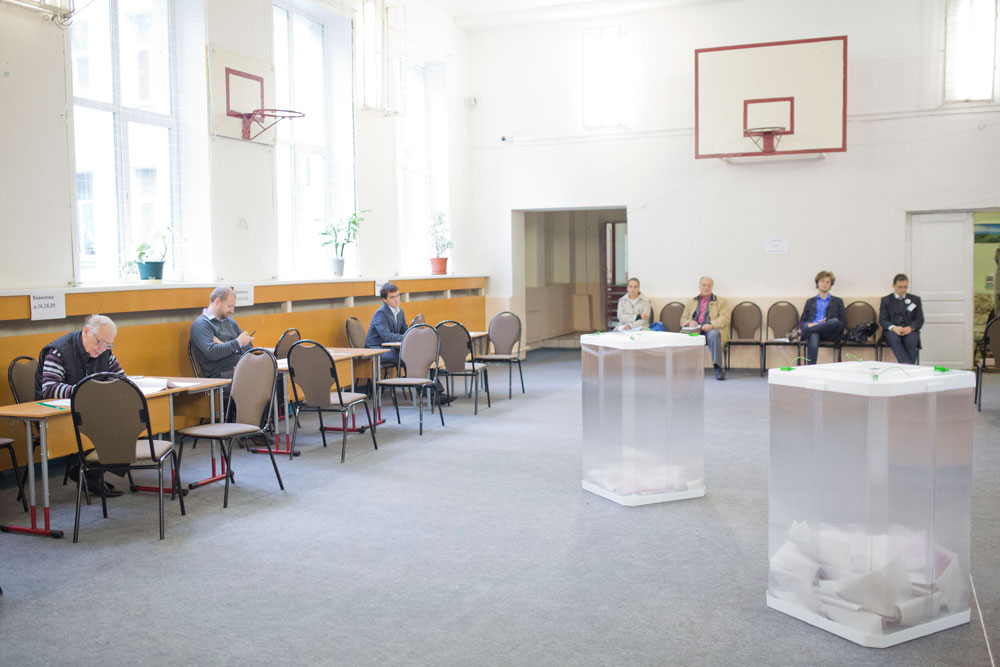
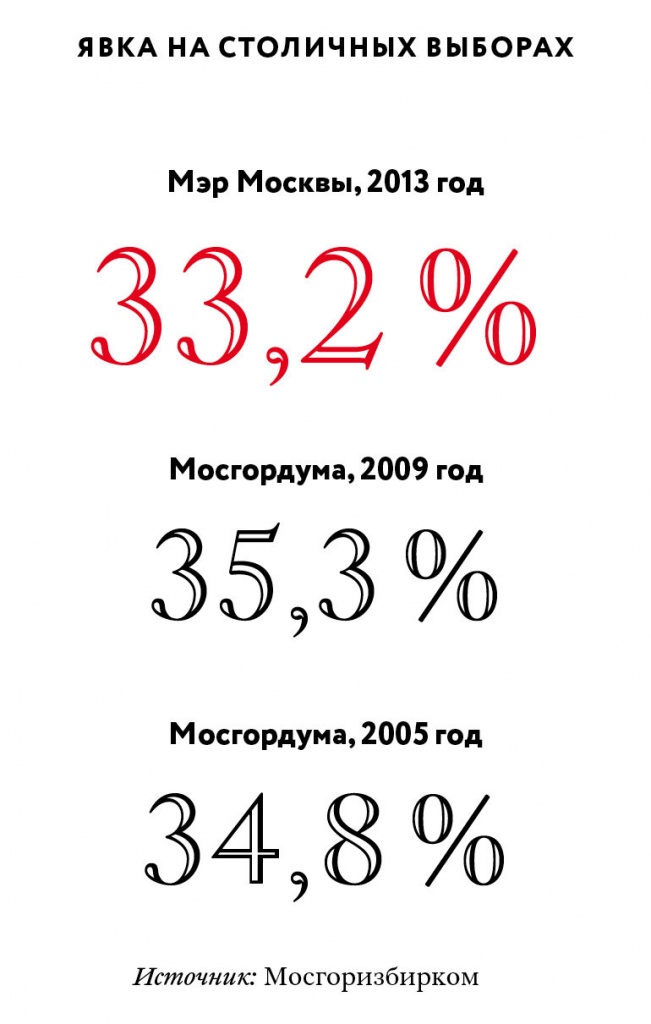
Six hours after the opening of the plots, the turnout was catastrophically low - it did not reach 17 %, then grew up, but in the end it was still much lower than expected. If this happened a year or two ago, no one would be particularly surprised: in 2005, 34.8 % of Muscovites came to the Moscow City Duma elections to the Moscow City Duma, 35.3 % in 2009. But this time the voters had a choice, there were alternatives: the unprecedented campaign of Alexei Navalny promised a completely different political activity. It did not happen. Why?
Version 1: Error of the authorities
According to political scientist Alexander Morozov, who at one time worked in the Tsar -Rossiya Russian Party, a low turnout is explained by several factors. “The transfer of elections at the beginning of September (until 2012 the single voting day was on the second Sunday of October. - The New Times) is a mistake because some of the people are on vacation and in the dachas,” he explains. “The low turnout also says that a significant part of the population decided not to participate in the battle between Navalny and Sobyanin, they simply do not trust the elections.” The director of the Levada Center Lev Gudkov agrees with this. Morozov also notes that candidates from the LDPR and the Communist Party “led a weak campaign not designed for mobilization”, and this is “not a mistake, but probably a conscious decision of these parties”. Plus and the Kremlin decided not to highlight this campaign on federal television channels, says Morozov, and this is the main information resource. Gudkov believes that the low turnout played, first of all, to Navalny’s hand: sociologists gave him no more than 22 %, and as a result, it was he who managed to mobilize his electorate, while the voters of Sobyanin either left the dachas or stayed at home. “Sobyanin will inevitably lose in legitimacy - regardless of interest received,” says Morozov. “The power was captured by their own illusion of success: they were so confident in Sobyanin’s victory that they played to lower the turnout,” adds sociologist Gudkov.
Version 2: Headquarters errors
 |
Political strategist Igor Mintusov, the head of Niccolo M, reproaches the teams of candidates - especially at the final stage, when people had to be called to polling stations. “On American elected campaigns, the last stage is called Gotl (Get out the Load - literally:“ To unload ”votes). These are calls, leaflets, cards - all this in the last days before voting. In our country, none of the headquarters motivated Muscovites to come to the polls. ” Gleb Pavlovsky, in the past, one of the authors of Putin’s victorious campaign in 1999-2000 and the head of the Effective Policy Fund also believes that the headquarters of Navalny did not work on the finish line. For example, a concert on Sakharov Avenue September 6 sounded like the last chord: “Say, the thing was done, the authorities were inserted. And the fact that this piston still had to be lowered into the electoral urn was somehow forgotten about that, ”says Pavlovsky. However, Mintusov admits that Navalny managed to mobilize the youth - most of the votes brought to him just young voters. But for Sobyanin, such a low turnout, according to the political scientist, is a very unpleasant surprise: “He had to mobilize his electorate more efficiently.” “Sobyanin abandoned the debate, there was no special mobilization from his headquarters - apparently, they wanted honest elections and complete legitimization, and the administrative resource was used to a limited degree,” says Gudkov.
Version 3: Visual Help
Perhaps the most unexpected version of the low appearance was put forward by businessman Alexander Lebedev, who in 2003 participated in the elections of the Moscow Mayor and took second place with 12.8 % of the vote (Yuri Luzhkov received 74.8 %). In his opinion, the current 33 % is actually a very good turnout, because in the previous city elections about the same turnout was achieved exclusively due to mass falsifications.
“The authorities have banned the current election in the current election, and there were a very large number of observers. Therefore, the fact that Luzhkov’s team had not been possible for the past ten years this time did not work out, ”says Lebedev. - It seems that they (Luzhkovites) invented 30-40 percent of 30–40 percent due to all that was prohibited in these elections. Those who have not come now, and did not go before, but all these voices were “drawn”.
By the way, many experts spoke about the attributed appearance in the last elections to the Moscow City Duma in 2009. In particular, the physicist and programmer Sergei Shpilkin, having carried out a statistical analysis of the election results, came to the conclusion that the real turnout then amounted to only 22 % instead of the official 35 %. 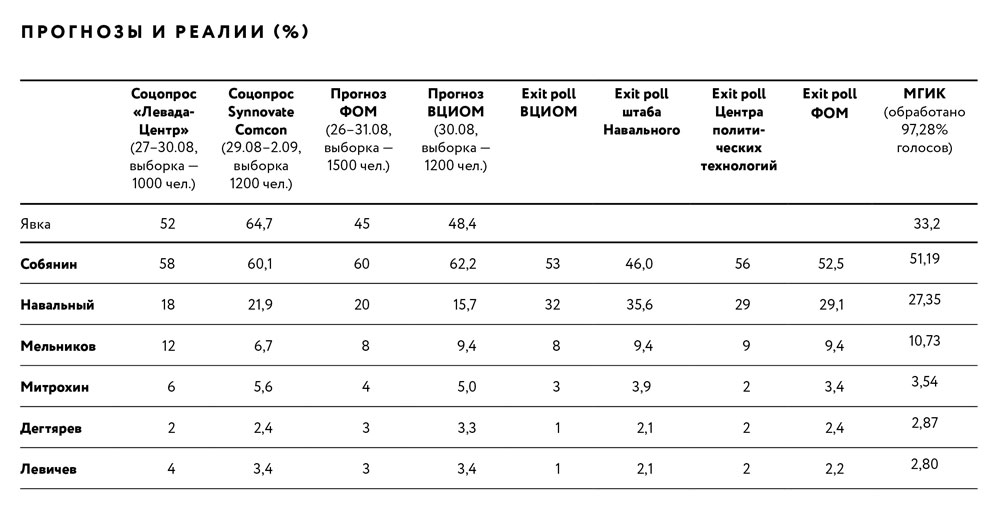
Photo: Evgeny Feldman