
Translated material
It began
In society
 It began
November 14, 2011 Boris Kolymagin
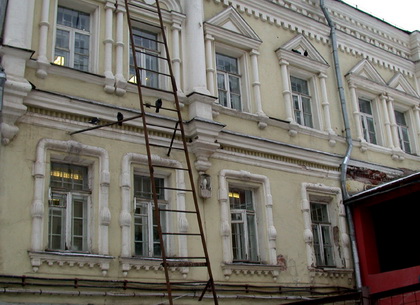
It seems that the mechanism for transferring property to religious organizations will soon work in full force. Recently, in the Rossiya Gazeta, an order was published by the Ministry of Economic Development of Russia, stimulating the process. Link acts, forms, shapes and other paper turbidity appear, moving everything from a dead point. In part, the case was stopped through the fault of the church, which occupies a very pragmatic position.
As it turned out from the words of the legal consul of the Moscow Patriarchate of Monoini Ksenia (Chernogi), one of the documents for several months “hung” in the Ministry of Defense. The ministry did not agree to continue to pay for the churches for use objects that hung on his balance. The military believed that all expenses should be assigned to the user, that is, on a religious organization. “And the church had its own opinion,” notes the lawyer of the Patriarchate. “With difficulty, through the government commission on religious associations, it was possible to move this issue from the place ... The law allows you to distribute the burden of the content of the object received for temporary use between the owner and the user.” Now the costs of the parties for the maintenance of the transferred building will be determined by the contract. The ROC MP chose a convenient position: you own the monument nominally, and pay for real.
For the same reason, the church will not take ownership in the near future most of cultural objects. Why, if, budget money regularly dripped for the restoration of history and culture monuments taken for free and unlimited use. And so nothing will drip.
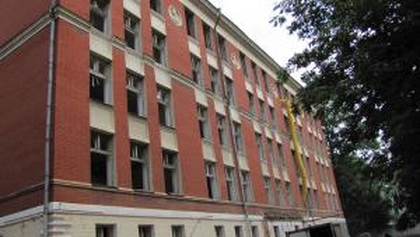
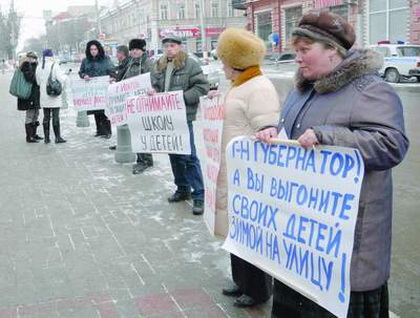
Recently, only one-sort of knowledge of the parish school has been transferred to the property of the church in Moscow-in the capital, unlike the federal level, all paper procedures have long been worked out and adopted. Five more objects are waiting in line. Quite, as we see, a little.
Of course, the churches are difficult to keep in cultural monuments itself. A considerable amounts flow through the ROC MP, but today they are, but tomorrow they may not be - here the patriarchy is strongly dependent on the state and businessmen. This situation can only be changed by the introduction of “tithe”, an intra -church voluntary tax following the example of Protestant communities. Instantly, of course, everything will not change. It is important to indicate the trend.
But this trend is associated with the growth of influence on the arrival of ordinary believers, with a real increase in their participation in management. And in the light of building a vertical of power to church managers, this is not very convenient. They do not want to look in this direction.
But they look at another with pleasure. There, as the Fund of Andrei, the First -Called Money is twisting, turned around on the planting of superstition and PR Putin. However, the fund is not only negative. Here, for example, with his help recently in Moscow, an exhibition from the Nilovo-Stolobensky monastery on Seliger was brought to the “Icon House” on Spiridonovka. Among the exhibits are the wooden sculpture of the Monk Nile, ancient rubbing, church vestments, icons, unique royal gates, seals, crosses and even treasures found on the territory of the monastery during revolutionary pogroms. A museum was created at the monastery. True, there the situation obliges: it is around the Nilovo Desert that “ours” camps are standing every year every year - young people need to be educated.
As for the secular museums located in church buildings, serious tests await them in the near future. Commissions on the transfer of church property have already been formed. They included representatives of religious organizations, officials and culturalists. The commissions, apparently, will control financial flows and settlement of disputed issues. Of course, there will be a lot of disputed cases. Yes, what to talk about if, with an exemplary eviction from the Ipatiev Monastery, the museum and the allocation of significant means of significant means of the invaluable collection of works of art of the XVIII-XIX centuries. Still stands in stacks in stacks.
And this is only the beginning.
Photos from the site artClassic.edu.ru