
Translated material
Our mentality interferes with progress
In society
 Our mentality interferes with progress
February 12, 2018 Peter Filippov
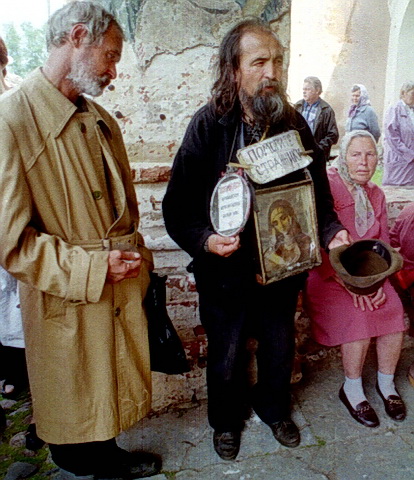
When discussing the future of Russia, it is useful to know about the causes of poverty of peoples. It seems to us that everywhere - like ours. There would be money - both an official can be bought, and the law can be bypassed. But this is not so. The life of the Swedes to the life of Russians is not like. Not only clothes and food. It is not like culture: one is progressive in some, opposing progress in others. Hence the different standard of living. This is written by Lawrence Harrison in his book "Who is Propasing?" (New Publishing House, 2008).
At the beginning of the last century, Argentina competed with the USA in terms of welfare. Since 1930, its golden age was replaced by a hound of weapons, the economic, political and moral degradation of society during the President presidency. Then, 17 years of the reign of military dictators, when many thousands of people became "missing." We, the Russians, ourselves survived the Stalinist terror, participated in aggression against the countries of the Baltic and Finland. Today, the authorities deprive us of freedom to gather at rallies and oppose arbitrariness, embezzlement and corruption. We have something to remember and with what to compare.
Mariano Grondon, an Argentine journalist and scientist, showed that it was the culture of the people, his mentality caused Argentina's impoverishment. The culture opposing progress is considered the cause of backwardness and many famous economists and political scientists, such as D. Adjimoglu and D.A. Robinson ("Why are some countries rich and the other poor." AST, 2016).
Mariano Grondon compiled a list of cultural features that impede progress. In societies focused on progress, respect an individual and trust him. Hence, such peoples have decentralization of power and trust in honestly earned wealth. There is no egregious property stratification, like ours, and the capital of the rich goes not so much for prestigious consumption, but to the development of new industries. Like a mask. Theft, corruption, embezzlement in society are not accepted, not only the police are fighting them, but also the citizens themselves. This is incomprehensible to us!
But there are peoples whose cultures are opposed to progress. There is little person means. Any stranger is suspected of bad intentions. There are guards everywhere, and in the apartments there are iron doors. Citizens are sure: you can only believe in their own. Therefore, for example, it is not possible to create cooperatives in Thailand.
Such cultures give rise to authoritarian power, not only in the state, but also in companies. According to sociologists, Russians also prefer authoritarian management style in production: the director ordered, and our business is to fulfill. Most residents of the Russian Federation consider the army organization the best. With such a culture, repressions against dissidents and opposition always begin sooner or later. If they criticize our power - they are enemies! At the same time, there is an outrageous enrichment of those in power. Compare our culture and culture of the Swedes, who are proud of their honesty, regularly pay taxes and practically do without protection.
In a society focused on progress, morality is based on responsible egoism and mutual respect. A person himself honestly should achieve a worthy life for himself and his family. Well -completed work, courtesy, neatness, punctuality are respected. There, people, overcoming difficulties, build a decent life in the real world, and do not hope for state handouts or happiness in a fictional afterlife.
On the contrary, in cultures opposed to progress, salvation from adversity people are looking for in leaving risks and problems. Go to the monastery. Or, like Shahids, they explode themselves, hope for happiness in a different world. Those who show enterprise and hard work are suspicious.
In a progressive society, a person’s goal is the desire for self -improvement, for the respect of others. Although not everyone is strong in higher mathematics, not everyone has acting abilities. But citizens believe: we must strive for a decent life.
And in cultures opposed to progress, there is no such severe desire for a worthy life. There is laziness, indifference, passivity, idleness. There, spiritual and political preachers use the vices of people in order to inspire people with guilt and make them their obedient flock.
The main difference between cultures is in respect for the law. In a progressive society, the law is what needs to be fulfilled. This is the rule of life. We see this on the example of the United States, where the law is executed by people voluntarily and almost instinctively, where it is mandatory for everyone, including the president. People know their legal rights and will not allow them to neglect anyone. There, the law is the foundation of power and a violation of the law leads to dismissal, impeachment or prison term.
And in the cultures opposed to progress, "the law that was drawn, as it turned, it turned out." There, the power is not subordinated to the law, but the law is interpreted by power to its benefit. Moreover, power is often captured contrary to the law and is held by force. For example, the Russian Constitutional Court, by its decision of November 5, 1998, introduced a ban on the election of the same person by the president more than two times and considered the presence of the word “contract” in the article. Has our president heeded the norms of the Constitution? And the people approved his behavior!
With a progressive culture, the inevitable result of the development of society is real democracy, which puts an end to authoritarianism and strengthens pluralism, a variety of views. On the contrary, in cultures opposed to progress, fictitious “democracy” is used as clothing for new forms of authoritarianism.
Let us compare the cultural values that, according to the typology of Grondons, contribute to or, on the contrary, confront progress.
- Religion justifies success in culture and in life. Religion justifies hard work.
- Religion justifies suffering, promises happiness in the afterlife, forgives sins and pushes to new ones.
- Wealth is the result of initiative and hard work. The wealth of the people is growing with labor and enterprise.
- Wealth is a limited resource as earth. The main thing, not embarrassed in the means, snatch more for yourself personally.
- Competition is an engine of progress.
- Competition is a form of aggression that threatens the cohesion of the nation.
- Justice in the economy requires savings and investments for the good of future generations.
- Justice in the economy is to distribute equally to everyone, so that you can eat, drink and spend money today.
- Labor is a moral duty, it is a form of expression and self -satisfaction of a person.
- Labor is a burden, inevitable evil, a person finds satisfaction outside work, over a cup of vodka.
- Dissent is very important for the search for truth and improvement of society.
- A dissident is a criminal, a foreign agent, an enemy of our stability.
- Education is a condition for human creativity.
- Education is necessary to strengthen orthodox views in order to believe more in Allah or Christ.
- Pragmatism, rationalism, empiricism, utilitarianism are the main values of society.
- The main values are our traditions and my luck. But in the end, for some reason, stagnation is observed
- People are aimed at the future - after all, you can influence it!
- The thoughts of people are directed into the past - in the future everything is unclear, it is not known how lucky, how will fate be?
- The world is a space for our actions.
- The world is in the power of insurmountable forces and inspires people with fear.
- Life is what I do, what I will achieve.
- Life goes on its own, this is what is happening to me besides my will.
- Optimism is the norm of society, it is even our duty.
- Our goal is to survive, pessimism is natural for us!
- Our goal is to survive, pessimism is natural for us!
Let us ask ourselves the question: what culture, what mentality does Russians have? We live in a country that is in a shameful political and difficult economic situation, but we are sure that the country is experiencing a triumph and gained a huge weight in the world. The main thing is to arm yourself! We suffer theft, corruption, a crisis of medicine and education, a corruption and a court -dependent court. We cannot see such a culture of courtyard hooligans and loafers of a bright future. If we go out to the square, then because oil will become cheaper and there will be nothing to eat. We will not come out because Putin strangled our freedoms, but because the shelves are empty. And the rest does not matter to us. Our culture is against progress, but for a good soldering! Is it possible to change the culture of the people? There are cases when the culture of the people changed during one or two generations. Examples: Singapore, South Korea, Taiwan, China. Changing living conditions, an effective fight against corruption and embezzlement change the mentality and behavior of people quickly enough. We see this by the example of a quick change in the mentality of the Eastern Germans. But while maintaining the traditional organization of power in the country, the mental attitudes of the people are preserved and transmitted from generation to generation. It is they who, ultimately, determine formal institutions, and laws, and the nature of power. The authorities, out of selfish motives, does everything to maintain and preserve the medieval traditions of the people. Hence the “authoritarian track”, according to which we have been rolling for centuries.