
Translated material
Oil and ruble returned to August
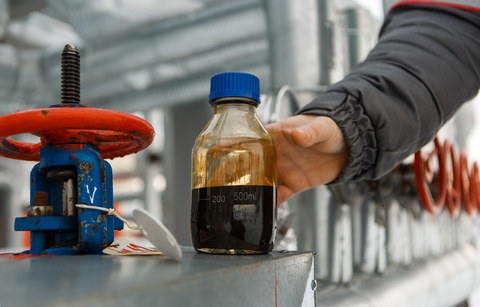
The ruble for the second day grows sharply to the dollar and the euro. For the first time since August, the American currency fell below 62.5 rubles, and the euro below 70. The ruble is getting more expensive after the oil, which broke up the “round” level of $ 50 per barrel upstairs, adding more than 10 percent from the beginning of the week.
Back on Friday, the Brent brand quotes were traded around $ 47 per barrel, in the immediate vicinity of the narrow corridor of $ 47-50 per barrel from the beginning of September. However, on Tuesday evening, prices flew at once by 6%, and on Wednesday the growth continued, “throwing” Brent to 53 dollars per barrel.
Some commentators pay attention to the fact that oil began to rise in price after a sharp exacerbation of the situation in the Middle East as a result of the beginning of the Russian military operation in Syria. However, this factor, if he played a role, was clearly not decisive. A more significant factor is the ongoing decrease in US production and more optimistic forecasts regarding energy demand next year. The signal by the beginning of the two -day oil rally was an unexpectedly strong decrease in oil reserves in the United States.
Finally, the main thing is that not only oil grows on, but the stock markets around the world, as well as other risky assets - the data published last week from the American labor market. They turned out to be significantly worse than the expectations of analysts, and this was perceived by investors as a signal to the fact that this year the Fed will not increase the Fed, and an unprecedented long period of free money in the United States will last an indefinite period. Partly this theory was confirmed by the ex-head of the Fed Ben Bernanke, who in an interview with CNBC announced that he did not see the reasons to rush to tighten the monetary policy. In his opinion, low inflation allows you to continue to stimulate the economy until inflation reaches the targets of 2%.
This approach may turn out to be the main restraining factor that will in the foreseeable future limit the growth of quotations, since it is cheap raw materials that is the main cause of low inflation in the United States. If a sharp increase begins in the raw materials markets, the situation simply will not leave the Fed, the increase in bets may be more intense than the fact that the markets are tuned today.
Another, no less significant restraining factor that will not let the raw materials return to the pre -crisis maximums is the continuing slowdown in the Chinese economy. If the raw materials are sharply rise in price, slowing down can turn into an uncontrolled collapse, which, in turn, provoke a new wave of raw materials.
This does not mean that oil growth in the near future cannot continue. On the contrary, the Brent brand is quite capable of growing to $ 60 per barrel, and the ruble on this wave of optimism can rise in price to 55 rubles per dollar. However, the more sharp and rapid this growth will be, the more chances for the subsequent collapse.
Photo by Maxim Slutsky/TASS