
Translated material
Investigation
Is it possible to unite Russia with Belarus in 2024?
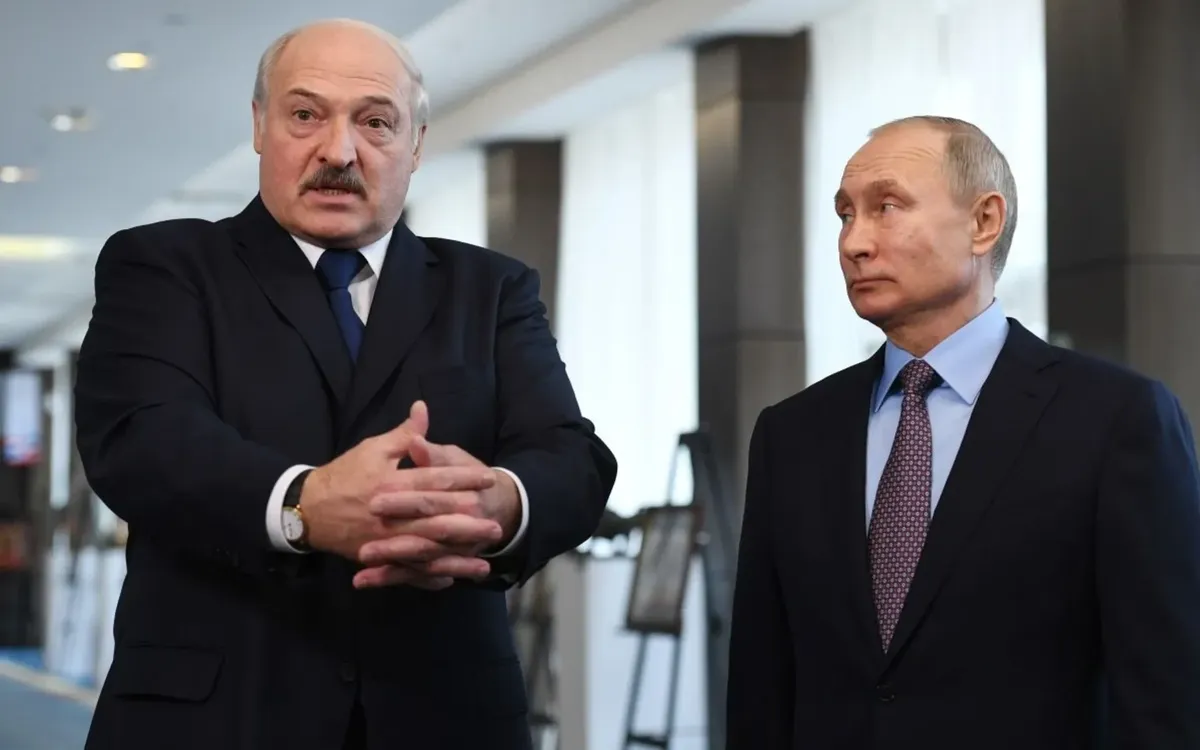
The last Elbasy was fed - in the twenty -ninth year of reign. Although he had no visible reasons - he could be in the position of President of Kazakhstan for life. But he reset to the future - he strengthened the position of the family and the clan, moved to the post of head of the Security Council, which controls everything and everything, including the president.
Alexander Lukashenko made political zeroing twice already: in 1996 and 2004. In 1996, he held a referendum, which actually destroyed any powers of the parliament and turned it into the office, whose function is to register decrees and decrees. Then Lukashenko said that in connection with the new constitution, the previous two years of the presidency is canceled, and the five -year term begins again. So from the first presidential elections in Belarus to the second, not five, but seven years passed.
During this time, the head of the Central Election Commission, deputy Viktor Gonchar, was abducted and killed, and Lidia Yermoshin Bobruisk's legal adviser, who, starting from this very referendum, became the chairman of the CEC, who brought to perfection the falsification mechanisms when counting the votes, so that the results of voting could no longer be worried. But in the Constitution, even in the actual absence of legislative power, there was a restriction of the presidential terms - no more than two. And in 2004, Alexander Lukashenko held another referendum to which only one intricate question:
“Do you allow the first president of the Republic of Belarus Lukashenko A.G. To participate as a presidential candidate of the Republic of Belarus in the presidential election and accepting part of the first article 81 of the Constitution of the Republic of Belarus in the following version: “The President is elected for five years directly by the people of the Republic of Belarus on the basis of universal, free, equal and direct suffrage with secret voting?”
Previously, Article 81 limited the presidency in two terms. This was higher than any legal literacy: two separate ones were included in one question - “Do you allow Lukashenko to be elected again?” And "Are you accepting the change in Article 81 of the Constitution?" However, it was clear to everyone what exactly was happening and for what. The fact that, according to the Electoral Code of Belarus, the issues related to the election or resignation of the president are not taken to referendums, everyone was generally safely forgotten - except for opposition and human rights defenders, of course. It was after the then protests that the leader of the Social-Democratic Party Nikolai Statkevich received his first prison term (he will receive a second prison term after his own participation in the presidential election in 2010). In a word, complete zeroing took place in two moves.
Vladimir Putin, too, was reset over the years twice. In the same 2008, he temporarily moved to the chair of the Prime Minister and received a change in the Constitution, which increased the presidential term to six years. But he, unlike Lukashenko and Nazarbayev, has a zeroing, has a “fitness” period - until 2024. And most likely, options are thought out now.
Many of my colleagues in Russia are discussing the association of Russia and Belarus as one of the possible and most likely embracing options. A new state, a new constitution, and all political biographies begin with the first universal elections.
For many bureaucracy, work will be enough for decades - to rewrite, synchronize, shovele, declare contests for the best anthem, flag and coat of arms and hold at allied amateur performances. If you seriously talk about such a political scenario, then theoretically it is quite possible, but in reality it is unlikely, and all its varieties.
Everyone has already talked about the unification on a voluntary basis 20 years ago. (This, of course, is about the voluntariness of the contracting leaders-there is no talk about the will of the peoples in any of the possible scenarios at all.) Then, in the second half of the 90s, when Alexander Lukashenko and Boris Yeltsin began to digest border posts and sign agreements and agreements on a union state-such an opportunity was quite real.
Alexander Lukashenko was ready to unite in confidence that in the election of the Union President he would certainly bypass the decrepit Yeltsin. “I am 40, he is 80,” - one of the then refrain of Alexander Grigoryevich. And the geography of his working trips also resembled trips of a Russian presidential candidate - he more and more traveled to the Russian regions and met with governors. Yes, apparently so successfully that one day, October 3, 1997, Russia refused to provide an air corridor for a visit to Lipetsk and Yaroslavl.
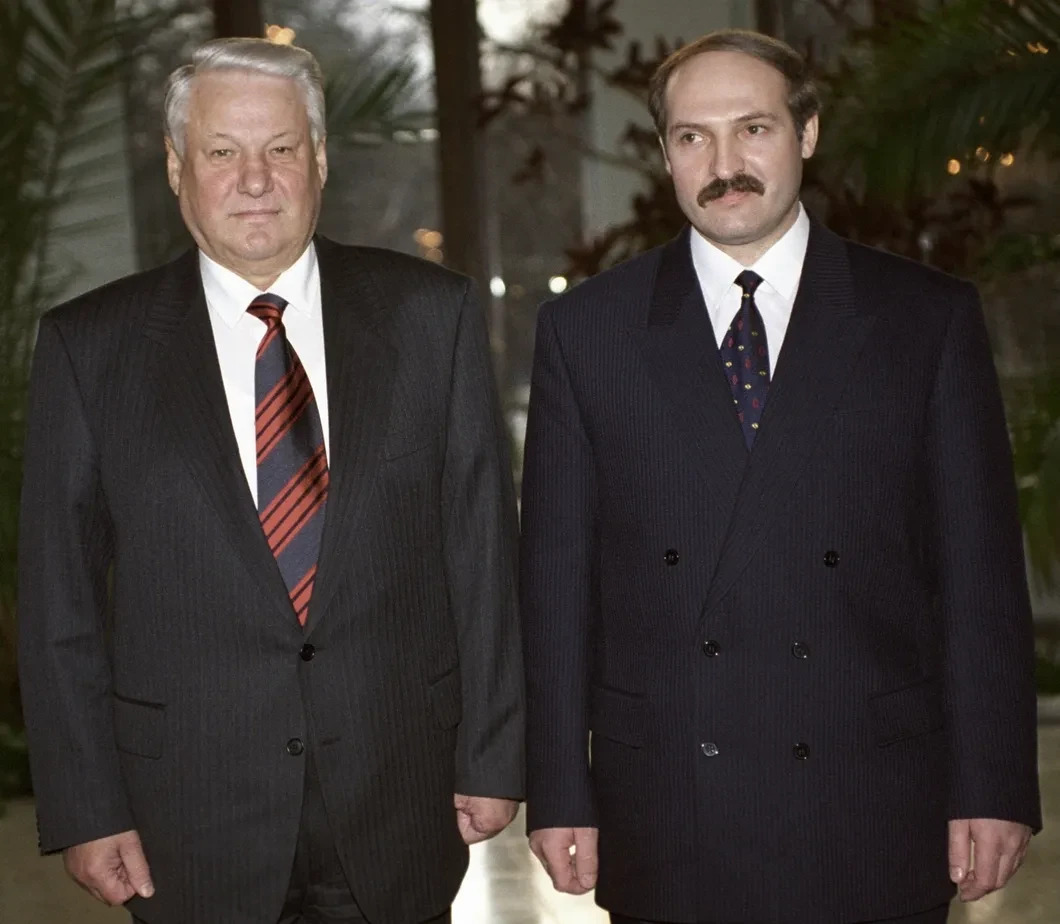
At that time, journalist Pavel Sheremet sat in the Grodno pre -trial detention center, and Boris Yeltsin spoke harshly: “Let him release Sheremeta at first!” But in addition to the requirement to free the journalist, Yeltsin, who arrived in Nizhny Novgorod on that day, said that the heads of regional administrations do not have the right to invite and adopt the leaders of the sovereign states, not agreeing with this with the President of Russia. That is, he recalled who was the main one in Russia. And the association with the signing of a new agreement every year was more a political technological course for Yeltsin than a serious idea. By the way, there were more authors of that move than those who carried a log with Lenin: many declared their authorship at different times, from Berezovsky to Khodorkovsky.
Lukashenko, however, did not refuse to move to the Kremlin from the idea and loved to say that it was he who brought Yeltsin to win in the 1996 elections. But when Yeltsin was replaced by Vladimir Putin, Alexander Grigoryevich realized that in this situation he was prepared only for the place of some chairman of the Union Construction Commission, no more. And against the backdrop of gas and dairy conflicts, Lukashenko quickly changed the rhetoric to “I am a guarantor of sovereignty,” which he still has successfully used, not forgetting, however, about the usual apartments on the topic “I am ready to crawl into Russia on my knees”.
Those who seriously believe in the guarantees of sovereignty probably do not live in Belarus. Because the local residents have long understood: Alexander Lukashenko is a guarantor of their own well -being and their own security, and this is possible only in an independent republic. So far, in any case, it is possible. So the voluntary association with a solemn parade on Red Square and the election of the head of the new state is excluded from the agenda.
A variant of Belarus’s power accession to Russia - the second “unifying” scenario - also, like the first, is possible theoretically, but hardly feasible.
All previous power scenarios with the participation of Russia were related to individual regions - Crimea, Abkhazia, South Ossetia, Transnistria. This is impossible with Belarus: there are no obvious centers of the "Russian world". There is no Sevastopol, after all. The legend, say, about the Mogilev region, where the Russian -speaking population suffers, would look even more implausible than the Martian’s conspiracy. This means that the annexation of a certain individual region disappears immediately. And such as just to take and capture the whole country, in the current century there was no and cannot be in our latitudes. Rather, maybe. But why? There is no more economically dependent on Russia than Belarus. So it is already under the Russian economic and, importantly, military control. Therefore, why finally hang it on balance and upload budget money there? Dear and pointless.
The cost of any option of unification is probably already calculated and recognized as unprofitable - at least for now. What will happen in 2024 and no one knows what scenario will pass. But it is unlikely to be somehow connected with Belarus.
And by the way, now, after many expensive and meaningless actions, Belarus is much more profitable for Russia as an independent state. Russian sanctions against the European Union have caused exclusively domestic consumers. But both the Russian and the Belarusian leadership now make an excellent business on the "sanctions". In the moments of exacerbation of relations, of course, the Rosselkhoznadzor publicly exposes Belarusian shrimp - for the acutters. But they, shrimp, do not care. And until 2024 they will not live at all.