
Translated material
The victory is completely green
Results of parliamentary elections in Lithuania
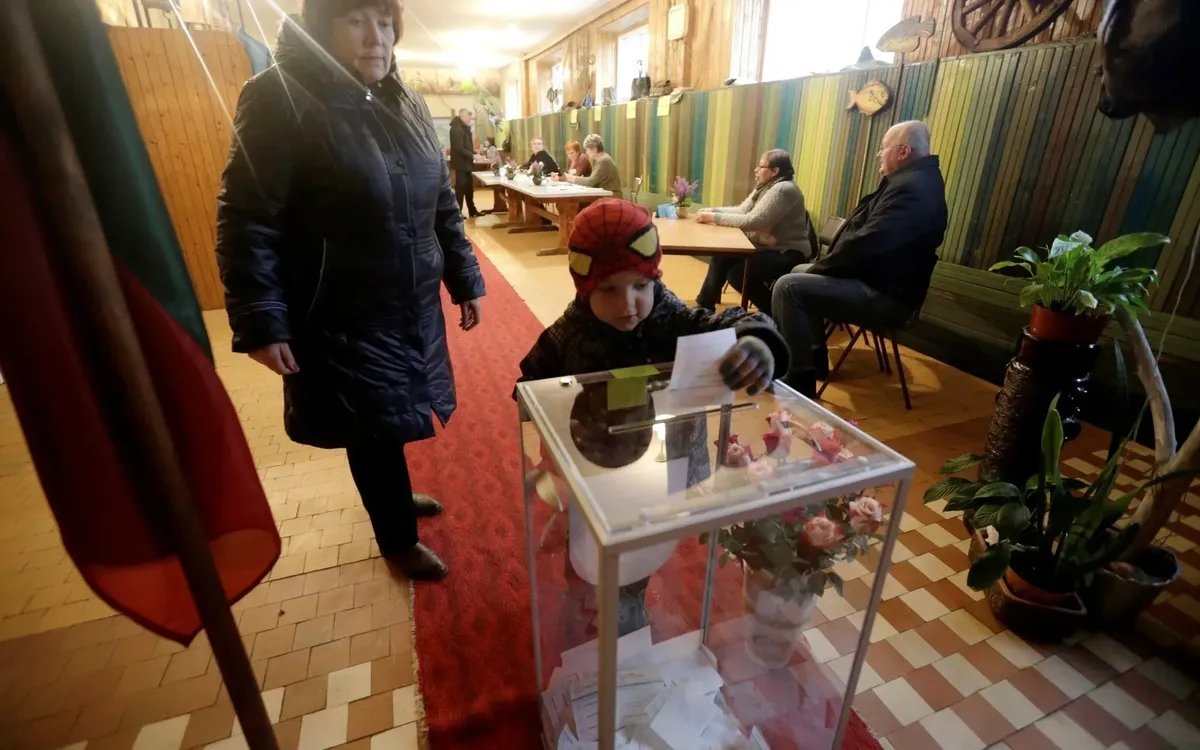
On Sunday, the elections to the Lithuanian parliament (Sejm) ended. The result surpassed the expectations of analysts: the first place was taken by the party, which so far had only one deputy mandate. The “Union of Green and Peasants” is a relatively young party, and it is difficult to classify by an ideological basis. How the domestic and foreign policy of the country will change in many respects on the outlines of the ruling coalition, which is now the “union of green and peasants” to form - farmers, as they are called in the Lithuanian press.
An unexpected victory
Elections to the Sejm in Lithuania are held in two rounds: the first - voting on party lists - took place two weeks ago, last Sunday voters voted in single -mandate districts. The composition of the new parliament has already been defined: out of 141 mandate 56 (majority), green and peasants will receive; 31-conservatives, 17-Social Democrats, 14-liberals. The remaining parties received less than 10 mandates. Given the fact that in the past elections in 2012, only one deputy passed from the Union of Green and Peasants, the current result was a deafening victory.
Most of all, the results of the elections were upset by the Social Democrats, who in 2012 received the majority and formed a coalition with two other batches-"Order and Justice" and the Labor Party. According to the professor of the Faculty of Political Sciences and diplomacy of the University of Vitautas, the Great Lauras Belinis, the Social Democrats disappointed voters with their inertness and passivity. “Distrust of them is very high,” Belinis believes. -Over the past years, they have shown themselves very weakly, without demonstrating the desire to do anything. Their actions and communication with the population were very plain. ” In addition, many turned away from the Social Democrats after the Sejm approved the new version of the Labor Code, which was criticized by trade unions-for protecting the interests of employers, not workers. After a sharp criticism of trade unions and student strikes, the ratings of the Prime Minister of Lithuania from the Social Democrats of Algirdas Butkyavichyus and his parties were greatly shaken.
What new leaders look like
By the way, the critics of the new Labor Code were acted just by farmers - this also added glasses to them. The program of the "Union of Green and Peasants" is generally quite populist, according to many.
So, in their pre-election program, they quite vaguely promised to figure out “complex methods” with the problem of orphans and stimulate adoption, fight monopolies and strengthen trade unions, raise salaries and pensions (without specific numbers), develop regional universities and achieve a “European level of education”.
In more detail, the “Union of Green and Peasants” has not yet disclosed its plans for the future. On Monday, the party’s leadership met with Lithuania President Dalley Grybauskaite, after which the chairman of the LSZK Ramunas Karbauskis, speaking to journalists, promised: “We will like a qualitatively new page to the cooperation of the Sejm, the government and the presidential administration.”
What will this cooperation look like and the Sejm itself depends on who with whom the “union of green and peasants” will decide to form a coalition. After that, the composition of the Cabinet of Ministers will be determined and the name of the new Prime Minister is named. So far, the most likely partner of the farmers call the Social Democrats, who, although they lost the elections, remain the party closest to the farmers in spirit-at least if you compare the programs. However, Karbauskis has already stated that he was open to cooperation with both conservatives and social democrats. It is interesting that in the pre -election period, many predicted the entry of the "Union of Green and Peasants" into the ruling coalition, but no one was ready to determine it.
It is very difficult to try to determine now what the composition of the coalition and the policy of the new Sejm will be. “The Union of Green and Peasants” is an incomprehensible and unpredictable party. “In an ideological sense, it is very difficult to classify it,” says political scientist Lauras Belinis. -Part of the party-former Social Democrats, some came from different other parties. The party mainly represents the interests of those layers that for the most part were not represented by anyone: petty peasantry, inhabitants of small cities. People who do not actively participate in politics, but are faced with different social problems and therefore are dissatisfied with the government. At the same time, in some of their statements, they are close to the conservatives of the law-Christian sense, for example, in matters of family and fertility. ”
Less criticism of Russia
Some indicate the spiritual kinship of the "Union of Green and Peasants" with the Polish party of Kachinsky and fear radicalization. At least in matters of foreign policy, the agrarians diverge from the traditional line of Social Democrats: for example, Ramunas Karbauskis previously spoke out against Lithuania in NATO, but during the election campaign refused this rhetoric. There is reason to believe that the criticism of Russia, which always sounds quite sharply from Lithuania, can give way to a softer position. “The farmers look more calmly at relations with Russia,” Belinis believes.
However, according to the Lithuanian Constitution, the president determines the foreign policy of the state, the role of the Sejm is secondary here. Much depends on who will take the post of the new Minister of Foreign Affairs - the farmers have already decided and named the name Pyatrats Vyaytekunas, the former ambassador of Lithuania in Ukraine, which has established itself as a Euro -Poor -oriented politician in this matter. So, through the Foreign Ministry, apparently, you should not wait for changes.