
Translated material
Inflated meters
In Russia, there are all signs of a mortgage bubble. What will happen when he bursts?
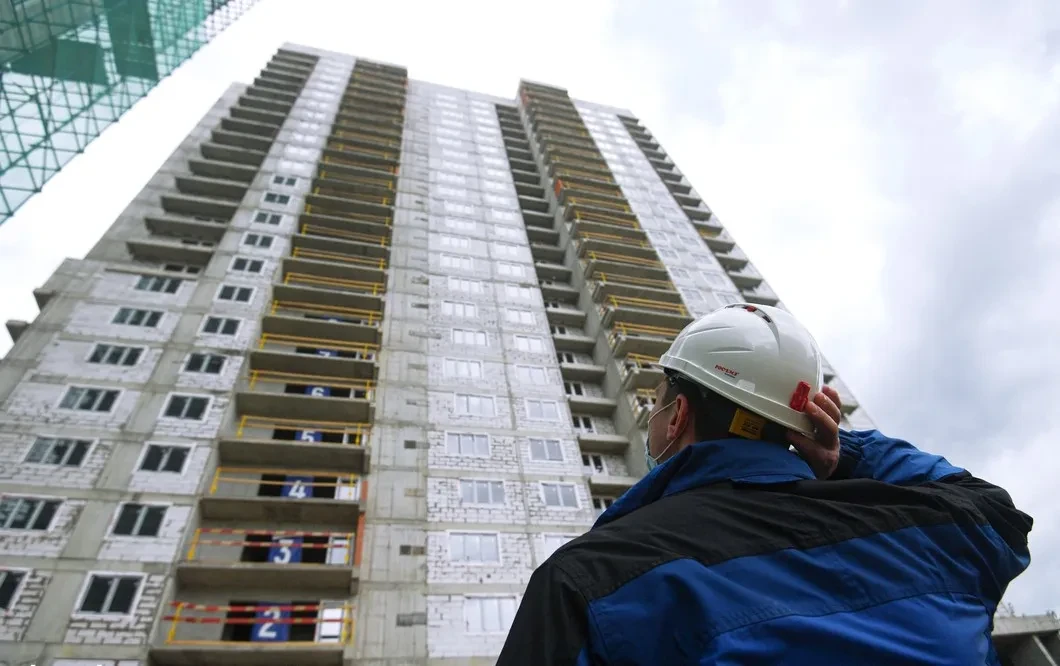
A bubble is a significant deviation of the price of the asset from the so -called fair value (Fair Price, the price that reflects the entire future income or all the future usefulness of the asset). The task of determining the fair price in relation to real estate is very complicated, but many indirect features indicate that at present in large Russian cities-Moscow, St. Petersburg, Yekaterinburg, Kazan, Novosibirsk and some others-a classic bubble has been formed in the real estate market.
It is noteworthy that one of the factors of its formation was the program of preferential mortgage.
The situation has already caused concern about the Ministry of Finance and other officials. But while the support of the support of developers outweigh growing risks. However, this can change soon.
The program has become very popular, in some regions up to 90% of new buildings are sold with its help. The initial contribution was reduced from 20% to 15%. Thus, the implementation of the program of preferential mortgage contributes to the increase in prices: without it, a significant number of current buyers simply could not purchase real estate.
But the increase in prices itself is non -hazard. It is dangerous that it is formed mainly for borrowed money. At the same time, the main guarantee is the real estate purchased by mortgage itself (and some borrowers even take a consumer loan for the initial contribution). At the same time, the real disposable income of citizens has been stagnant for many years, and real estate prices, as well as the volume of issuing mortgage loans, are growing.
This combination is the right path to mass defaults.
And if you take into account the high risk of the next round of the decline in the Russian economy associated with the risk of Locks due to the surge of coronavirus, it becomes clear that the highlight market is high time to cool. At least - an increase in the size of the initial contribution.
The small initial fee is very attractive, but it creates huge risks for both the bank and the client. If the real estate market falls by a larger percentage than the percentage of the initial contribution, and the borrower will have a default, then the implementation of the real estate seized from the borrower will not cover its debt to the bank (of course, the calculations are much more difficult and depend on the rules for repaying a particular loan, but the principle is illustrated correctly).
In such a situation, many foreign currency mortgages in 2009-2010 were. But they were radically smaller than recipients of preferential mortgage. As a rule, these were relatively wealthy residents of large cities. Now the social base of recipients of preferential mortgage is much wider.
It is not difficult to evaluate the potential of a possible drop in prices: in the USA and Russia, the real estate market in 2008 fell by about 30% (in national currencies, in dollars the Russian market fell about three times). This fall is significantly larger than the initial contribution for preferential mortgage. So, in the event of the fall of the market and default of the borrower, both the borrower and the bank, which issued the loan, falls into the risk zone.
Unfortunately, there is a strong correlation between the decline in the economy, the fall of real income of citizens, defaults on loans and the fall of the real estate market. If there is a sufficiently deep decline in the economy, then all other phenomena listed above will not be forced to wait long.
One thing is good - the real estate market is very conservative. Strong price movements on it do not occur immediately. Real estate owners are reluctant to reconcile with the fall in the value of their asset. Both in 1998, and in 2008 it took place from year to two before the sellers reconciled with the fact that the old prices would not return soon. And only after the adoption of a new reality, prices fell seriously.
Therefore, the regulator still has time, if not for the complete prevention of a mortgage crisis, then at least to soften it.
To do this, it is necessary to increase the requirements for the first contribution to 30–40% and tightly control so that the first contribution is not made at the expense of the previously taken loan. To prevent a mortgage crisis is much less painful than fighting its consequences.
PS The consequences of a mortgage crisis in Japan have not yet been eliminated. Banks have a large number of real estate from the beginning of the 1990s, which he got in the form of a security bail, on mortgage loans.