
Translated material
Bla-Bla Land
In the idea of Trump to buy Greenland, the whole world sees a stupid joke, and the US president himself is a chance to go down in history
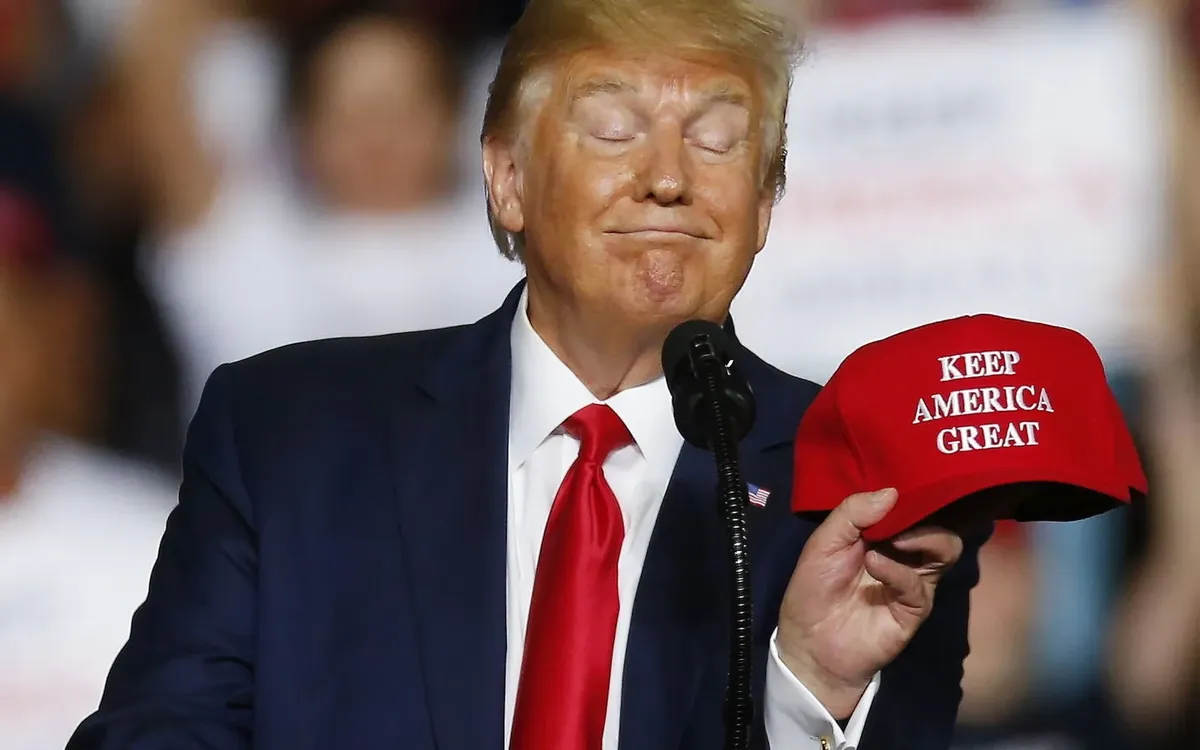
“Not everything is calm in the Danish kingdom”-Shakespeare comes to mind after the sensational messages of the American media (the first was the publication “Wall Street Jornal”) that Donald Trump has been discussing with his advisers the purchase of Greenland, the largest island in the world, which is part of the Commonwealth of the Kingdom of Denmark on the rights of autonomy. Only Australia is more Greenland, but it is recognized as a continent.
Buy or not buy: that’s the question
In the spring of 2018, the president announced his assistants at dinner that he was advised to engage in the purchase of Greenland. Denmark was faced with serious problems of financing this territory. The Greenland budget for two -thirds is paid from Copenhagen - this is $ 500 million annually. “What do you guys think about it? - Trump asked the advisers: "Do you think it will work?" Some of the assistants immediately supported the president, others were silent, and now, when the secret has become obvious, they express the skepticism in the media, but - “on conditions of anonymity”, noting that the issue of buying Greenland was discussed purely in private. How serious Trump's intentions are, the opinions of sources diverge. It is reported that the issue is really being worked out in the bowels of the administration.
In every joke, as you know, only the share of the joke. In the 19th century, the United States held two largest geopolitical purchases. In 1803, Louisiana was acquired from France for $ 15 million (15 states are now completely or partially located in this territory: from Montana to Texas, this is 23% of the total area of the United States today). And in 1867, Russia was bought by Alaska for $ 7.2 million. In accordance with the US Constitution, both agreements were supported by two -thirds of the Senate. But is such a transaction possible in the 21st century?
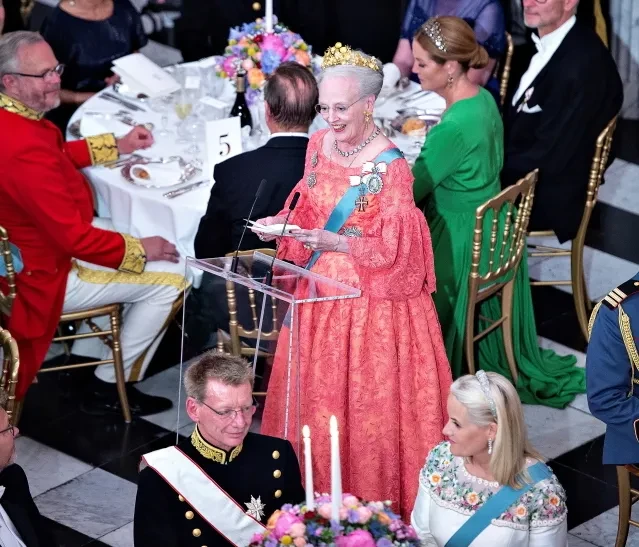
Of particular interest is the fact that in early September Trump will visit Denmark with an official visit, meet with Queen Margrets the Second, and will hold negotiations with the 41-year-old Prime Minister Mette Fredericksen. On this occasion, the heads of Greenland and the Faroe Islands will go to Copenhagen. Officially, the question of buying an island on the agenda is not listed, but after a hype in the American media, to which the Danish politicians reacted with all seriousness, the interest in Trump’s trip to Hamlet’s homeland increased incredibly.
Whether the president will take a checkbook with him, journalists are wondering. The purchase of Greenland would be the personal contribution of the 45th president in history,
celebrates the press, referring to the opinion of sources in the administration. Each US president usually thinks about it in the second, final term. As they say here, the first term is for politics, the second is for history textbooks. True, not everyone can re -elect.
"Airman Greenland"
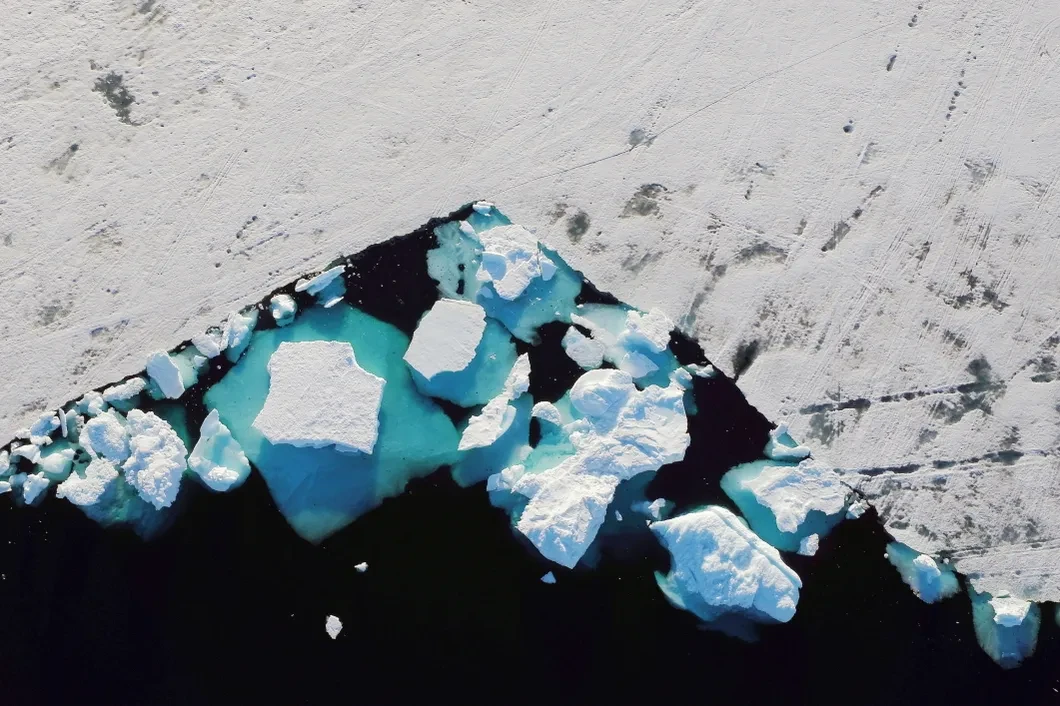
Washington twice tried to acquire an island, 80 percent of which was covered with ice (ice was called "eternal"). In 1867, Greenland, and at the same time, was proposed by Iceland by the then Secretary of State William Seward, who convinced President Andrew Johnson that the abundance of fish and mineral resources on the island could make it valuable investment.
As we know, as a result in Washington, we limited themselves to the acquisition of Alaska.
In the 40s of the last century, President Harry Truman invited the Danish kingdom to sell Greenland for $ 100 million in gold. In the USA it remained a secret. In 1991 alone, the Jyllands-Posten newspaper announced Washington's attempt when archives were declassified in Denmark. At the beginning of the Cold War, Washington strategists considered Greenland not as a tank of pure water, minerals and fish, but as a future battlefield with advice and the place of reflection of enemy missiles. “People just forgot what important place was Greenland in the Cold War,” writes historian Ronald Doel, author of the book “Exploring Greenland: Science and Cold War technology surrounded by ice”. By 1946, the “almost every member” of the Strategic Planning Group of the United Committee of the Chiefs of Staff agreed that the United States should try to buy Greenland, reports in the official note by an employee of the State Department John Hirerson. According to the Pentagon,
This territory is "completely useless for Denmark" and "necessary for the security of the United States."
The official proposal to sell the island for 100 million with gold ingots caused a “shock” from the Danish Minister of Foreign Affairs Gustav Rasmussen. This was announced in his telegram by Truman by US Secretary of State James Barnes. The meeting of diplomats was held in December 1946 in New York. “In Denmark, they considered the proposal offensive,” R. Doel notes. As an alternative to one hundred million dollars, the United States offered Denmark an exchange: land in the Point-Barrow area in Alaska to those parts of the islands that the Pentagon considered to be of great military significance.
The deal fell, but did not spoil the relationship. The American military, one might say, received their own. In 1951, two countries entered into a defense agreement that allowed the Pentagon to build a Tula air base, the northern northern military base of the United States, one of the largest, ever built. Over the years, it was used both by the US Air Force Space Command and the North America (NORAD) Aerospace Defense command for the deployment of an early warning of ballistic missiles.
To make room for the construction of the base, the Danish government replaced the Inuits community. The indigenous inhabitants of the island “unceremoniously sent 65 miles to the north to the village of New Tula, betraying them blankets, tents and“ the best wishes, ”writes historian Daniel Immervar in the book“ The True History of the Great United States ”. By the way, when in 1945 the famous polar explorer Peter Froichen during a performance in Aydakho asked if he was thinking that the United States should acquire Greenland, the answer was categorical “no”. The researcher of the North was afraid that the Inuits would be treated in the same way as the Eskimos in Alaska. The declassified notes of the State Department of those times do not even mention the existence of the Inuits, it is only noted that about 600 Danes lived on the island. (Currently, about 58,000 people live in Greenland, most of whom are inuits, we are more often called Greenland Eskimos, and in the local language they are Calallites.)
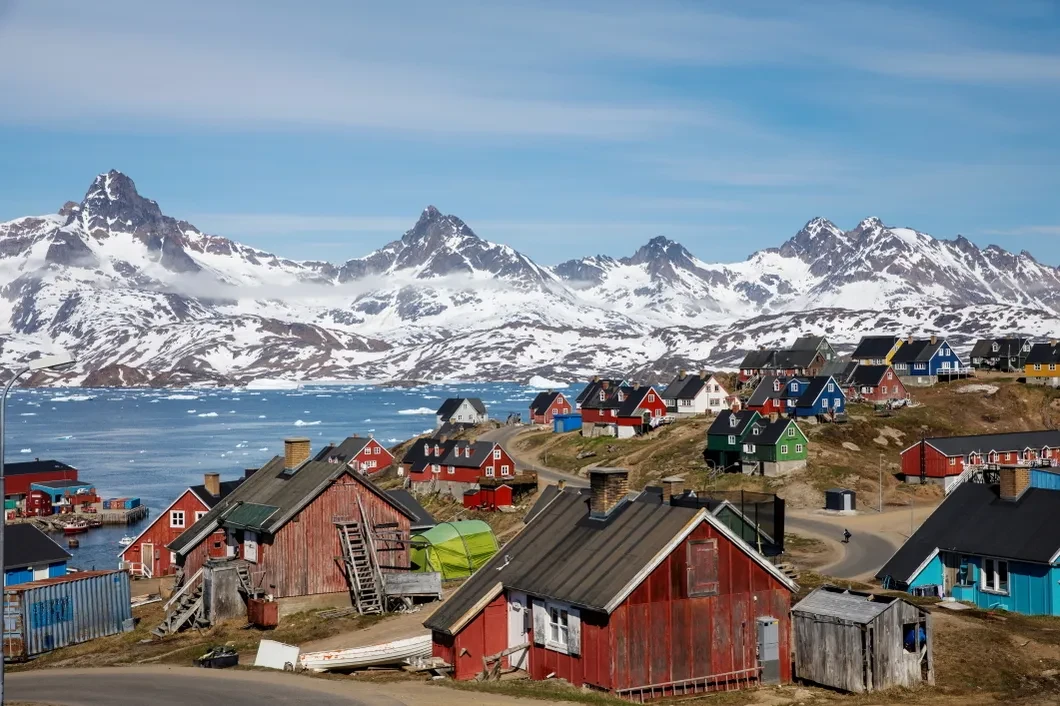
In the article of the magazine Time for 1947, Greenland was called "The world's largest island stationary aircraft carrier."
In the XXI century, the Arctic, instead of being a zone of cooperation, promises to become a zone of tough confrontation of the United States, Russia and China. Greenland, with its stocks of coal, uranium, oil, etc., in the field of interests of Washington. Quickly melting ice for scientists is a threat to climate, for “real politicians” - new opportunities. According to US Secretary of State Mike Pompeo, ice melting can reduce the sea route between Asia and the West by as many as 20 days. The Arctic sea paths can become the "Suez and Panama channels of the 21st century." Ice melting will also facilitate access to island minerals. As the Time magazine notes, historians well understand: all these new opportunities can lead to the fact that the territory around Greenland will become a place of the “political crisis of the 21st century”.
Sell or not sell
So far, the question is not posed . Prime Minister Greenland Kim Kelnzen, a former sailor and policeman, said: "Greenland is not for sale, but it is open for trade and cooperation with all countries, including the United States."
The official Twitter of the Greenland Foreign Ministry also notes that “bargaining here is inappropriate”:
“Greenland is rich in valuable resources, such as natural minerals, pure water and ice, fish reserves, seafood, renewable energy, and is a new border for adventure tourism. We are open to business, not for sale. ”
In Copenhagen, too, are not happy with the idea of Trump. Former Denmark Prime Minister Lars Lyokke Rasmussen noted that this is probably an April Fool, "It is a pity that now is not a season." “If Trump actually considers such a plan, this is the final evidence that he is crazy,” said the representative of the Danish People's Party of Slen Jespersen. "From what never to be, it is the most unlikely, forget!" -wrote on Twitter the deputy conservative Rasmus Yarlov. The current prime minister has not yet commented on newspaper publications, apparently not wanting to spoil an imminent meeting with Trump. A television interview with the Greenlanders are also unequivocal: in the XXI century, the inhabitants of the island cannot be sold with the land, they value their independence, albeit in the form of autonomy.
But, as the American media noted, despite the wealth of minerals, the island completely depends on Denmark. And among the population, especially the indigenous, a high percentage of unemployment, alcoholism and suicide. Perhaps if you hold an island referendum, the issue of sale will not look so unambiguous.
In the United States, Trump's critics note that with him the amount of public debt exceeded $ 22 trillion and continues to grow. Only Greenland’s oil reserves are estimated at 3 trillion dollars.
Where will the president take money for a purchase without piercing a new debt ceiling?
Moreover, voices about the threat of an economic recession are increasingly sounding here. The idea of buying the island is still convinced by Trump's supporters. The Republican Congressman Mike Gallagher considers this to be a "smart geopolitical course." “The United States has an insurmountable strategic interest in Greenland, and this issue should be considered,” wrote the legislator in social networks. Trump has not yet commented on his Twitter, we are waiting for an explanation, what would all mean.