
Translated material
Stalkers of our time
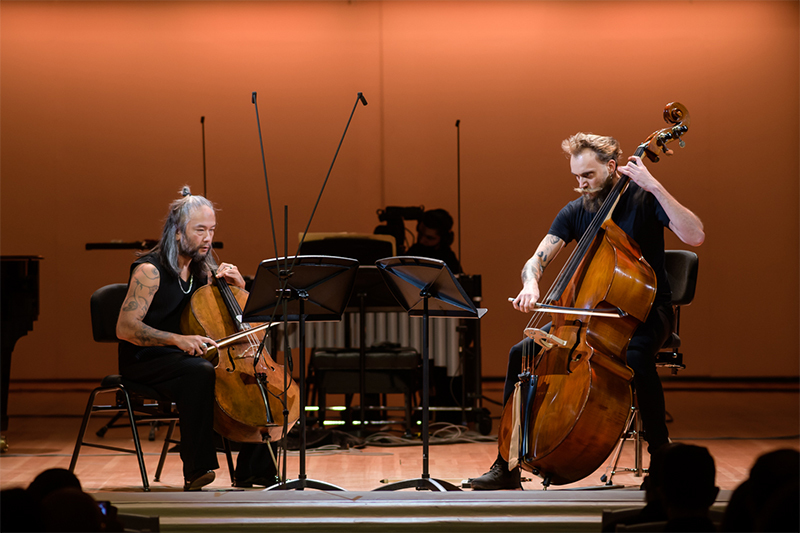
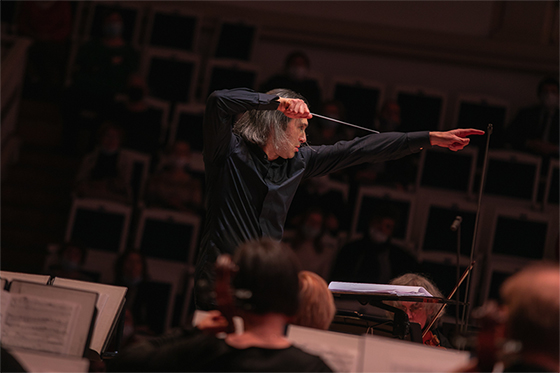
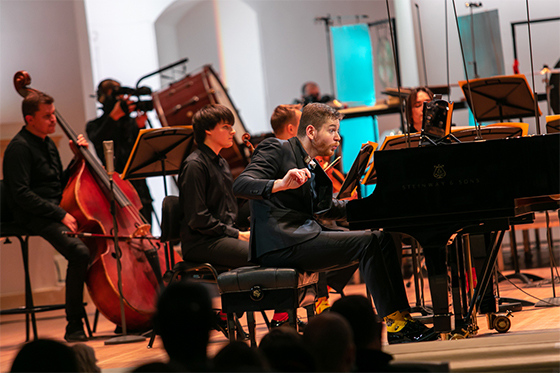
To whom is a feast during the plague, to whom is an unnecessary heroism, but it is quite obvious that for all participants and listeners “another space - 2020” has become a happiness, a holiday and important psychological support. 5 days, 9 programs, 9 groups (including one French), more than a dozen premieres (including world ones), who massively crawled out of their holes composers in creative masks, musicians in red socks (the trend of the season) and - not the most characteristic detail for the festivals of modern music - a parade of status soloists. Andrei Gugnin Star was in the piano concert of Djurdy Liegeti (the dizzying first part had to be bending). Ailen Protachin - in the Anthèmes 2 Pierre Boulez for violin and live electronics (a batch of electronics, no less complex than that of the violin, and is completely incomprehensible, Sergei Poltava, known as Altist, performed the superman in ordinary life). Alexander Rudin - in “Meditation” by Valentina Silvestrova for the cello and a chamber orchestra, such a “Solaris” of late Soviet music, with hopeless existential problems, “bachisms” and harpsichord. Elena Revich - in a virtually woven from rustles and sighs of the "delicate wind of Elysium" for a violin with the orchestra Olga Raeva (this was a world premiere). Yuri Favorin - in the mystical thriller Marco Nicodievich “ Gesualdo Dub / space with an erased figure” for piano and 17 tools.
 © Oleg Singareev
For many years, the artistic director of the festival Vladimir Yurovsky successfully brought modern music from the workshop composer ghetto to the big concert world; The results are evident. And now, in this strange year, to him and the supercrofession team of the Moscow Philharmonic (which includes the gods of the crew organizing saving online broadcasts ), they had to carry us all into the half-forced zone, a limited 25 percent leaves in the hall, abbreviated as musicians on the stage, compassible borders between states, Patsi tests And a whole bunch of continuously updated circumstances. The festival program has repeatedly redrawn and pierced, soloists and premieres flew. Perhaps the most implausible miracle was the arrival of the legendary Parisian Ensemble Intercontemporain , founded by Boulez in 1976 and has since touring in Russia or two or three times. The French, which made up the most diverse program from composer names of varying degrees of fame and unknown, came in a heavily abbreviated form (eight instrumentalists plus Dylan Corley Conductor), but conquered sound, freedom and at the same time incredible perfection. Bird solo trumpeter Cleman Sonya ( " Wild Winged - One ” Lisa Lim) or brutal rocker duet of the cellist Erica -Maria Couturier and smuggler Nicolas Cross ( “ Soaring Souls ” by Bernhard Gander) was enough for new worlds to open. And even the work scenes, which quickly rearranged the puppers and microphones between the works of the puppies and seemed to be embroidered black statists from the performances of Katie Mitchell.
 © Oleg Singareev
Of the local experts, all three Moscow ensemble traditionally participated in the festival - Mass, Gam and the Studio of New Music. They had to play completely for a handful of amateurs (according to the new rules, only 24 listeners were allowed to be in the chamber hall of the Philharmonic, where their concerts took place), but how many composers managed to encourage the fact that their music sounds even in our difficult time! I must say that the 25 percent audience at the festival concerts responsibly clapped for four, without this feeling of the living room it would be very difficult for musicians to play (for example, if only a camera for online broadcasting remained in front of them).
Of the more crowded groups in the scale permitted by Rospotrebnadzor on the stage of Tchaikovsky’s hall, Questa was present Musica and the Moscow State Academic Symphony Orchestra Pavel Kogan. The latter, led by Philip Chizhevsky, coped with the Russian premiere of “Eighteen Episodes” by Sergey Nevsky, for which he had to master the game on the foam and an empty metal canister. The world premiere of the more disciplined works of Alexander Manotskov (“Presence No. 2” and “Canon In D ”) took over the Musica Viva chamber orchestra with Alexander Rudin behind the remote control. To open the festival was entrusted to the nimble for a novice - the Russian national youth symphonic orchestra led by Valentin Uryupin. Closed - the artistic director of the festival with his HASO.
 © Natalia Surnina
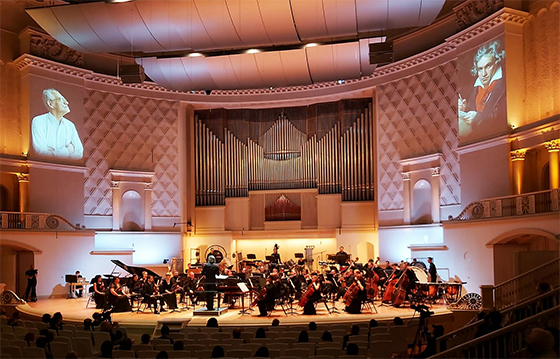
Yurovsky said that if, with emergency overlapping of programs, it was not possible to “save” one or another essay, then the composer name “saved” the composer - that is, they chose another opus of the same author to execute another. So on the final evening, some kind of spectacular brand new “C-dur” (this is the name) Alexei Retinsky and the terrible “Foucault pendulum” Vladimir Tarnopolsky got into the final evening. The latest music of the festival was Alexander Vustin’s dedication - a concert for shock and chamber orchestra, beautiful, smart and amazingly positive music written in 1984. Two portraits-Beethoven, whose 250th anniversary in this ill-fated year, could not really be celebrated, and Woustin, who became one of the victims of the current pandemicia, was displayed to her finale on the sides of the stage.