
Translated material
There was no sadness
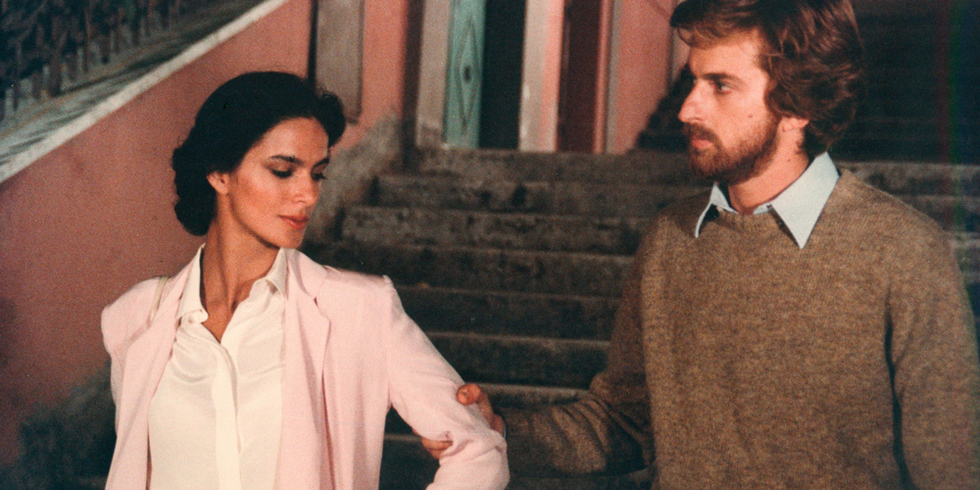
From November 8 to 17, the Moscow Cinema Pioneer will host a retrospective of Nunny Moretti films , the author of sad comedies about the policy of relations and about relations with politics. Maria Bikbulatova - about the eternal return of one (and effective!) Reception in deceptively easy films of the director.
There are directors about whom it is customary to say that they have been shooting the same film all their lives. This similarity becomes a method that each author uses differently. In the case of Moretti, the structure repeated from the film to the film is used as a cognitive mechanism: with its help, the director explores reality, while an unexpected sharp maneuver in this mechanism is absolutely indispensable.
His favorite character, as a rule, is an unlucky mentor who must direct, realize something great and holistic, but is unable to cope with himself. Teacher, priest, psychoanalyst, director or producer, who, despite all their zeal and aspiration, get continuous absurdities. Absolute films and absurd sermons, insolvent lessons, inappropriate, awkward curiosity (the heroes of Moretti love to look through the windows or annoy the passers -by), when the observer is visible and he confuses everyone with their presence - all this looks ridiculous and extremely self -identical. The heroes of Moretti, which he most often plays, almost always has touching addictions: the priest in the Messa is over, a teacher of mathematics in Bianca, a director from Golden Groce - a sweet tooth, who are versed in desserts, like a sommelier in wines. The love of good shoes, for romantic Italian songs, which must be sang loudly in the car, or for slot machines as a way to relieve stress (however, this tool never works) ... However, not only the weakness of the character, but his whole story can be ironic.
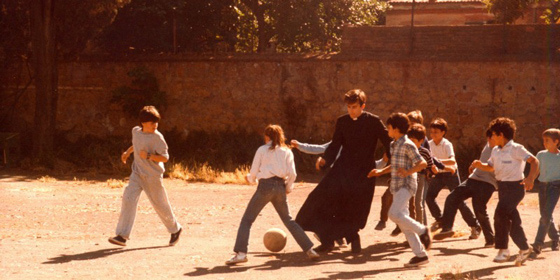 Frame from the movie "Mess Cums"
This irony creates the illusion of the safe space of frivolous comedy. However, at some point, the director suddenly ceases to joke and becomes extremely serious. This transition to the painful and tragic occurs without any preparation, and for several minutes the viewer falls into the uncomfortable space of uncertainty, where it is difficult to understand whether it is another joke, only this time unsuccessful, or something important happened. The mesanthropus is by no means a mizantrop, he does this maneuver not in order to enjoy our discomfort and confusion, as, say, Lars von Trier. With the help of this maneuver, he finds us by surprise, preventing us from taking a static position at a safe distance from what is happening on the screen. Protective mechanisms, which usually allow us to slip away from important and global, and therefore almost always painful and energy -intensive questions, simply do not have time to work. So we find ourselves in a situation of active questioning with the director.
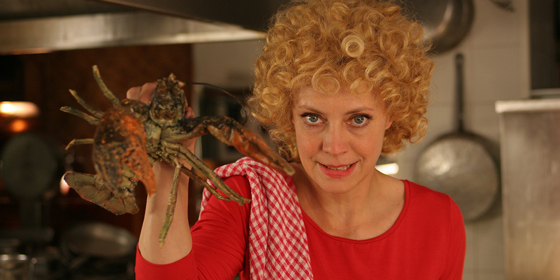 Frame from the movie "Kaiman"
In most of the paintings of Moretti, we will find the same (see above) a cute, slightly crazy character, from the very beginning of the alarming. The hero’s frustration is inevitably increasing: internal problems are deepened, and there is more and more responsibility. These two poles are moving away all the time, a vacuum forms between them, where the hero exists. The young priest at the Messa Completed receives a new parish, which he must get out of the decline, more and more people are turning to him. But at the same time, his family is destroyed, his father goes to a young girl, his mother is bad, and her sister's relationship with her boyfriend looks suspiciously frivolously. The producer from Kaiman, whose company is on the verge of collapse, starts a large -scale and risky project and at the same time is divorced with his wife, very trying not to injure the already nervous and gloomy sons. The psychoanalyst in the “son’s room” is not able to help his patients, because he himself finds himself in a difficult situation, and all his thoughts rotate around what he did not do what he should have done to avoid tragedy. This axial figure duplicates the macrology of the story at the level of the subject: a funny, clumsy person always contains potential tragedy, to which he passes so lightning speed that we do not have time to notice the very moment of its transformation.
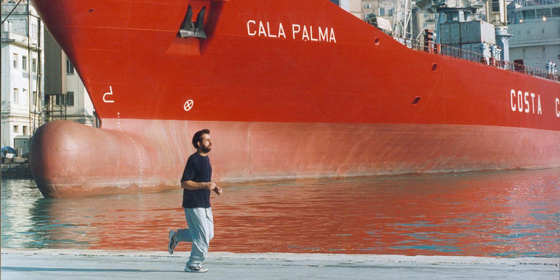 Frame from the movie "Room of the Son"
The constant repetition of such a dual structure - a narrative, always unexpectedly changing the tone from the ironic to a serious, with a tragicomic central character - is used as a cognitive apparatus, with the help of which he tries to comprehend the problems personally, but concerning the majority. For example, in “Bianca” or “Messa is over”, Moretti asks the question of why people who love each other part, no matter how much a feeling; What is this elusive moment when a gap occurs, and why it is not possible to avoid it, despite all the will and desire; What mistake do we make again and again? In Golden Drevces and Kaiman - reflects on what it means to make a movie; How to manage all this process and people, when the director himself abides in creative uncertainty, and it is necessary to portray firmness and determination. The work of the Red Penalty is built at once around several closely related problems. What does it mean to be a communist (and Moretti, as you know, is a politically active figure, he was the organizer of protest against the Berlusconi regime) and wish for a different future for everyone? Why are we doing what we are doing? And why do we always miss the main thing? Where does fear come from, inhibiting all our most important life projects?
Probably, the seriousness with which Moretti approaches all these problems is special because the path to it is laid with humor. But the mistake would be to say that the comedy for him is just an auxiliary tool, a trick. Moretti’s films are by no means gloomy, at some point an irrational vitality includes in them: Moretti is not a defeator, and the recognition of failure for him is part of the ongoing struggle and resistance. Anger and ruthless sarcasm in these films are replaced by the incomprehensible sense of kinship and a warm community with the heroes. The so -called simple joys for Moretti are not sugar added to a bitter pill of life, they are a way to feel reality in its entirety, like a glass of water, which Soretti himself eagerly drinks in the final of a “expensive diary” - a film dedicated to the struggle of a directive disease.