
Translated material
Cannes-2018: postscript
The closing ceremony of the Cannes festival was full of awkward moments. The invited to present the prize for the best female role, Asia Argento, immediately remembered Harvey Weinstein with an unkind word. "20 years ago, at this very place, he raped me!" The actress shouted into the microphone, her voice trembled. The presenter Eduar Ber, trying to be witty, let a couple of very inadvertible jokes-so, about the man who took the award for the “image and speech” Jean-Luke Godard, for some reason blurted out: “What kind of squinting Monsieur is stomping on the stage?” Finally, the preceding second acting nomination, the protracted and uninhabited pantomime Roberto Benini sounded a sad echo to his signs and jumps of twenty years ago (“Life is beautiful” was awarded the Grand Prix in 1998), when the “palm branches” were distributed by desire, and not by the command of the polythevativ, protruding on behalf of the all-kinds minorites .
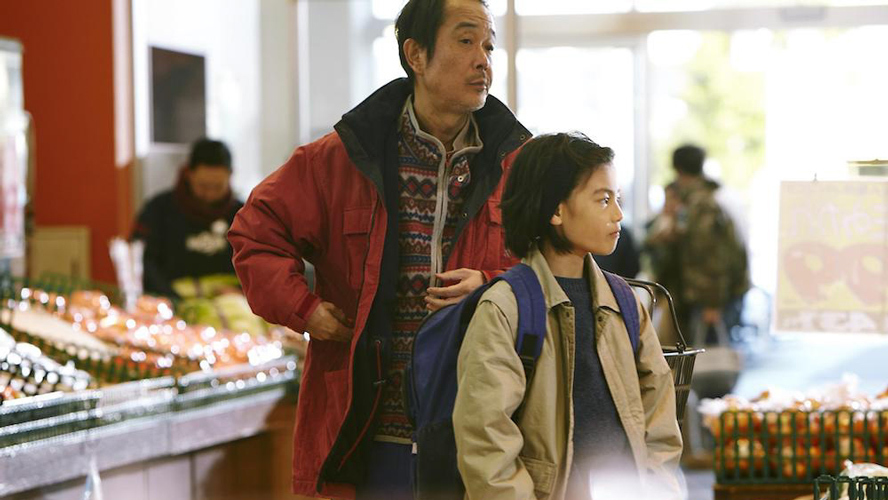
Now about the decisions of the jury. A quiet, literally lulling movie (fortunately, with a slightly less cozy ending) - “store thieves” Hirokazu Koraeda - the option for the highest reward is not the worst, but deeply compromise. Apparently, the jury could not agree and decided to give the prize to the "third person." The history of a large family, which produces itself with thefts in district supermarkets, is certainly not devoid of subtlety, avoids straightforward conclusions and frank speculations, but with kindness, as always with Koraeda, too much. Jean-Luk Godar, for whom this year was cowardly invented by a special “palm branch” (for merits in the difficult matter of rethinking cultural codes), asked to convey about the following about the following: “We are always not sad enough to change this world for the better.” Great review of the winning movie!
 Frame from the movie "Under Silver Lake"
The Grand Prix Lee Lee and his humor “Black Clan” is evidence that on the Western Front of the Interracial War, alas, without changes. The Cannes reported after the Oscar, every injustice in real life, the establishment made an atoning sacrifice in the field of cultural. In general, the US cinema this time was represented in Cannes sparingly (thanks to French legislation): at many shows of Thierry Fremo justified before the public - there is, they say, other countries on the map. Another American film, “under Silver Lake” by David Mitchell, turned out to be much more interesting and inventive than the winner-meta-carcasses through years and styles according to Los Angeles of our days with a steeply cooked conspiracy therapy, but now is not the best time for a postmodern game in styles and quotes.
 Frame from the movie "Capernaum"
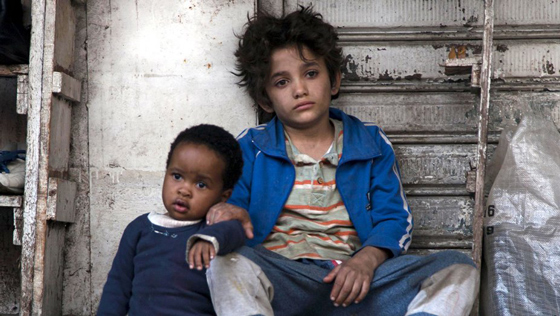
Kapernaum Nadin Labaki, who received, to relieve film critics of all countries, just a jury prize, is another example of an unscrupulous Poverty Porn , a trigger who is working out at any festival. The more champagne is drunk and the caviar is eaten on the sidelines, the homeless the children in the distant Lebanon. So, even if they were their lawyers (the lawyer of the protagonist, a nine -year -old boy who sued his parents for the fact that they had raised him, play Labaki herself) will leave Riviera not empty -handed.
The prize for directing Pavel Pavlikovsky (Cold War) is essentially the only prize without political connotation. “War” is an ideal cinema in which aesthetism threatens to turn into formalism, but the horrors of Stalinism outweigh any directorial delight, and even the most aseptic plans take the viewer by the throat.
The Irony Prize for the best script (it was divided by the “Happy Lazar” Alice Rorvaker and “Three Persons” by Jafar Panahi) is that in both films the script is clearly not the strongest component. As soon as the heroes of the fairy -tale world of Rorvaker, lovingly assembled by Helen, Louvar from bright light and the cool shadow of the Italian hinterland into an enveloping granular fumamom, begin to say - magic dissipates, giving way to a rough social grotesque. Panahi is not important at all-a real ethnographer-professional is always limited to the role of the observer.
 Frame from the film "Dogman"
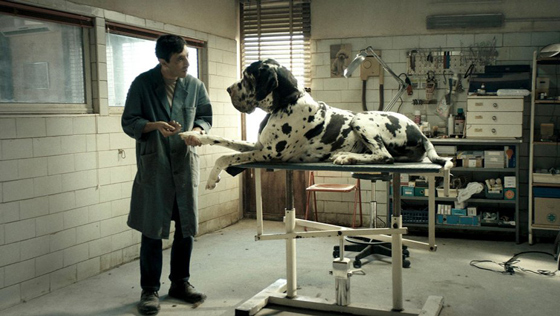
Now about acting prizes. “Dogman” is a criminal story that is already familiar to Garron in the scenery of littered Naples, but in the new film the director did not limit himself to the urban texture - therefore, the “Soprano clan” here turns into strained humanism. One thing is encouraging: the hero of the Fontet, who received the “branch” for this role of a small person, rebels not against the system, but against the nature itself, which deprived him of biceps; Garron still remains within the framework of the genre, without claiming the manifesto.
 Frame from the movie "Aika"
The "Aika" by Sergey Palavoy maximum honestly fixes the humanitarian catastrophe in the post -Soviet space. Moscow does not believe the tears of visitors, and does not even notice illegal immigrants from the former republics at all, people-teni survive here (or do not survive). The awarded jury Samal Eslyamov here-the Dardennovskaya Rosette twenty years later, but the stylistically Palace inherits Dardenne somehow too diligently.
 Frame from the movie "Girl"
Finally, the "Girl" beloved by many Russian critics from the "Special View" contest, awarded the Golden Cam for the best debut (as well as Queer Palm ) and noted for acting achievements. The story of the floor of the floor of the teenager who dreams about the ballet career is told with restraint and with surgical accuracy - no medical secrets, cut off, sewn, sewed.
Without prizes, of course, the best films of the festival were left - the real masterpieces of “Burning” Lee Chkhan Don and “Wild Pear” Nuri Bilge Jaylan. Existential dramas about the illusoryness of human beliefs, about the conflict of fathers and children who do not cancel any more spectacular social problems, about the fear of living, in the end. Obviously, in the code of new sharpened morality, personal pain still retreats before abstract public benefit: it is not enough just to be unhappy, your misfortune should be useful to progress, bring its celebration closer.