
Translated material
In the spill
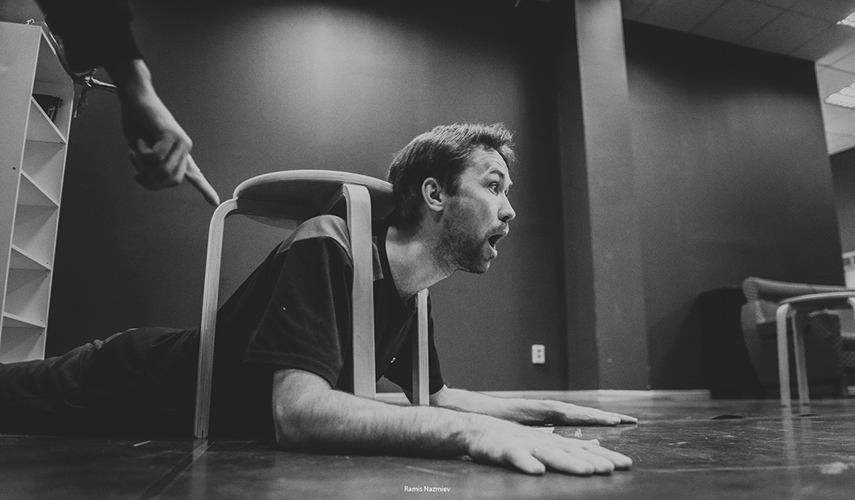
“Once you were outside the house, at this hour, in this place, it means that you want to get something that you do not have, and I have something, because I have been here before you and I will be here after you, and even this hour-an hour of a fierce battle between a person and a beast-does not scare me.” Kolits - you will not believe - sounds in the courtyard in the center of Kazan. People sit on folding chairs, stand along the walls, hang on fire stairs. Other people take pictures from the windows as a seller and a buyer from the play “Lonight of cotton fields” accept various larvae: a business suit conveys a microphone with a spectacular go -go girl , a red cap passes her nun. The performance, staged in just five days, is included in the program “City-Art Podium”, which the Living City Foundation has been holding in the capital of Tatarstan for the second year in a row. The main interest of this festival is the theater outside the theater, the theater outside the theater building. In the game room of the Globe Children's Center, four artists play a fairy tale composed along with director Ekaterina Gorokhovskaya, one of the main specialists in Russia at the Baby Theater, that is, the theater for the smallest. Children are sitting on small chairs and commenting out loud. The artist knelt down, puts a stool on his back: “The old one crawled out to the shore ...” “... a turtle!” - shouting small spectators. The performance is no less - about death: together with the prince, the main character of this fairy tale, children meet with an arrogant lady who forever takes the living.
About the same, but in another tonality and in another audience, there is a conversation in the ancient attic of the Kazan Art College. The playground is burned out as a crime scene with a striped ribbon, behind the fence - an iron bed and a shock installation. The windows are covered with black polyethylene, one is open: the sun sets for the Kazan roofs. And here are two, a saxophonist and beauty, lead a deadly game. Julia Aug set up the play by Romanian Mateya Vishnek under the intricate name "The History of Panda Bear, told by a saxophonist who has a girlfriend in Frankfurt." Casting the experienced novel Erygin and Diana Safarova, and dozens of cameras are aimed at Diana: the Living City Land Leader, the Kazan star and daughter of the head of the presidential administration debuted in this performance on a professional stage. Yes, it is on a professional scene, this is not a reservation. Children's center, gateway, attic - the same spaces of a professional theater as special houses with a stage and a buffet. And even better. Thus, the organizers of the festival, the Living City fund and the curator Oleg Loevsky believe: the spaces with a special, unique atmosphere were a starting point for them. At first there were spaces, then plays and staged teams were selected under them.
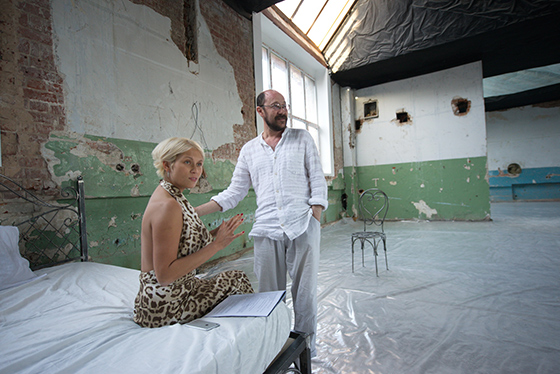 © Ramis Nazmiev “The History of Panda Bears told by a saxophonist who has a girlfriend in Frankfurt”
This company spends the laboratory in Kazan for the second time; The success of last year's laboratory led to the emergence of a new place in Kazan - the residence of the creative industry "Staff" and the creative laboratory "Corner". Behind these tricky definitions, a bright openspace is hidden, where a gallery, a discussion platform and cabinets are fragmented by glass doors, and a small theater “Black Cabinet” - the Living City fund, which controls the “angle”, remains to be filled with performances. Some of them will appear when the sketches of the laboratories are brought to mind; Another part will appear from the parallel project of the fund - Modern Drama. In a word, the “living city” expands the boundaries of the theater with all means available to it and extremely intensively: taking it out of theatrical walls, leading to the performances of new spectators, putting modern drama, inviting young directors - if there is a deficit in the theater, then to fresh personnel. A team of young directors from Switzerland arrived at the current laboratory, the landing was initiated by the Swiss Culture Council Pro H Elvetia . One pair of directors put Harms in the Youth Theater; Kolitsa on the street spectacularly set Karim Bel Kasem; Miriam Walter made a dashing virtuoso adaptation of the script of the film by Jarmush “Outlaw” with artists of the Kamal Theater. Another attempt to swim the theater for buoys was to contact the audiences, especially sensitive to falsehood, are the smallest children and adolescents; The theater usually avoids them. In addition to the Baby-performance of Ekaterina Gorokhovskaya, the project of director Radion Bukaev with students of the local theater academy was presented, who showed Chekhov’s stories from school ackheast of teenagers.
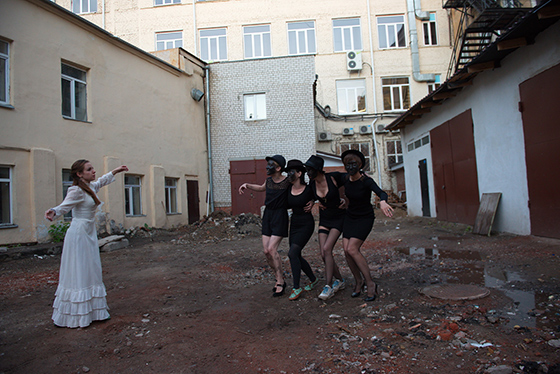 © Ramis Nazmiev "alone of cotton fields"
Something did not succeed, something did not work out quite, but in general the “living city” does its own business regularly-it develops the Kazan public and the Kazan professional community itself, pushing the limits of the theater. Which, by the way, in Kazan are outlined differently (or one might say, and wider) than in Russian theatrical capitals. This was clearly shown by another theater festival, which ended a few days before the laboratory - Nauruz, the International Theater Forum of the Turkic -speaking countries. It was played by Kazakhstan and Kyrgyzstan, Mountain Altai and Bashkortostan, Türkiye, Azerbaijan, the Republic of Sakha - plus, of course, Tatarstan itself. The theater, which is shown by Nauruz, is a naturally melting boiler, which re -melting archaic and innovation, simple -mindedness and sophistication, Russian school and national classics, Lithuanian metaphorism and Turkic epic; On the stage, Islam, Christianity, shamanism come to the consent. The laboratory, which followed the festival, strengthens at times the impression that theatrical Kazan makes, without fear, looking beyond. It is open to the unknown and is full of curiosity for the new. In a stranger, unfamiliar, she is looking for a close one. In herself, she finds a unique one. An amazing impression if you look at the capital of Tatarstan from Moscow, where the center officials clung to the culture with a dead grip and strive to return it to the post -war boundaries.