
Translated material
Electric ladies
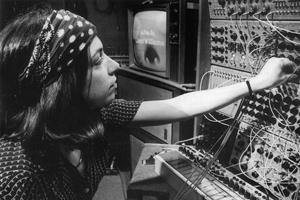
The stereotype that electronic music is not a female business that they like to confirm by arguments like “look at how few women among the WARP label or participants of the Sonar festival ” are easily refuted by the fact that it was women who stood the cradle of electronic music. These are very different people with unique destinies and characters. Among them were owners of analytical minds, talented engineers and programmers, and there were pure musicians for whom the synthesizer was nothing more than another tool. Some were talented managers and effective propagandists of their craft, while others did not even bother to really record their own works. Some made a successful academic career, others sought recognition and commercial success, the others lived as her lodges and shunned all publicity. Perhaps only one thing united them: without them, electronic music in the form in which we know it today, simply would not exist.
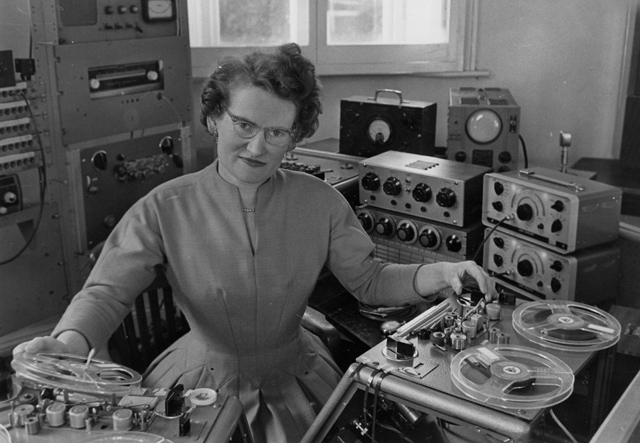 1. Daphne Oram
This story needs to start, of course, with a bbc sound laboratory Radiophonic Workshop , or rather, with one of its founders of Daphne Oram, or Miss Marpl British Electronic Music, as it was often called. Daphne, which from childhood was carried away by the nature of sound, physics and engineering, could well count on the career of the classic composer, but to study at the Royal Musical College preferred work as a sound engineer at the BBC . There, she not only recorded classic orchestras, but also experimented with film equipment and slowly mastered the first sound generators (synthesizers in the form as we imagine them now, in the forties were still simply). These skills, as well as a hobby for a modern vanguard, made Oram an indispensable employee when the BBC set up not only to record music and voice, but also to create a sound design for popular science programs and radio supports of their own production. The iconic work for the oram was the soundtrack for the radio version of Jean Girod Amphitrion-38-this was the first case of public use of electronic music in the media. Soon after, a whole laboratory called BBC opens under the sound designer tasks. Radiophonic Workshop . Daphne Oram stands at its origins, but less than a year after the creation, BBC leaves for a rather absurd reason. Sanitary norms prohibited anyone to work continuously in the laboratory for more than six months, and this schedule fanatically devoted to their business did not fit. Having left the BBC , she founded her own Oeramics studio, where she was engaged in “applied music” - soundtracks for advertising, television, radio, cinema and even voiced dance lessons for children who became her only commercial releases at that time. Her most noticeable work of that time was the music, or rather, electronic special effects for the horror film “innocent” directed by Jack Clayton. However, the need to engage in applied projects Daphne always weighed, in the warehouse of mind and temperament it was more likely a scientist. She taught, wrote books, developed a visual synthesizer, also called Oramics , composed “On the table” (the archive of the recordings of Daphne Oram was published after her death), at an advanced age learned programming and made a “soft” version of Oramics , but the public life and even more so show business shrugged. Once, “two of some famous musicians from Liverpool” came to her in the rural studio-according to the description of Daphne herself, who were very similar to Lennon and McCartney, who in the mid-sixties actively searched for new sources of inspiration, but the hermit simply did not know who it was.