
Translated material
Poetics against consciousness
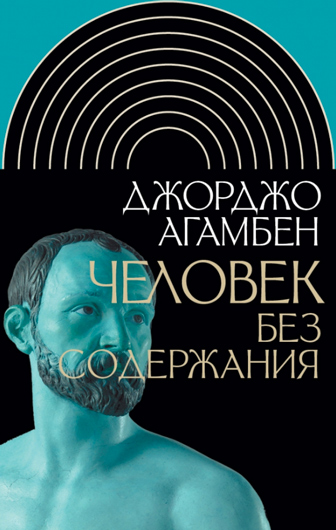
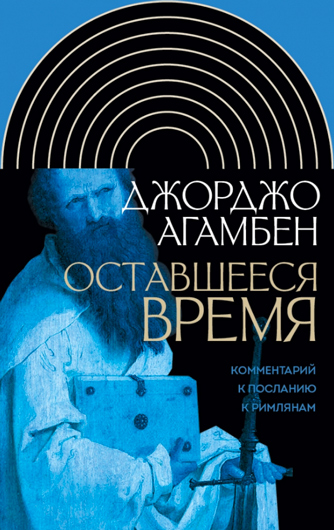
Books, in the original edition, divided by three decades (1970 and 2000), come out as if a two -volume. About the difference and the need to remember that every decade is the abyss, the reader is saying the characters on the cover (unfortunately, nowhere in the book are not signed): the self -portrait of Van der Shardt (1573) and the apostle Pavel Luki Luki (1520) - the designer did not think that the sword of the apostle should be in his right hand.
Books are created not only in various eras, but also in various companies. “A man without content”, a study of how the aesthetics killed art is written in the Heidegger seminar, through the master’s thoughts about nihilism as the essence of European civilization. The book about the apostle Paul was created in the wake of an equally powerful event than the activity of the late Heidegger - discussions about something else and a word as an institution of another: around the theses of Levinas, the controversy of Derrida with Levinas (who died in 1995), replicas of Badya and many other contexts.
 © New Literary Review, 2018
Heidegger, deprived of the opportunity to teach in Germany for decades, met a generous technique in France: that the language of being could suddenly sound, but to sound masterfully - this was the apology of man after the disaster, the opportunity to justify the study of a person (anthropology) as a new measurement for the world. It was a radical apology of the humanities and their own radical criticism at the same time, and between the revolutionary student 1968 and the year of publication of the first book, Agamben survived the entire paradoxical of the status of the language. Language is the essence of a person that allows him to take the world, but the world requires a person always something more than just a relationship comprehended by anthropology.
In the 1990s, after the fall of the Soviet bloc, the discussion, which ended with Derrida’s book “Farewell greetings to Emmanuel Levinas” (1999), were built around how to accept not only the being of another, but also the time of the other. It is necessary not only to establish a hospitable reception to representatives of other crops; It is necessary to perceive and accept their ability to change in time as a necessity for our thoughts.
In both cases, the questions were posed by radical. The Heidegger seminar found out how it is possible to save in a world in which the production of things and values makes it impossible to save: each new work refers only to the previous, and not to the source that would only substantiate its production and necessity. In the dispute around speech and the other, it was found how it is possible to maintain the position of another, a critical position, when all speech, every language has their own life, their own “century”, and what to do after the end of this century.
 © New Literary Review, 2018
Of course, both books of Agamben are intertwined through gaping for three decades. Agamben considered aesthetics as a private occupation in relation to the generic essence of man: it cannot reveal this generic essence, but serves to invest a passionate attitude to another, more precisely, traces of his stay. That is why the aesthetics is doomed: it always chooses among things not the most economical, but the most wasteful, whether it be luxury, kitsch or enhanced observation. So the position of the other in the era of aesthetics is preserved, but not as critical, but as obviously unattainable: passion never reaches its object, but spans itself in often random speech. The end of the era of aesthetics can be allowed for the first time to carry out social criticism, not falling into what Heidegger called “chatter” or “pals” in “Genesis and Time”.
On the other hand, the speech of the Apostle Paul is not for Agamben only the establishment of a new order of religiosity, which allows you to relate to another without loss of tension of mystical attention or eschatological expectation. This is not only Paul transition from simply faith to the trinity of faith, hope and love. Pavel Agamben is a researcher of sailing, the presence of the Almighty, already saving the world by the constant production of the generic essence of the world. Recalling himself as a Creator, the god of the apostle Paul all the time creates the world as the produced generic essence of all events: any event then should save the world from commodity fetishism.
In such an sophisticated plexus of Heidegger's criticism of nihilism with Marxism, the philosophy of language and psychoanalysis, it is important to note one thing. Another Agamben is not at all the other Levinas as a condition for our genuine existence or other Derrida (criticizing the idea of “genuine”) as our guest or hospitable. This is another, who committed it with his own separation, separately, defeated sectarianism. This is why the apostle Paul as the other for his own and can be “called up” to respond to the calling of God.
The God of Agamben, of course, is also not being, but “present”, goes into history in order to end his own sectarianism. Here Agamben acts as a Marxist: history can be completed only thanks to the class consciousness, which allows everyone to end their own individual - but this becomes possible only to the extent that the revolutionary class has already built itself in history, answered its calling.
So, Agamben acts in the interpretation of faith as a traditional Marxist: it is important for him to contrast the “false consciousness” as an anomy, the lawless legality of the old religions, the Farisanism rejected by Paul Paul - and the word of Pavlova as a moment of the revolutionary consciousness of the Gentiles, the Jews and Christians. The apostle Paul also inspires him as a romantic subject inspired Marx himself. Here, of course, the Russian reader can recall the hatred of Leo Tolstoy to the Apostle Paul as a romantic subject that distorted the Gospel.
Neo -Marxism is almost not present in the book about the Apostle Paul: there are no effects of consciousness that give rise to the plurality of practices. One of the main theses of Agamben, about the absence of the Apostle in the world and in the world of real Christianity, “splitting faith” for conviction and trust, according to the plan of the book, should, of course, undermine the position of capitalism based on this distinction within professional self -realization: capitalism will never confuse the work and capital, convinced work and lending (literally: trust, Credit ). But neo-Marxism, without questioning the attitude of labor and capital, has called into question professional self-realization as the key to explaining the latest history, whether it is the concept of “interpellation” of Altusser or the “divided sensual” RanSier or the history of the working class E.-P. Thompson. Agamben clearly argues with neo -Marxism as a Catholic with Protestantism, referring to Epiphania (outbreaks of the Divine presence) right here and now, right in you and in the place of your stay, unlike Protestant epiphany in the text of the Bible external to you. The moment of revolutionary consciousness and the baroque counter -reformation luxury of epiphany coincide, and the apostle Paul again on the way to Damascus.
And just Agamben's early book on art is the key to understanding such a coincidence. For Agamben, “Poetry” and “Practice” (“Paisyes” and “Praxis”) are not two fundamentally different manifestations of the human spirit: he is afraid to fall into idealism, although such an understanding would correspond to ancient and not just German idealistic philosophy. Poetry for him is exclusively will, “the unity of theory and practice” (p. 106), the rapid coverage of the conscious manifestations of man’s self -reproduction of the generic essence of man.
Then Marxism turns out to be a minimal “poetics” of such “poetry”; At the same time, the generic essence of man acts as a form, and human consciousness as material. But in the end, Agamben had to justify the consciousness not only as material - and therefore after three decades he turned to the apostle Paul, as he had previously turned to the section (co -author of one of the works), the philosophy of power and the philosophy of love. It is a pity, the key work of Agamben on the philosophy of love, such as “Friend” (2007), will probably not be translated soon.
Agamben is extremely useful, because it is not one of those authors who like to win by any means. His strategy is not a victory over victory, not an increase in the rates of historical necessity, psychoanalytic “investment” or social practices. Agamben constantly returns to the experience of Benjamin, who saw a mechanical uniformity in such a victory over the victory, the action of a dwarf-shahmatist, who plays for a wonderful mechanical doll hidden under the board, and contrasted this mechanics with an epiphany of the Kleuevsky new angel. The angel is the minimum poetics of history, in which the poet has something else to say about the future, and the apostle Paul is about his own past. From each chapter of both books we learn new, even if it seems to us that we all know about Marxism, Benjamin and the twentieth century.
J. Agamben. Man without content / per. With Ital. S. Ermakova. - M.: New Literary Review, 2018. 160 p. (series "Intellectual History")
J. Agamben. The remaining time: a commentary on the message to the Romans / Per. With Ital. S. Ermakova. - M.: New Literary Review, 2018. 224 p. (series "Intellectual History")