
Translated material
But Herman is not all
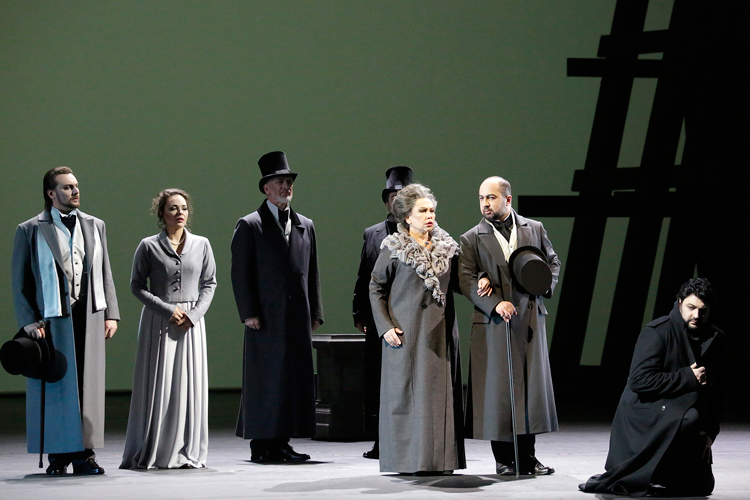
Previously, everything was clear with the “peak lady”. She walked for decades in the version of Boris Pokrovsky and seemed as an integral part of the Bolshoi Theater as eight columns of his portico. Then new times came, and a feeling of a certain hysteria appeared. Not a single name is so often returned. Everything is looking for and looking for his “peak lady”. For the third time, over the past decade, he releases a new performance - and each time referring to the bright author's statement of the venerable dramatic director. At the end of 2007, Tchaikovsky’s opera on the new stage (the historical then was closed for reconstruction) was timidly set by Valery Fokin. Three years ago, the updated scene was tried on the famous voluntarist, but already in order to grow old Amsterdam-Parizh performance by Leo Dodin. And now, not losing hope, Bolshoi made a bet on Rimas Tuminas, a couple of years ago quite convincingly debuting in him “Katerina Izmailova” .
This is such a special opera in which you always rest against the first question - who is Herman?
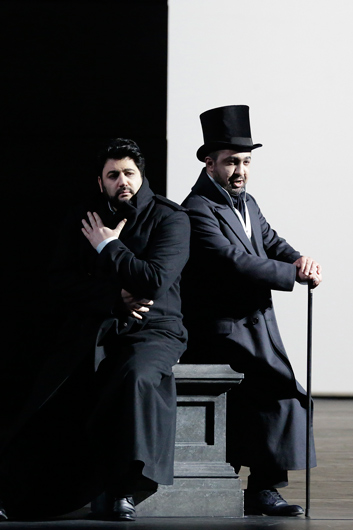
The handwriting of the master and his team is too expected. The next conditional and intelligent decorations of the same Adomas Yatsovskis, the strict gamut of the costume artist Maria Danilova, and the sad groups of the lyceums, apparently once and for all symbolizing the ridiculous masquerade of this evil world, migrated from Katerina to his current production. This time, which is responsible for the mobility of the choir and Mimans, is called not only a choreographer, but also the director, which is completely fair: all the swaying of artists on stage is an exclusively dance property. Others, however, cause some confusion - for example, the circle of hail girls with a yoke rolled on their wheels with a piano or kindergarten jumping of soloists booty on the table and back during the performance of the Gamera. Most of the staging work is noticeable in the intergesty “Sincerity of the shepherd”, which begins with exquisite hints of the opera focuses of the Elizabeth time, and rather ends with the movements of the masses from the Olympic stadium ceremonies.
 © Damir Yusupov / Bolshoi Theater
In general, we can say that mass scenes are worked out by the muscular-multiplicingly, and it was decided not to bother with solo. Tuminas himself does not promise anything like that. “Our goal is to tell a story, but to leave the particularly undercomed,” he reports through the booklet and really gives publications to the conductor. Which, thank God, has something to say.
The conductor's work of Tugan Sokhieva significantly compacts a liquid consistency of the performance. A beautiful, muscular orchestral sound, dramatic details, confident piloting, attentiveness to soloists - all this is. However, the “peak lady” is such a special opera in which you always rest against the first question - who is Herman? Neither the conductor, nor the director, nor anyone else will be able to get around this question.
 © Damir Yusupov / Bolshoi Theater
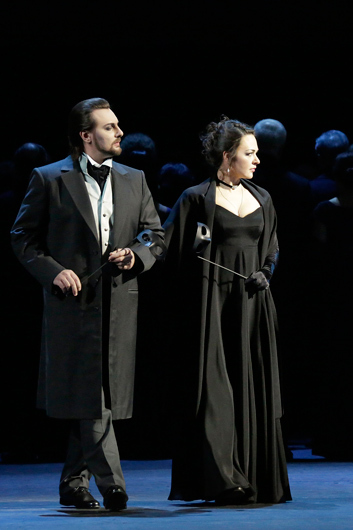
However, the Bolshoi Theater seems to have done the impossible. And the fact that at the premiere performance in the stalls next to the director she shone, she made a selfie and distributed autographs by Anna Netrebko, of course, would go down in the history of Tchaikovsky’s opera on the main stage of the country. Well, this is a beautiful ceremonial detail. And from it it is clear that the main batch was sang the husband of the prima donna of Yusif Eyvazov. He is a good singer, but not Herman, his voice is not dramatic enough for this party. He perfectly succeeded in the final scene in the gambling house with Aria “What is our life? Game! ”, Where high tessature is needed. But in many other cases, he lacked weight, although Maestro Sokhiev always masterfully led the orchestra into a muffled regime.
The Mariinsky legend Larisa Dyadkova was invisible to the role of the charismatic old woman of the Countess. In the party of Lisa, she kept fellow, but without brilliance, the soloist Bolshoi Anna Nechaeva. The Armenian baritone Gevorg Akobyan was correct as Tomsk, although he began to be freshly, the ballad was completely lost. But the confident swimming of the Great Russian Opera was restored without any questions when two performers of small parties appeared-the debuted in Bolshoi Olesya Petrova with a luxurious, dense Mezzo-soprano (Polina) and the filled nobility of the local baritone Igor Golovatenko (Eletsky).
In general, so far let him hang, but if the Bolshoi Theater does not stop there in his search for the “peak lady”, he will be right.