
Translated material
Dostoyevsky-Trip
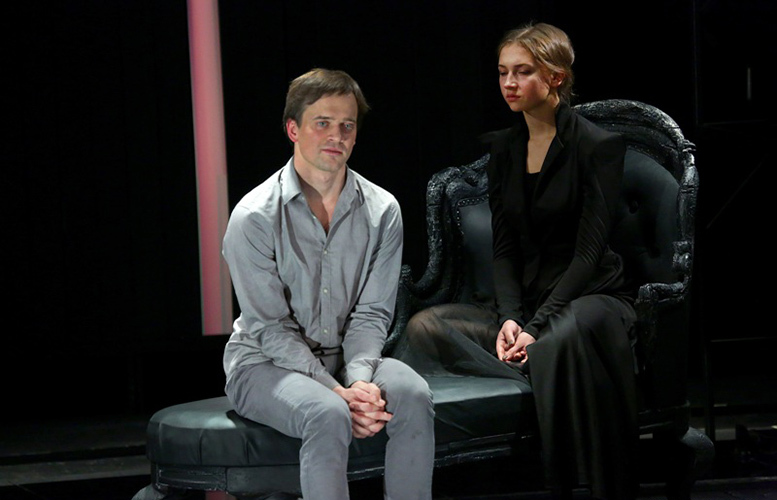
The figure of St. Petersburg Evgenia Safonova always stood out abruptly against the general background of “generation of flowering mugs” , which went on stage in the early 2010s and determining the appearance of the new Russian theater today. For four years that have passed since the premiere of its first major work-“kings” Hulio Cortasara on the small stage of Alexandrinka, Safonova released only two productions in St. Petersburg: in the spring of 2012-faithful to the spirit and letter of the original Dorota of the Maslovskaya “Two poor Romanians who speak in Polish” in the “Etud Theater” and now-the play based on the motives of “Brothers Karamazovs ”in a small but proud “ comedian shelter ” . Over the years, Safonova, of course, had also staged in the regions-but something prevented them from cutting, sounding, the information wave did not carry them to the surface of theatrical life. From the very beginning, as if the naobitsa, Safonov, still remained truly unrecognized even inside the professional community-this circumstance is capable of saying a lot about the state of affairs in the near-theatal community, and the properties of the gift of one of the most outstanding Russian directors of thirty-year-old generation.
The perfectionist, Safonova slowly works for a long time, in detail, as it is not in honor, rehearses. The agenda, requiring the momentary result here-i-now, it contrasts a focus on gradual germination, research, search. Her theater - at first glance, it seems to be just arranged, but in fact, internally very winding, intricate, balancing between the analytical warehouse of thinking and paradoxical dark sensuality - is not given into the hands. Labels are poorly glued to the rough surface of its performances, it is difficult to put them on a certain shelf of a theater supermarket, which means it is difficult to sell. Plutered, muscular-stripped, having nothing to do with the common stereotypes about the “female directing”, they are inaccurate and defiantly independent. Voluntarily or involuntarily Safonov with an enviable sequence and stiffness goes against the spirit of the times, working for overcoming - and achieving, judging by the chronologically the last work, completely impressive results.
 © Marat Shakhmockotyev
Great Russian literature is not too interesting to the modern Russian scene: “Double” and “ Zero Liturgy” Valery Fokin and “Boys” and “Brother Ivan Fedorovich” by Sergey Zhenovach - rare performances that can challenge this thesis can be listed on the fingers of one hand. On the general Bezrybier there are two important premieres of the past metropolitan season - the “dead souls” by Kirill Serebrennikov and the “Karamazovs” of Konstantin Bogomolov - look more likely to confirm the rule of the rule. The scenic biography of the “Karamazov brothers” was still reduced to four productions: to the already mentioned opuses of Zhenovach and Bogomolov, it is worth adding the historical Mkhatov staging of 1910 and the legendary “brother of Alesha” Anatoly Efros. The case of the “brothers” in this sense is not even interesting that Safonova encroached on the “novel of the novels”, but by the way she induced him: this reading “Karamazovs” is remarkable primarily not so much the semantic, conceptual interpretation of Dostoevsky’s ideas - although the director definitely has something to say - how much sound, facts, rhythmic, and general intonation system. They are flesh from the flesh of today: in the performance of Evgenia Safonova, the original text of the “Karamazov brothers” sounds so acute and fresh as if it were written by the author-hovodrama.
 © Marat Shakhmockotyev
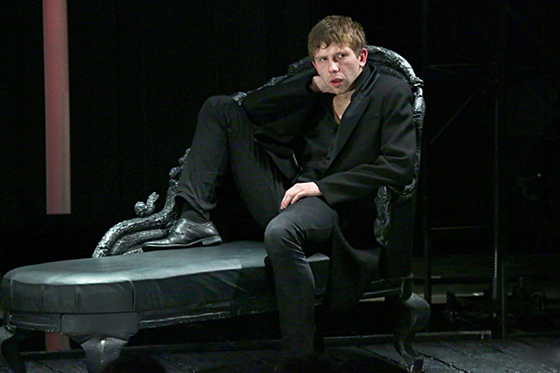
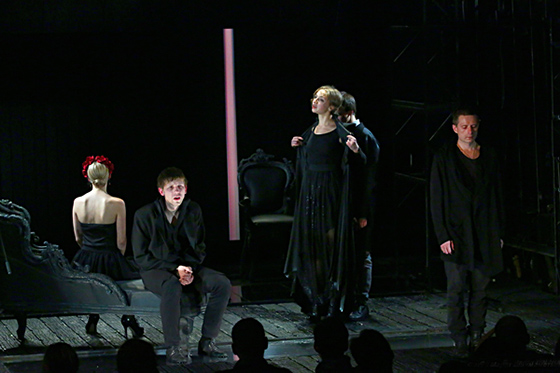
The absence of even the shadow of postmodern irony in relations with classical text is the first and most importantly what the “brothers” bribe. The directing does not flatten the volume of the novel by the translation of its meanings into the language of today's realities, does not shade the “karamaz” with a variety of gags that prevent the public of attractions - quite the opposite: the imagery of the performance is emphasized ascetic and a conditional space, a minimum of the requisite, an almost empty scene. Here, apparently, it is necessary to make a reservation that Safonova is not directly engaged in a staging of the novel: the author of the Brothers is interested in something much more important than the retelling of well -known conflicts. In the focus of the director’s attention is the text of Dostoevsky and our relations with him: the “brothers” super-unit is an attempt, having torn through the thorns of a large narrative, to understand whether we can today, if we do not appropriate the “Karamazovs”, then at least to some extent to be correlated with the content of the novel. At the same time, Safonova rather prefers to raise questions than to answer them: it is not by chance that the protagonists repeat the phrases that have just been spoken several times in the exposition of the first act, as if trying to knead them, to re -feel the plastic of their meanings, listening to Dostoevsky’s word, biting into his very flesh.
In the performance of Evgenia Safonova, Dostoevsky’s text sounds so sharp and fresh as if it were written by the author-hovodrama.
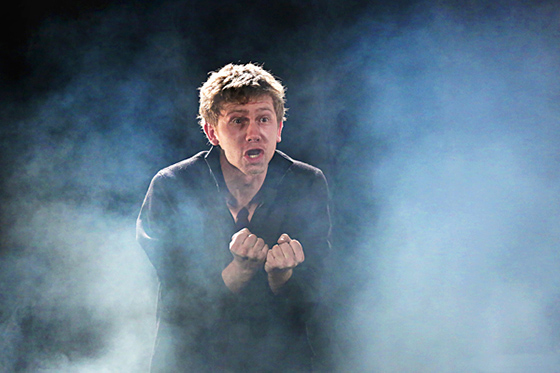
The three -hour structure of the “brothers” corresponds to three stages of evolution of action on the way from the search for imaginary harmony to total, all -consuming decay. The first act is a leisurely extended in time and space, containing several small scammers of the trio of Grushenka, Katerina Ivanovna and Mitya. The second act is torn installation, syncopted gluing with the legend of the Great Inquisitor as a refrain. The third act is the splitness of the world, confusion of consciousness, deconstruction of the text and action: here not only Smerdyakov beats in an epileptic seizure, but the whole world of the “brothers” is experiencing collective agony in the acid Danse Macabre . Starting the performance with an attempt to establish communication with the text of the “Karamazovs”, in the final of Safonov comes to the conclusion that all contact with him is impossible: the meanings of the production are summarized by a radical epilogue - a monologue of Alyosha, who is not able to extinguish anything but a scream, seizures, and cramps. The convulsive inconsistency of the “positively beautiful person”, a roar of a preacher turned into a beast - is the deaf wall into which the heroes of the “brothers” rest in the finale.
Since appearing on the stage at the beginning of the performance, the sextet of young Petersburg actors (the game of Nadezhda Tolubeeva, Konstantin Malyshev, Philippe Dyachkov, Evgeny Perevalov, Vyacheslav Korobitsin and Vera Paranicheva deserves that their names are certainly named) almost does not leave the scenes: the artists who are not occupied in an episode are sitting or sitting along the perimeter The sites, let it be realized and silently, but invariably involved in action. This situation of collective experience repeatedly enhances the weight and density of each pronounced from the scene of the word, each gesture performed.
 © Marat Shakhmockotyev
St. Petersburg criticism devoted to the premiere of the “comedian shelter” so much attention that this performance would like to call the important milestone of the young Russian directing from the threshold. The said, however, does not mean at all that the “brothers” are unequivocal luck: an uneven, not without long and indistinguishable, the composition of Safonova would definitely show the assistance of the editor - if only the method of trial and error was not the essence of the performance. Comb, to invite this complex stream of consciousness, in which thoughts and ideas, intertwining, feverishly dispute each other, would mean killing it in the root. The four -hour, which go with two enthrackers “Brothers” is a rare example of a large, slowly unfolding form, realizing itself in a purely chamber space. In the next work of Safonov, he remains true to herself: she is unknown to the temptation, she is not afraid to be complicated, is not afraid to seem boring, does not want to like the hall and does not try to play with the viewer with the spectator, preserving that proprietary concentrated seriousness, which always distinguished her directing - and which is almost unknown to the modern Russian theater.