
Translated material
EX MAKHINA
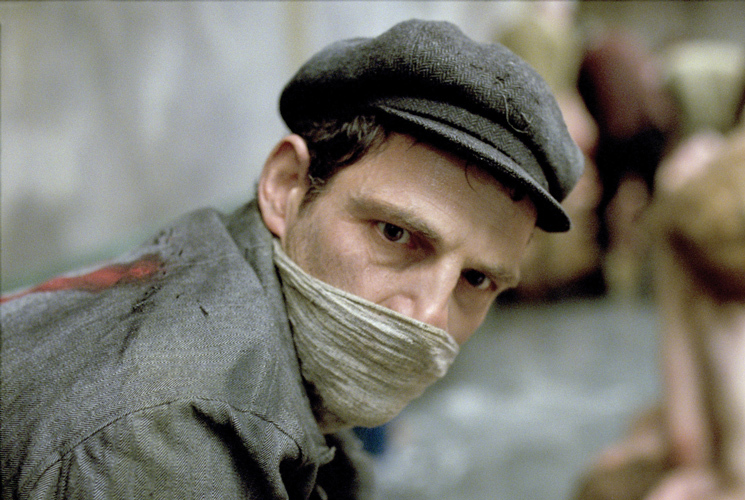
In Moscow there is a festival of Hungarian cinema cifra 2 . The film closing of the festival (April 4) will be the “son of Saul” Laszlo Nemesh, who received the Grand Prix in Cannes and a bunch of all kinds of awards. Vasily Koretsky - about how Nemesh’s film turns into a car, and the car into a person.
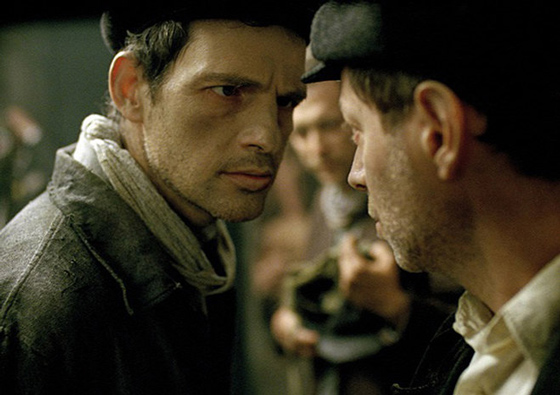
Bad films about the factory often begin with the passage, and the paintings about the factory - from the hot workshop. Debut Laszlo Nemesh, one of the main films of the year (Grand Prix in Cannes, Oscar, Cesar), does not neglect this stamp: in Aushwitz-Birkenau, the processing of human creatures in ashes, mattresses, golden scrap and second-hand, we get out of the gate, which they drive freshly surviving European Jews. The Russians are advancing, and the Holocaust car works for wear, with a triple overfulfillment of the plan. Then there will be locker rooms in front of the showers with a cyclone-b, and a fireman crematorium-but they will not really show us all this: dystrophics, “Muslims”, Capo, corpses called “pieces” here, conspiracies, corruption, personal circumstances of the characters-all this is buzzing and sobs constant, bringing to nausea the background. The camera never looks away from a person, our guide. The entire film screen fills the close-up of the face of the actor-non-professional ges Rorig, covered with thick, as in zombies-Horror, a layer of gray make-up. This is the face of Saul Auslander, which is deprived of all emotions, a member of the Sonderkomanda, becomes an analogue of the camp perimeter divided into isolated compartments; The frame turns into a zone where only the echoes, a reflections of external life penetrate. And death: executions, gas chambers - all this is also in blur, on the periphery of the field of view, in the orders of space, creating a noise similar to the factory. Actually, the whole cinema of the “Saul son” is subordinated to one goal - the representation of the coordinated mechanism of death and the desubjective launched in the concentration camp. As you know, the German genocide machine differed from the Soviet claim to moral purity - the dirty work should not have tarnished the soul of the “people of the future”, all sorts of excesses that arise during the final decision were punishable by the penalties (as far as it was possible in a rather disorganized Reich system). In the film, this mechanism is distinguished, when one of its details suddenly finds subjectivity again. Feelings: love, solidarity, instinct of self -preservation, memory, finally, all this does not need and is obsolete with member of the probe department, suicide bombers who received four months of relative comfort (separate hut, hot water, tolerable food) for the work in hell. After the expiration date, they will also go to the shower with a cyclone-b; However, rumors from the will say that the Russians are on the way, and the cleaners of the corpses are preparing an armed uprising. Saul is also a participant in the conspiracy that should be realized within a day. But here he finds out (apparently, mistakenly - however, the general impermeability of history does not give us any clue regarding the motives and true causes of everything that happens to the heroes) in the survivor of the gas chamber (after five minutes he will make him the SS) boy of his son. All further - desperate and unsuccessful attempts to find a rabbi that will help to bury the body through the Jewish rite.
 © Laokoon Filmgroup
Each detail of what is happening in the “Saul son” is based on real cases (a detailed analysis of precedents can be read in the article by Richard Brody ). But the actual reliability in the case of Nemesh is completely unimportant. Objective facts are nothing in comparison with the subjective, difficult to constrain the sensation that the conflict and the form of the film create. Nemes clearly shows the inappropriateness of formal logic in a conversation about the Holocaust - the logic here stands on the side of the administration, it prescribes discipline and order, “civilized”, hygienic, impersonal way of mass destruction; The camp is the end point not only of the logistics, but also of the logical chain. Automatism in the case of Nemesh is almost the Bresson automatism of the usual actions and gestures, which, however, does not reveal to the viewer any deep truth about a person - only an infernal emptiness. On the side of resistance - chaos, corruption, irrational affects, pretense and misconception. Marked with blood-red x on his back (a distinctive sign of the Sonderkomanda), the Saul remains invisible, and falling out of the car, freely jumping from one gear to another in its hopeless search for the Rebbe. At the same time, he is also invisible to us: to his very (and film) end, he remains a hermetic figure, if not a silhouette, who has not crossed the border between a person sacrificed - and a rebel, trampling a voluntarist death, the death of the prescribed and legitimized. This death, carried out in the ordinance of the viewer, causing a frustration of his predictable - and still dumbfounding - lightness, its disproportionality of the whole heavy fraud that heeded before him just, in the first second, the finale of too simple, too obvious, wrong. But - what else can the Holocaust (crossed out) man end?