
Translated material
AI phenomenon
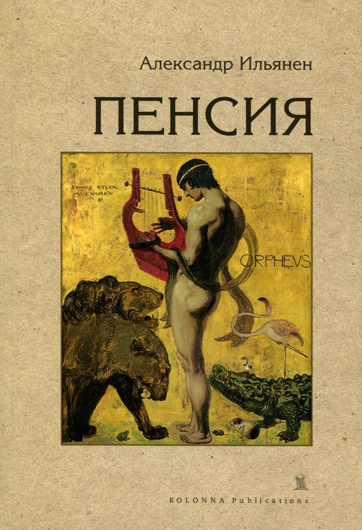
On January 28, the results of the Nose Prize were announced. The 2015 short list included Alexander Ilyanen’s new novel “Pension”, but did not receive a prize. The COLTA.RU literature department, considering this book this book , together with colleagues from the New Literary Review, offers your attention the text of Alexandra Tsibuli dedicated to it.
What is usually classified as Ilyanen's prose-fragmentation, ornamental, diary nature of the letter, sensuality, marginality (in the sense of marginalia-notes in the fields, notes, interpretations of fragments of the text, comments-which is especially characteristic of tolmaces, one of which is the author, vignettes, bizarre patterns)-in general, is also characteristic But in a new novel, these features are aggravated, actualized, even emblem (becoming self -pourade), and techniques are exposed. This cannot be said only about sensuality - if in the novel “and Finn”, for example, we are dealing with almost an obsession and love obsession (albeit a stained and honored carrier), then in “Pension” the hero is even more busy with himself: the temptation is not visible, pleasant. The desire is scattered everywhere, total - everything falls into his focus. A bright, festive temptation makes objects shine. Is it because the robes of the heroes in which they are like ancient heroes and celestials are described in such detail?
On the eve of the bosses, I met Nevsky Nikita in a blue sweater, colored socks
In golden autumn, he met Nikita in a blue sweater, in colored socks
(p. 16)
The letter of Alexander Ilyanen is certainly associated with pleasure (pleasure and obsession). Interestingly, the author’s enthusiastic obsession with the things of the world Ivan Sokolov in his article “St. A.I.: Comedian and Martyr” compares with obsessive addiction. Nevertheless, we know that the obsession inevitably causes distress and painful for the subject. In the case of Alexander Ilyanen, we can only talk about “sweet torment” and, possibly, about the concept of a fetish (for example, an obsessively repeated image of a dress).
According to Ilya Kukulin , “any integrity is a fantasy. If you need integrity of consciousness, then it can only be created again, developed as an artificial position. ” In this light, the fragmentation of the “pension” seems as natural, truthful, humane. The notes of posts want to seem careless: everything consists of accidents, trifles, eccentricity, and stupidism. Accident, trifles and become a substance of life.
 © Kolonna Publications
Talking about the book of Ilyanen, it is interesting to talk about how the book is written today, whether it is a poetic, prosaic or, so to speak, transitional, intermediate letter with a flickering (fluid) subjectivity.
In modern poetic practice, there are more and more authors who write precisely books, previously developing and conceptualizing the project. Evgenia Suslova said that she sees the future text as a landscape - a glass city (a certain abstract pattern always occurs in advance) - and vice versa: any poem can be translated into this volume if desired. First, the name appears (separate text or book), then the main word, necessarily something bodily, then the text itself is written directly.
The poet Natalia Azarova writes the “calendar” as a book of fortune -telling, calculating days and numbers, but leaving some pages clean - they can be filled with new guessed texts or leave empty ”(N. Azarova. Calendar: Book of Gadaniya. - M., 2014. S. 5). It is impossible not to recall here about Mendeleev, who left places in the table for new, not yet open, but proper elements.
It is known that Ilyanen himself also writes books, like Sosnora (it was the last that he once called his teacher ). In “Pension”, the author calls his own production by carpeting - “One of my favorite metaphors (regarding the letter): carpet, when the centimeters are promoted” (p. 156).
Metatekst, methanarration are continuously carried out by the narrator. Actually, the novel himself becomes a novel about the novel, the dream of a utopian text that seems, gleams, dreams and comes true in a conversation about himself, in the project, incompleteness. Roman - in the infinity of possible ways and branches, reasoning about our own name and its variations (so, there are several “novels in the novel” inside “Pension”: “Highest Degree” , “La vadrouilla” , “Roman Roman” , “Sustainable Design” , “Surfing”, “Casting”, “Casting” "Überamur", "Opera Tristan Tzara and impostors").
Ilyanen is literally obsessed with the names - they should have everything: evenings, speech, seasons, flowers, perfumes, short travels. A hard -to -do name turns a raw object, material into literature, the head of the novel. We can say that the name becomes a marker of literature. Each statement can be turned along its axis in order to form new details and meanings:
When Mrs. B. came out of the concert, Nikita met with a doctor.
When Mrs. B. left the concert, Nikita met with a doctor (and Ryazhenka).
When Mrs. B. left the concert, Nikita and a doctor with Ryazhenka met
(p. 7).
This fragment resembles an endless text of the character from the “plague” of Camus, writing a novel about a beautiful rider and hopelessly stuck on the first sentence, forever desperate to bring him to perfection. Ilyanen’s find is that the perfection consists of a tautological insanity of slightly varying refrain. The character of the “plague” and the speaking “pensions” - both with the stubbornness of the maniac carry out a utopian project, but if the first continuously suffers the collapse, then the second, producing, in fact, the same pathological effect of rewriting, is productive, victorious, resourceful: each new portion of meaning is associated with admiring, tenderness, a new statement does not replace the previous one, does not bother, does not make it possible. And it is strung on him.
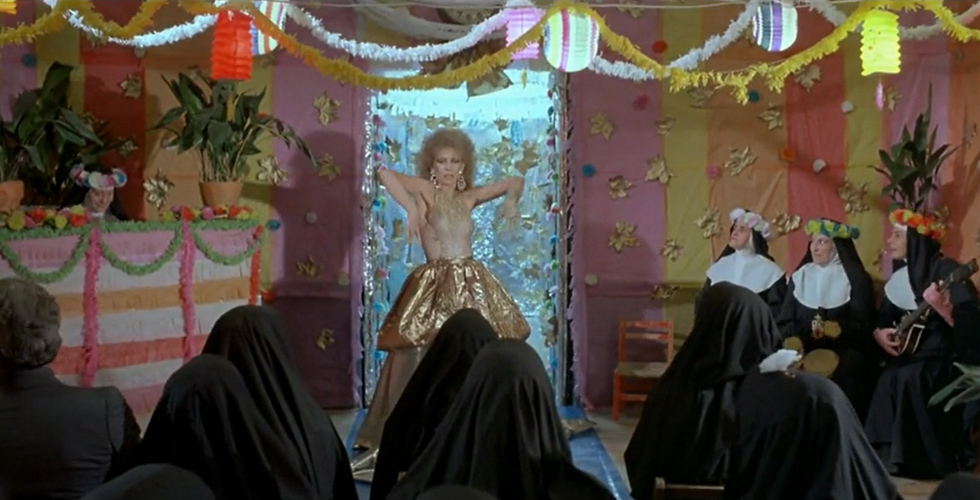
“Touch” and “admiration” - of course, Christian categories (tenderness, Eleus - an icon -painting type of image of the Mother of God). The hero of Ilyanen is luxuries in poverty, participates in “gallant festivities” in the spirit of Antoine Watto, strokes the laundry, listening to the French radio: making ironing as obedience (here it is impossible to recall Tsvetaeva writing Rilke in a letter about how she washing underwear in the basin). He contains Golubchikov in the home boarding house, lives along the church calendar, travels to holy places and visits the mysterious BDSM-Salon of Mrs. B. (generally the motive of strangeness, pilgrimage-one of the key in the novel, it is partly associated with the principle of non-attribution, and with literary gliding along the surface of life; survivors of the text: walking? Life?). This entertaining alloy can remind the film Pedro Almodovar about singer Ilanda and monks-heroic, tasting the cake as the deity of God (“The immodest charm of vice”, 1983), where there is such a dialogue:
- And for me to taste this cake - as if communion. Jesus appeared to me while I tasted the syrup. He opened his wounds to me and asked me to drink from them, as if I were a swallow.
- These are hallucinations.
- Such hallucinations are blessed, I will eat a little.
The more I read the texts of Alexander Ilyanen, the more it seems to me that the phenomenon of AI is a brilliant case of schizophazia, tide, fullness, endless writing and an inexhaustible monologue. It seems like an overgrown and mutated Pushkin lyric retreat. The story of Ilyanen seems to me with a light walk - bewitching, dizzying, ironic, piquant - sweet sliding on the landscape, intellectual flairing. He describes the life of Bohemia, consisting of epiphany and illuminations - the art of being idle, light, festive. Rilke in the Florentine Diary writes: "You made me festive." The books of Alexander Ilyanen are a literature that can make us easy, festive, in love.
Alexander Ilyanen. Pension. - Kolonna publications, Mitin magazine, 2015