
Translated material
Cracations of the avant -garde
The third season of the joint program “Moskino” and the excursion project “Moscow through the eyes of an engineer” is dedicated to the topic of urban micro -communities. The first film screening and lecture by the art critic and historian of reinforced concrete Ksenia Grigoryeva “Tram Bulgakova. The housing issue in the era of the NEP through the prism of architecture ”will be held on July 13 at 20:30 in Dangauerovka on the aircraft engine (preliminary registration is required).
"My grandmother" (1929)
Director Kote Mikaberidze
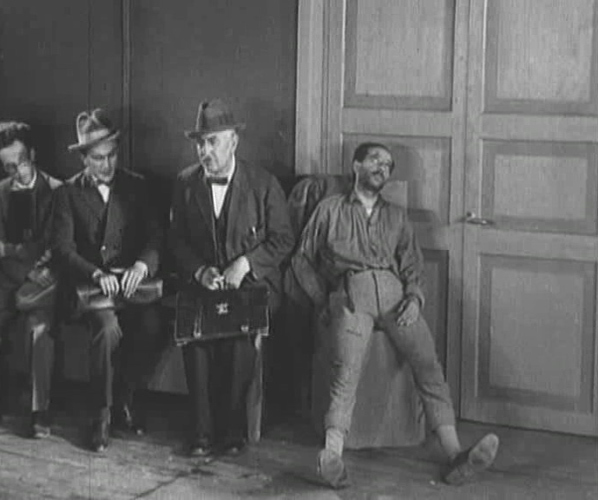
A huge table at which a bunch of people sits. There is nothing in common between them. Some of them are sad, others are cheerful. Some play, others solve love affairs, others eat, the fourth sleep. In fact, they unite them that they are all bureaucrats. Yes, and none of these people (except perhaps the secretary and an extremely cheerful gatekeeper) seeks to work, every time finding a lesson more important, and the coming pieces of paper throwing from the office to the office.
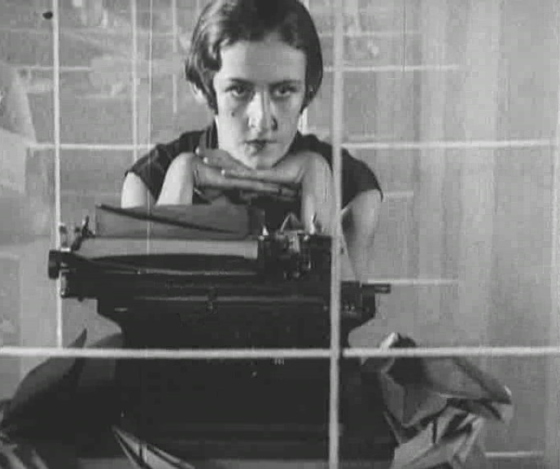 Frame from the movie "My Grandmother"
While husbands are busy wiping the pants in institutions, their wives are indulging in what is now called “demonstrative consumption”: they buy, buy, buy, spend colossal amounts for purchases and again run to the shopping store. But the public is not asleep. A clever journalistic investigation or complaint of citizens (in the role of citizens - gigantic sizes of a worker) - and now this or that official flies from his post and is forced to resort to all kinds of tricks in order to get a new profitable place ...
This is not a revealing column directed against corruption, but the plot of “my grandmother” Kote Mikaberidze, a masterpiece of the Soviet avant -garde. This picture is an important link in that rather democratic satirical tradition that it blossomed on Soviet grounds in the 20s: a number of Mayakovsky’s works (remember all these “I would have gnawed bureaucracy”) and some plays by Bulgakov, the feuilleton of Ilf and Petrov, Zoshchenko’s stories and much more. She did not bypass and cinema. It is enough to look at the images of Soviet bureaucrats in the gloomy comedy of Protazanov “Don Diego and Pelagia” or in the great “Skeleton” of Spikovsky. Its echoes can be found in the 30s-for example, in the "Harmony" of Savchenko. All this is the near and distant relatives of the Mikaberidze film.
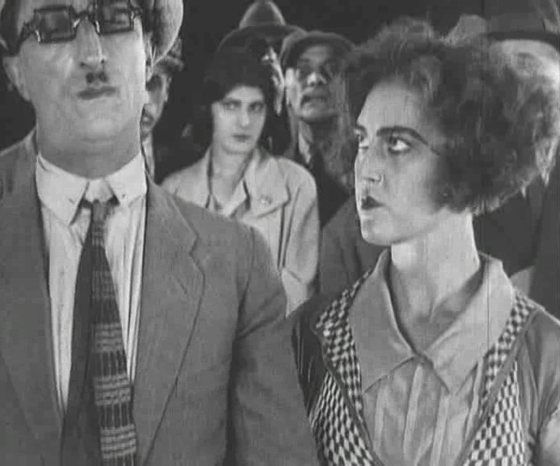 Frame from the movie "My Grandmother"
A tradition of tradition, but by the end of the 20s the situation began to change. State -officials began to perceive the satire as a shattered on the Soviet system, and the satirists were suspected of the absence of loyalty, so that “my grandmother” was banned, and the main repertoire committee demanded “hold the Georgian Goskinoprome to the release of an obviously anti -Soviet picture that showed bureaucracy in such a way that the viewer’s consciousness is mobilized against the Soviet regime in general (Trotskyist attitude to rotting of the Soviet system). "
Is it worth clarifying that when the film was released (it happened earlier than with many other shelter paintings, back in 1977), Soviet spectators did not find any Trotskyism in it. The charm of “my grandmother” is not at all in the accusable pathos or the special status of the “anti -Soviet picture” - many films criticized the bureaucratic apparatus at different times, but not all of them want to review. And this is a very lively, cheerful, sparkling movie. Thinking of depicting the vices of contemporary institutions, Mikaberidze used the entire affordable arsenal of cinema (such a miracle in the history of the movie happened, it seems, only once, when Thomas Gutierres Alea took off his “death of the bureaucrat”): there are tricks, and mounting experiments, and animation. The enthusiasm and joy of the process of creating the film here are almost more important than any criticism. And how the hero’s wife dances, returning from speculators!
Never before the conviction has been so cheerful.
 Frame from the movie "My Grandmother"
Dangauerovka
Moscow in the period of new economic policy turns into a feuilleton. As the singer of the era Mikhail Afanasevich Bulgakov formulated capacizedly, the “Trading Renaissance” came in the city. The streets of Moscow were flooded with the myriad of colored signs, offering to buy whatever the soul wants. The new economic policy that came to military communism revived the peasantry, stimulated private entrepreneurship; The young Soviet state began to grow with fat.
But did the same “housing renaissance” come in the city? The main customer of residential architecture of the NEP era is the housing cooperative partnership. The features of cooperative housing, built with a minimum budget and with many architectural tricks, will be described in detail at a lecture. A visual example of the municipal construction of that time can be seen with your own eyes: the project of the working village of Dangauerovka was developed just during the NEP.
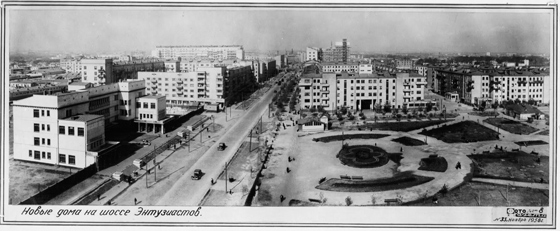
Dangauerovka could be lost among two dozen of her own socialodities, if not for Mikhail Motylev, the author of the general plan and an architect who planned a special functional structure of the complex. The town offered workers not only housing, but also wide opportunities for leisure, raising children and comfortable exemption from life - complete rationality of life, could not leave the area. Where else we will see a constructivist school, a nursery, a dining room, a kitchen factory, a shop, a hospital, a workshop, a laundry, a working club, a bathhouse and a completely outlandish-a fire department in the spirit of the vanguard.
Subscribe to the COLTA.RU channel in Yandex.Zen to miss nothing