
Translated material
Memory. Boris Shaposhnikov
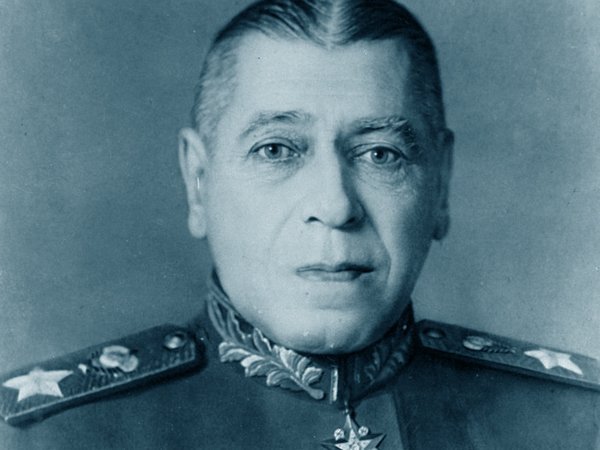
On September 20 (October 2), 1882, Boris Shaposhnikov, Marshal of the Soviet Union, was born.
Personal business
Boris Mikhailovich Shaposhnikov (1882-1945) was born in Zlatoust of the Ufa province (now Chelyabinsk region). His father served the manager at the distillery, then he was the manager of the warehouse. Mother worked as a teacher.
He graduated from the Krasnoufim Industrial School, and in 1899 - the Perm Real School.
After that, I decided to enter the junker, but I missed exams due to illness. He worked for nine months in a wine warehouse as a youngest clerk, and after that he entered the Alekseevsky Military School in Moscow. After graduating from it in 1903, he was enrolled as a second lieutenant in the 1st Turkestan rifle battalion in Tashkent, commanded a half-rot there until 1907. Then he studied at the Imperial Military Academy in St. Petersburg. After its end in 1910, he returned to Tashkent, where he commanded a company.
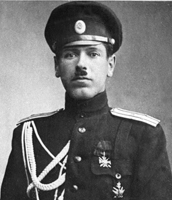 Boris Shaposhnikov. 1915
In December 1912, he was transferred to the senior adjutant of the 14th Cavalry Division to Chenstokhov (now the Silesian Voivodeship in Poland). Since August 1914, he participated in the First World War, fought on the Western Front, where he showed courage and showed good knowledge of tactics.
In October 1914, he received a contusion in the head. Since 1915 he served in the intelligence department of the headquarters of the 12th Army. Then he headed the headquarters of a separate combined Cossack brigade.
In September 1917, he received the rank of colonel and was appointed commander of the 16th Grenadier Mingrelsky Regiment, deployed in Tiflis. At the request of soldiers' committees, he shifted several officers and non-commissioned officers of the regiment. In November 1917, at the congress of delegates of military revolutionary committees, he was elected the head of the Caucasian 13th Grenadier Division. At the beginning of 1918 he was seriously ill, hit the hospital. After discharge for a short time, he worked in Kazan by the secretary of the people's court.
In May 1918, he joined the Red Army and was appointed assistant to the head of the department in the headquarters of the Revolutionary Military Council of the Republic (RVSR). Then he served the head of the reconnaissance of the field headquarters and in other positions in the RVSR.
In 1921-1925 he was the first assistant chief of staff of the Red Army, transformed from the RVSR.
In May 1925 he became deputy commander, and in October - the commander of the troops of the Leningrad Military District.
From May 1927 to May 1928 he commanded the troops of the Moscow Military District.
In May 1928 - April 1931 he was the chief of staff of the Red Army. Then, during the year, he commanded the troops of the Volga Military District.
In 1932-1935 - the head and military commissar of the M.V. Frunze Military Academy. In September 1935, he was again appointed to command the troops of the Leningrad Military District.
In 1937 he was elected a deputy of the Supreme Soviet of the USSR from the Moscow region. In May of the same year, he was appointed head of the General Staff and Deputy People's Commissar of Defense of the USSR.
In 1939, he was elected candidate member of the Central Committee of the CPSU (b). In May 1940, he received the title of Marshal of the Soviet Union.
In August 1940, he was removed from the post of head of the General Staff of the Red Army for health reasons, served as deputy people's commissar for the construction of fortified areas. In June 1941, he was appointed a permanent adviser at the rate of the main command of the army.
With the beginning of the Great Patriotic War, in June-July 1941 he was a member of the Council for evacuation under the Council of People's Commissars of the USSR. In July 1941, he was included in the headquarters of the main command of the army and was again appointed chief of the General Staff. He participated in the development of counterattacks in the winter of 1941-1942. After the defeat of the Soviet troops near Kerchy in May 1942, he was removed from the leadership of the General Staff.
In May 1942 - June 1943 - Deputy People's Commissar of Defense of the USSR. In June 1943, he was appointed head of the Higher Military Academy named after K. E. Voroshilov (now the Academy of the General Staff of Russia).
March 26, 1945 died of tuberculosis (according to other sources, from stomach cancer) in Moscow. On March 28, the urn with the ashes of the military leader was placed in the Kremlin wall.
Shaposhnikov remained the widow of Maria Alexandrovna, the soloist of the Bolshoi Theater, and the son-Igor Borisovich (1919-1991)-later the lieutenant general of the engineering troops, the deputy head of the department of the Military Academy of the General Staff of the USSR.
What is famous
Boris Shaposhnikov stood at the origins of the Red Army. He was an outstanding military theorist, a talented commander who knew the strategy of the First World and Civil Wars well. He participated in the development of army charters, in which he reflected the main provisions of the USSR military doctrine. His most famous work - the "brain of the army" - is devoted to the analysis of the characteristics of the leadership of the armed forces, as well as the structure and functions of the General Staff.
Stalin enjoyed great respect, since the late 1930s he was one of the main advisers of the Soviet leader for military issues.
What you need to know about
According to the daughter -in -law of Marshal Glory Shaposhnikova, he was a devout person and did not hide it. “Stalin really knew that the chief of the General Staff was a deeply religious person,” she retold her husband, Igor Shaposhnikov. - Joseph Vissarionovich also knew that Boris Mikhailovich had never shot an old Night incense with a very ancient Cossack icon, which was almost 200 years old. It was transmitted to the Shaposhnikov family, who led their family from the Don Cossacks, from generation to generation - from father to son. Boris Mikhailovich handed her by her mother. And being already a general, under the Soviet regime, he always wore her on his chest. Even under Stalin. It was for the fact that Shaposhnikov never hid his faith, Joseph Vissarionovich respected him - he never said a word against the faith of Boris Mikhailovich. ”
According to her testimony, in the mornings, Shaposhnikov prayed with the words: "Lord, save my homeland and the Russian people." He bequeathed the same to his son.
Direct speech:
About studying (" Memories ", 1974): “We had the opportunity to meet with the girls who studied at the female gymnasium. Although they studied separately, acquaintances started often. At 6 o’clock in the evening, the main street was empty, and the gymnasium students, accompanied by students, diverged home. Those of our students, whose parents lived in Krasnoufimsk, arranged evenings with dancing, inviting familiar gymnasiums and their comrades. We, living in apartments, could not go outside after 6 hours. Like the eldest in the apartment, I was obliged to monitor compliance with the daily routine.
Three of us, high school students, received invitations for evenings to the houses of familiar comrades or gymnasiums who lived in their families. But how to leave after 6 pm from the apartment so that the hostess does not notice? The way out was found: about 10 pm on top of the ceremonial jackets we put on night shirts, passed on the porch, as if in a restroom, and then dressed in fur coats and, imperceptibly for the hostess, went through the front door, from which we had a second key. At an hour or two nights, we returned back. ”
About discipline (ibid.): “No matter how you examine the beds, bedside tables, a smoking room, a company commander will find something, especially while young cadets are not used to observing the internal order. I had in my platoon, Junker Vladinsky, a typical Mamenkin Son and a Big Slot. It happened, you will go to inspect his bed, turn off the pillow, and under it there are a rusty shovel, an unnecessary piece of bread, in the nightstand next to the towel, a boot brush and immediately a toothbrush. I had to clean the bed as a platoon, and his separated every day and put things in order in the nightstand. No disciplinary penalties acted on him.
However, I did not lose energy and broke out those who showed slack and licentiousness. ”
About the beginning of the First World War (ibid.): “A telegram from the headquarters of the corps was short, and after 20 minutes it was lying in front of me. The crew stood at the gates of my hut, and, having checked once again the correctness of the decrypted text, went to the race field, ordering to go to a trot to get there sooner. The telegram ... stated that, at the highest command of July 13, is declared the first day of the preparatory period for the war. The troops were ordered to immediately follow their winter apartments. When I arrived at the beginning of the fifth at the racing and rose to the judicial tower, where [the head of the division] Novikov and all the commanders of the regiments was located, the first race was already at the start. My first desire was to stop the jumps, but then I decided to let the first race to pass so as not to create panic. I did it. The audience did not suspect that these were the last jumps, that in the same 1914 blood would pour in the same field, and not to rattle music and fun.
When the first race ended, I went to the head of the division and asked him to go down with me from the tower to report to him a very important telegram. After reading to Novikov, the telegram received, I expressed the consideration that it was necessary to finish the jumps, collect the regiments commanders and convey the contents of the telegram to them so that today, July 13, on the night of the regiments will appear in their permanent apartments. The shelves had to make about 140 kilometers. It was necessary to rush to arrive at the border in time. Excited by the received news, the head of the division loudly from the judicial tower announced the preparatory period for the war, although the family of officers and the invited civilians were present here. Novikov, in such cases, tone referred to the protection of faith, king and fatherland. I was a science for the future, how to keep secrets even from my superiors. ”
About love for music and wife (daughter -in -law of the military leader, “ Facts ”, 2002): “Boris Mikhailovich loved music very much. He could listen to the classics for hours. In addition, his wife Maria Alexandrovna had an amazing voice and sang at the Bolshoi Theater for some time. Vasilevsky told me how once he came to Boris Mikhailovich on a report. I must say, Shaposhnikov was a very collected and responsible person and listened to every word of the speaker. And suddenly, in the middle of the report, Boris Mikhailovich suddenly interrupts Vasilevsky: “Excuse me, Alexander Mikhailovich. Let's interrupt for a couple of minutes. Now on the radio a concert from the Bolshoi Theater will begin. Maria Alexandrovna will sing. Let's listen. ” He turned on the radio and reverently listened to his wife's voice. ”
8 facts about Boris Shaposhnikov:
The wife of Marshal Maria Aleksandrovna was from the unclenched Polish nobles of Ledomskoye, whom after the rebellion Nicholas II deprived all titles and titles.
In the 1950s, she helped the daughter-in-law Slava Alexandrovna in the rehabilitation of her father. Glory recalled: “The adjutant Voroshilov met me at the Spasskaya Tower. When I went into the office of the famous marshal, I was met by an elderly man, a gray -haired, short stature. I was surprised, since I represented this man-legend by stately, tall, always young. Voroshilov looked at me for a long time (his father’s business was already lying on the table), and then he said: “And I remember your father on the civil war, on the Western Front.” At first I did not believe. I thought he thus wants to place me to him. But when he said that I was very similar to my father (and I really was one face with him), I could not stand it and sobbed. Voroshilov held the word: his father was rehabilitated. "
According to Slava Shaposhnikova, the cabinet of the military leader "was hung with paintings with the image of naked women (brushes of famous artists) and is laid down by large bronze sculptures of horses."
In 1927-1929, three books of Boris Shaposhnikov “The Army Brain”, which gave the analysis of the First World War, published the Miliengia publishing house. In Soviet times, this series was one of the authoritative military theoretical works on the First World War.
In 1931, the Revolutionary Council of the USSR approved Shaposhnikov by the Honorary Red Army. In 1935 he received the title of professor of higher military educational institutions.
He was awarded the three orders of Lenin (1939, 1942, 1945), two orders of the Red Banner (1921, 1944), also had the Order of Suvorov I degree (1944), two orders of the Red Star (1934, 1938), medals. Before the revolution, he was awarded the Order of the Holy IV and III degree (1914, 1915) and II degree with swords (1916), the Order of St. Stanislav III degree with swords and bow (1916), St. Vladimir of the IV degree with swords and bow (1914).
The name of the military leader wear streets in Zlatoust, Voronezh, Belebey, Gorlovka, Irkutsk. Also, in his honor, a large anti -submarine ship of the Pacific Fleet of the Russian Navy “Marshal Shaposhnikov” is named.
His daughter -in -law Slava Aleksandrovna is an actress, in the film epic "Liberation" she played the role of the wife of General Maria Alexandrovna.
Materials about Boris Shaposhnikov:
Biography of the military leader in Wikipedia
Articles on the site "Chronos"