
Translated material
10: 6 or 14: 2
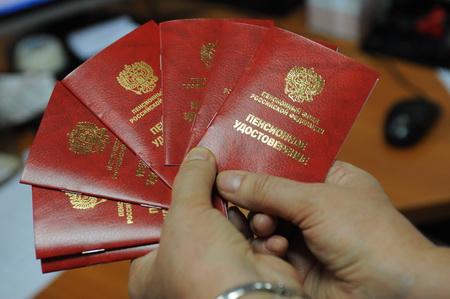
The government approved a new pension formula, based on which labor pensions will be charged to Russian citizens. The Ministry of Labor, preparing a pension reform, used a concept that has not undergone radical changes over the past year. In recent months, exclusively details have been discussed. The only more or less serious amendment to the initial plan, which actually means a return to the distribution pension system, is that citizens receive the right to leave their pension insurance premiums in the current form.
It is worth recalling that now out of 22% of the wage fund, which the employer monthly transfers for each employee to the Pension Fund of Russia (PFR), 10 percentage points go to the insurance part, 6 - in the joint -rate and are not involved in individual accounting, and 6 settled in an individual funded account of the employee, from which the accurate part of the pension will be paid.
In 2002, when the pension reform was launched, it was assumed that, as the number of pensioners who retired before the introduction of the funded component and receiving a pension from the funds that the working generation will be naturally reduced, the funded part will increase, and the insurance will decrease. The joint part from which the basic part of the pension is accrued was supposed to be left for those who, due to circumstances, did not earn their pension and should be content with minimal payments from the state. This scheme would allow you to completely switch to the accumulative principle in 30-50 years. However, constant adjustments and “improvements” of pension reform led to an existing hybrid at the moment, the main drawback of which was the giant FIU deficit, which the government regularly extinguishes with the help of budget injections.
However, the fact that the government was distinguished by the pension antireform, the “daily magazine” wrote repeatedly. As well as the fact that if, as a result of the reform, the budget saves hundreds of billions of rubles, then these hundreds of billions are money that future pensioners will not receive. Now, when the pension formula has been approved, and the discussion about the fate of the pension system in Russia is closed in the coming years, it makes sense to subject to what exactly awaits future pensioners.
So, the pension will still consist of three parts-the minimum basic, insurance and funded.
With the funded part, things are easier. The amount accumulated on an individual account by the time of retirement will be divided by the number of months, which, as the state suggests, will live the future pensioner (the so -called “survival ratio” used in the calculation of pensions is currently established at the level of 19 years, but will most likely be increased to 21 years), which will give the amount of monthly payments. At the same time, the remains on an individual account will continue to be invested in highly reliable conservative tools, which will provide a gradual slight increase in funded payments. The process of accumulating money on an individual account until recently could be monitored by the “letters of happiness” from the FIU, and now in the personal account on the website of the State Services.
But the base part ceases to be an old -age benefit. Now it will have to earn it. For example, if a person’s salary at the level of 2 minimum wages (minimum wage) is a little more than 10 thousand rubles a month-to work for the basic part (now 3278 rubles 59 kopecks) will take 20-25 years. Those who receive more will have to work less.
The most serious changes await the largest, insurance part of the pension. If so far it has been calculated in almost the same way as the accumulative, and the difference between the two parts was that the insurance part was not postponed to an individual account, but went to the current pensioners, now you can calculate this fraction of the pension only using the notorious pension formula.
In it, instead of money, coefficients are used. The first - individual - is counted annually for each employee and is the ratio of the annual salary of the employee to the established maximum annual income from which insurance premiums are charged. Starting next year, this upper bar will be set at 1,005,164 rubles per year. So in order for this individual coefficient to be equal to one, you need to earn about 84 thousand rubles a month. The higher the amount of individual annual coefficients, the greater the future pension.
The next two coefficients are tied to the experience and age at which the employee retires. In order to receive a pension in full (the length of service = 1), you will have to work out 30 years. Each next year will add 0.1 to the coefficient, each unfinished one will reduce it. The age coefficient will also work in a similar way. For those who agree to continue the work after the onset of retirement age (women - 55 years old, men - 60), is provided for an increase in the coefficient, for those who retire earlier - lowering.
All of the foregoing would make the system more confusing, but, nevertheless, would allow, armed with a calculator, to estimate the size of a future pension. However, in the formula there is another coefficient on which the pension size depends - pension. He is attention! - It will be annually determined by the government, based on the number of insurance premiums received in the FIU and the number of pensioners who claim to be. If we take into account that the number of employees (and, therefore, the amount of insurance premiums) in the foreseeable future, due to the demographic situation in the country, will decrease, and the number of pensioners will grow, it is easy to guess what will be with this very pension coefficient.
The pension coefficient established by the government turns the insurance part of the pension into a “roulette”, and pensioners are fully dependent on how the state has things to do with money.
In these circumstances, the accumulative part becomes the only one or less predictable and foreseeable part of the pension. So it makes sense, taking with you a passport and insurance pension certificate, by the end of this year to go to the district department of the FIU and write a statement that you are reserving the ratio between the insurance and the funded part of the insurance payments 10: 6, and not 14: 2, as expected according to the new rules. However, it is only necessary to do this “silent” - those who consciously or, by virtue of natural fatalism, left the funded part under the control of the state. Those who in previous years have submitted an application for the choice of a management company or non-state pension fund at least once, 6%will still be transferred to the funded part of the pension.
Photo by ITAR-TASS/ Alexander Ryumin