
Translated material
The Arab world becomes different
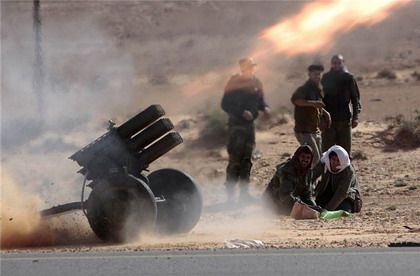
As soon as Russia “missed” the UN Security Council of 1973 (03/17/2011) , and the coalition began to bomb Libya, we wondered why, in fact, they bomb. The well -known part of the participants in our television show did not hesitate: therefore, they are bombing that in Libya the United States has oil interests, because Gaddafi is the “leader of the Arab world”, and for this the Americans want to kill him. A smooth transition was observed, so to speak, "from general to particular." Part of the society is sure that all the events in North Africa and the Middle East, of course, are the result of the Zionomason conspiracy, the heels of the CIA and the conspiracy geopolitical considerations. And in Libya, in particular. And the goals of those who actually rebelled are invariably taken out of brackets.
Judging by the confusion, which covered Western leaders after the start of events in the region, the West hardly prepared them. In America and Europe, they attended the rights of man and democracy, although there were more than a dozen years in this area that cracking authoritarian regimes. And all this time, the West did not pay attention to the lack of freedoms in these countries, mainly for the sake of stability in the region. If the United States incited the uprisings, then the Americans and its allies would act veriously before the start of the demonstrations. In the meantime, Libya's bombing resembles a spontaneous reaction to surprise: after the presidents of Tunisia and Egypt, Caddafi began to shoot back. And he does it quite accurately.
Of course, the United States have interests in North Africa and in the Middle East, they dominate the Cold War there. But to look for American oil interests in Libya is ridiculous: there are not the scale of hydrocarbons. Just as reducing the reasons for the bombing of this country to hunting Colonel Gaddafi as the “leader of the Arab world”. He was not such a leader. If there were, then the League of the Arab states would not initiate a combat resolution of 1973.
The West rightly considered Gaddafi’s behavior “outrageous” and created a persistent immunity in sanctions and bombing in him. The Americans bombed Tripoli and Bengra in 1986, bombed in 1986, suspecting that Gaddafi was building a plant for the production of military poisonous substances. The colonel himself bombed, for example, Hartum. He incited the civil war in the child so that even such antagonists as Iraq, Egypt and the USA were surprisingly united against him. Seven times he began to create varying degrees of cramped unions with Syria, Egypt, Tunisia and Chad. The Gaddafi plan, who had had had had had had been itemed Africa, went down in the history of the Great Islamic Sugar Empire under his beginning. It all ended in the murder of President Guinea Besau, the overthrow of the President of the Upper Volta, who failed to a coup in Nigeria and Gambia. The colonel did not disdain terrorism. They talk about the American liner, shot down over Scotland, but this is hardly the only such “feat” of Gaddafi.
Now the sides fighters in Libya moved to the "tachanks" - to SUVs with attached machine guns. And now it is almost impossible to distinguish from the air who is “for” and who is “against” Gaddafi. The pendulum of success sways - then the rebels will take the city, then they will leave it. Meanwhile, the coalition is bombing there for more than one day, and the end to these bombing is not visible.
Now there are calls for a political exit from the Libyan situation, that is, without shooting. In principle, this is possible: another thing is that for every African or Middle Eastern country special approaches are needed. I happened to be directly involved in the peaceful divorce of the south and north of this state as a special representative of the Russian President in Sudan. The Libyan sides are still far from the cruelty that was accompanied by a feud in Sudan. Nevertheless, international organizations, the UN and the African Union, together with the Institute of Special Representatives, achieved first a comprehensive peace treaty, and then democratic, by African standards, elections and referendum on the self -determination of Sudanese south. I dare to assure that this is a painstaking work, which includes shuttle diplomacy between the centers of the South and North of Sudan, consultations with the leaders of neighboring countries, with the UN, with the contingent of peacekeepers, with the leaders of the rebels, inspection of refugee camps in Darfur, etc. But the result is achieved. So some other than bombing, ways of resolving in Libya were possible. Another thing is that Gaddafi is a kind of person, he began to send emissaries to Europe only now, when he was trapped.
There are complaints about the 1973 resolution. Russia criticizes her for vague formulations. The de facto coalition sided with the rebels, who, in fact, could not be considered purely civilians-they are armed. I believe that Russia has taken the right position in relation to what was happening in Libya: we have a lot of things to do within the country, soon elections, we need modernization, etc. The theater of military operations in Libya is quite far away. Russia may apply for mediation in the conflict, demand a ceasefire and follow a resolution 1973.
The Arab world is changing. The press has a civil war in Libya in the foreground, because it is a war. And the unrest does not stop in Syria, Bahrain, Jordan, Yemen. Demonstrations in Iran passed. Periodically rally in Tunisia and Egypt, although the authorities there seem to control the situation. If a full -scale civil war begins in Yemen, there will be a direct threat to the calmness of its closest neighbor - Saudi Arabia. This undermines all American geopolitics in the Middle East. Eyewitnesses of past wars in Yemen claim that the battles there are held with particular cruelty comparable to wars in Sudan.
There is something in common that formed a predisposition to struggle in North Africa and in the Middle East. This is corruption, unemployment of the young educated part of the population, the lack of civil rights. And the leaders of Tunisia, Libya and Egypt also stayed in their places - their families and the immediate environment simply privatized the national wealth of these countries. North African and Middle Eastern elites did not keep up with the situation, missed the appearance of the middle class. In the countries of the region, under pain of Islamic extremism, any systemic opposition was destroyed, there was no social mobility. And the stability of the regimes of North Africa and the Middle East turned out to be visibility.
How all this ends, no one is guessing. There is a probability of Islamization of the Arab countries, especially since the al-Qaeda militants are fighting on the side of the rebels in Libya. We remember the result of free elections in Algeria when the army had to resort to violence. I was also an observer of the European Council in the Palestine elections, which Hamas defeated. Therefore, the processes that go today in the countries of North Africa and the Middle East should not be compared with the fall of the Berlin wall. In North Africa and in the Middle East, democratic leaders, to put it mildly, are not bright, and figures from previously prohibited extremist organizations come from all over the world. In opposition programs, only the requirement of the resignation of the presidents is clearly sounded, after which the general wishes follow. But there is hope for the establishment of moderate modes with elements of democracy.
The current Arab youth did not choose those who have been in power for more than a dozen years. This generation was tired of enduring and looking for a better share abroad. Tired of being ashamed of my country. Tired of sitting in internal emigration. Tired of the lies of the official media. Tired of the leaders noted by their greatness, for whom, if the elections were honest, no one would vote. Etc. And people in the Arab world lose fear. And this is the main danger for there.