
Translated material
In the ring of "Friends"
Around Russia
 In the ring of "Friends"
June 15, 2012 Arkady Moshes
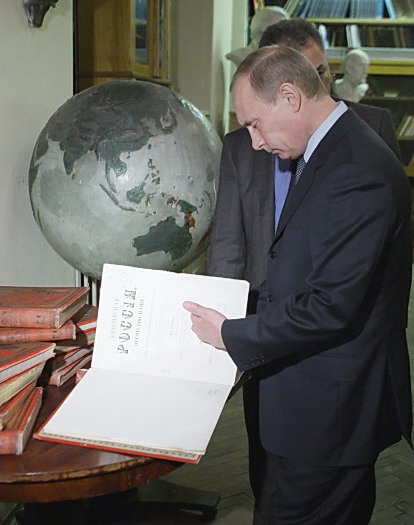
The geography of the recent foreign policy contacts of Vladimir Putin from Paris to Beijing, personal physical energy and negotiation resources that were needed to hold all these meetings and visits cannot but impress. But the substantive side makes you think. There are no real promotion, guarantees of stable and trouble -free relations with partners, in fact, in any direction. Unlike 2004, when Russian diplomacy under the leadership of his post for the second time President Putin began an external offensive, the current plan of action looks like a defensive and does not look much about the behavior of a confident power. It is more and more difficult to hide that difficulties and challenges are growing.
Let's start with Belarus. In the solid balance, only the consent of Moscow to provide Minsk with the next tranche of economic assistance, which until recently was announced solely in exchange for the launch of the privatization program. The incident cannot be perceived otherwise than the victory of Alexander Lukashenko and a huge image loss for the Kremlin. Lukashenko was not afraid, showed firmness, its usual rhetorical directness, violating diplomatic decency. “No resources have no resources in Russia. Neither Putin has to strangle Belarus, ”he said three weeks before the visit and, contrary to everyone, we received money about the surrender of the country. It can be expected that in the near future the appetites of Minsk will only increase, since Moscow at the moment demonstrates that it cannot afford to aggravate relations with Lukashenko, not to mention the fact that he really starts to twist his hands, achieving the transfer of property or other concessions.
Let's move on to the blitz-visit in Berlin and Paris. The street protests, which the Russian president met in the German capital, of course, can not be noticed, but the cold attitude towards Putin’s third term from the side of Mrs. Merkel will not be able to ignore. Of course, Germany’s business circles are not going to abandon existing business capabilities, but the failure of the declared plans of Medvedev’s modernization seriously and, apparently, for a long time lowered the bar of expectations in the field of bilateral economic cooperation. The transformation of the European gas market into the buyer’s market, and not the seller practically ended with the previously common opinion in Germany, that there is no alternative to increase the share of Russian gas in European energy consumption. It should be added that the description of Russia in the German press almost ceased to differ from the English-speaking media, and to convince someone, as it was in the days of Gerhard Schroeder, that Putin’s rejection is an “imperfect” democracy, which, nevertheless, strives for perfection, today is no longer possible.
It is also impossible to recreate the triangle of the Moscow-Berlin-Paris, similar to the period of preparation of the American operation in Iraq. On the one hand, Barack Obama largely managed to restore the transatlantic unity, the symbol of which was the holding of the last NATO summit in Chicago, in the United States. On the other hand, Russian assessments of the situation in Syria are fundamentally do not coincide with the opinion of Europeans. The Western military intervention in Syria has not yet become inevitable, but the threshold, of course, exists. At some point, the escalation of violence, if it continues, the increase in the number of victims will become unacceptable, and the inability of the UN Security Council will cease to be a restraining factor. There were enough precedents for actions to bypass SB in recent years. However, if Western intervention does not even become a reality, the Assad regime in Syria will still weaken, and his support by Russia will eat its influence in the Middle East, and this will affect the international positions of Moscow as a whole.
Everyone has been used to the absence of the results of summits of Russia-E. Indeed, it is pointless to expect the introduction of a visa -free regime - for all citizens, and even more so separately for owners of official passports - when the overall level of expectations falls, and the confidence of Europeans is that any person with ties or money can get a service passport in Russia, on the contrary, is growing. Moscow taught everyone that she was not dramatized. But this is only a good mine. In fact, dramatic notes sound clearly. The so -called third energy package directly threatens Gazprom’s positions in the EU countries, and Vladimir Putin publicly demands to make an exception for the Russian monopolist and allow him not to sell assets acquired before the adoption of this legislation. To which the head of the European Commission Jose Manuel Barrosa is a person who, earlier, in response to the sharp statements of the Russian leader, as a rule, smiled silently - firmly and prosaically replies that the third package will be realized whether Russia likes it or not. And to talk about the approaching collapse of the euro and the European Union itself at the very moment when the ruble falls towards this euro, it turns out somehow not from the hand.
Then the turn of Asia comes. Islam Karimov, apparently, himself, not wanting it, makes an unpleasant diagnosis of the current state of Russia, when he says that the nomenclature of Russian goods is very scarce. Thus, it turns out that Russian industrial export is uncompetitive even in Uzbekistan. The visit to Kazakhstan becomes a bright spot, and it cannot be otherwise, since it is both official and anniversary, since the 20th anniversary of the signing of the basic treaty on friendship and cooperation takes place. But this does not mean that there are no questions. Only a few weeks ago in Minsk, President Nazarbayev unequivocally made it clear that in order to further develop integration processes from Russia, they would wait for improvement of conditions for the transit of Kazakhstani energy.
And finally, China. The status of the visit is state, which relieves all issues regarding the real priorities of Russian foreign policy. But it does not eliminate the accumulated anxiety. Mutually enthusiastic diplomatic statements and the achieved stability in political relations are not able to hide the increase in problems in other areas. Yes, the turnover is growing, but it grows due to an increase in Chinese exports to Russia, and not vice versa. That is, the money earned by the sale of raw materials to Europe goes to the Celestial Empire. There are practically no ways to change this trend. Russian weapons exports to China are quickly reduced, there were no contracts for gas supply both, Russians in the WTO will almost certainly give Chinese manufacturers new opportunities to go through Russian customs protection, and Chinese investments in Belarus in the medium term will allow them to develop production already within the customs union.
Everything has already been said about the SCO summit. It is enough to mention that the Russian media perceived Russia's ability to block the adoption of a whole series of economic initiatives of China as a diplomatic victory. Against this background, the usual moderately anti -Western statements and meetings with President Iran Ahmadinejad no longer look like the main news.
By the way, in this context, the visit of Putin that was not there is again-his non-participation in the meeting of the “eight” in the Kemp-David. “Reloading” from the United States - in this case, it doesn’t matter what it was based on reality - it was a success. And now the prospect of its folding is becoming a reality. Barack Obama refused to come to the most important APEC summit for Russia in Vladivostok, without the support of the United States, the extension of Russia's presence in the Pacific region will be extremely difficult, and without this, aligning the balance in relations with China is difficult to imagine.
We will summarize. The effect of presence is certainly ensured, however, it is not necessary to talk about the prospect of restoring the global role or at least regional leadership.
It so happened that in the past ten years, Moscow has been striving to maintain freedom of hands, “equality” in relations with big players, loyalty from post -Soviet clients and pragmatic, business and not always transparent “exchange” not only in the economy. Such an approach did not imply mutual confidence, long -term and based on the values of relations. Therefore, today it is not surprised that other leading countries do not want to connect themselves with some immature obligations regarding Russia, but are ready to outplay the situation in their favor as circumstances are changed, and customers are all the time ready to look for new patrons.
Photo by RIA Novosti