
Translated material
Where to wait for the changes
In society
 Where to wait for the changes
December 9, 2011 Denis Volkov
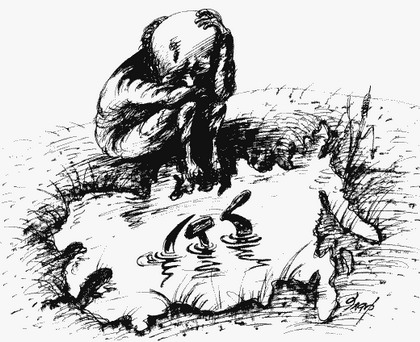
Twenty years ago, the collapse of the Soviet Union gave rise to within the country and in the West the illusion of a quick and inevitable transition to the market and democracy. The inertia of state institutions and conservatism of man-both of them imposes serious restrictions on economic and, especially, political changes-somehow did not think. Unfulfilled expectations of quick changes, and now also intensifying in the post -Soviet space, authoritarian trends give rise to disappointment. The return of Vladimir Putin to the presidency for many served as a signal that you can forget about modernization in Russia. The confusion is experienced by many who tried to bring democracy in Russia.
In doubt that in the foreseeable future, something will change in the country, understanding what you can do and who to support, some of the foreign charitable foundations turn its programs in Russia (as Oxfam and Ford Foundation did). Others reduce financing and revise their priorities. Meanwhile, it is today the civilian sphere in the country is experiencing structural transformations: available sources of financing are changing, generations in civilian organizations are changing, new initiatives are emerging. Therefore, support for certain areas can be especially effective.
For planning for a long -term perspective, it is necessary to understand well what is happening. Work on the study of sources of possible changes in authoritarian regimes is actively conducted in the West. For example, on the pages of Journal of Democracy. But much is being done in Russia. The “Soviet man” (the project of the same name was launched by Yu. Levada in 1989 and continues his colleagues) - a crafty, adapting to any power and suspicious to the outside world - seems to be one of the main obstacles to changes. Its features are reproduced again and again in new generations. Duma is not a place for discussions? - Not a problem. Business and non -legal courts depending on power? - The main thing is to achieve your own, but in which way it is not so important. The public competition of various social groups included in the process of making state decisions cannot even be presented in Russia. The society remains half -closed. 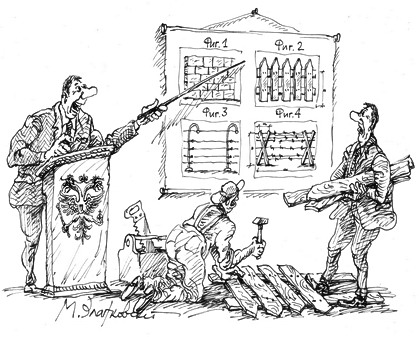
Nevertheless, the changes occur. Almost a third of young townspeople speaks at least one foreign language (among the population as a whole - less than one seventh). More than half of the young Muscovites have been abroad over the past three years (among the population as a whole only 10%), and a quarter has foreign friends. About 70-80% of the youth of large Russian cities use the Internet and social networks. More than half of the young Russians download films on the Internet (among the population as a whole - about one fifth), a third - books. Thus, they gradually fall out of the influence of state censorship and propaganda. The instruments of knowledge of the surrounding world among city youth are fundamentally different than the average Russian. Civil activity is growing in the same layers. New public initiatives are more diverse, they use modern technologies and management rules, think about effectiveness, are open to cooperation with other partners. It is easier for them to fit into global cooperation.
Russian public initiatives, such as, for example, Archnadzor or the movement against the construction of the Gazprom building in St. Petersburg, today learned to attract attention to serious social problems, sometimes they manage to influence the decisions of the authorities through public opinion. The authority of large human rights organizations like MHG, Memorial or the Union of Committee of Soldiers' Mothers is recognized as an international community and Russian authorities. But even it is difficult for them to develop. The Russian state increases the financing of non -profit organizations, but we are talking about a narrow circle of topics (healthcare, sports, support for homeless, religious organizations, etc.) and tight political control. A business that has an example of M. Khodorkovsky before the eyes of M. Khodorkovsky is ready to finance only projects approved by power. It is impossible to get support from the entrepreneur for human rights activities.
There is another extreme. For a long time it was possible to exist exclusively with foreign money, regardless of the interests of third parties. Today it is no longer possible. In the best situation were those who diversified their resources, engaged in social entrepreneurship, attracts individual donations. That is, those whose activities are truly in demand.
In order to move forward, it is necessary to take into account negative experience. Foreign funds have the advantage over their Russian colleagues that they can think strategically, for a long perspective. “Work on errors”, assessment of the effectiveness of already completed programs would help to concentrate on promising areas. For example, it is useful to understand: various gender programs had what long -term effect on the Russian civil sphere. Who is more efficient to accept for long -term programs of foreign internships: students who have only graduated from the university and few people attached to Russia, or specialists included in the work of professional communities who have obligations to colleagues and therefore will return back with more probability? Such an analysis can perform both foreign and Russian experts. It is important that the results of such work are not only published, but become a reason for reflection within the Russian civil sphere.
Recent studies show that today NGOs almost completely lack planning for a long -term perspective. Life from the project to the project, constant attempts to “make ends meet”, the lack of “long money” along with political uncertainty do not allow public leaders to look forward. The problem is aggravated by a gap of generations both inside large organizations, and between “old” and “new” initiatives, isolation from persons making decisions. In resolving these issues, both the experience of foreign funds and organizations, and the achievements of leading Russian NPOs and activists, may be useful. A public discussion of existing developments in itself can become a catalyst for positive changes in the civilian sphere. Support for the most authoritative - “exemplary” - organizations and initiatives, constant development (active, not passive) Western experience will contribute to the sustainable dissemination of these knowledge from the center to the periphery. At the same time, do not spray money to projects that can be supported by the Russian state.
Following Michael Edwards, the author of The Small Change, it can be repeated that any separate improvements in people's lives and the work of non -profit organizations will not lead to positive changes if they are not provided with changes in the work of social and political institutions. The artificial change in the political regime is expensive. For color revolutions in the post -Soviet space, civil organizations and activists in Russia paid their price. The mitigation of political conditions and democratization - work that Russian non -profit organizations and initiatives will have to do it themselves.
Author-Head of the development department of the Levada Center
Graphics of Mikhail Zlatkovsky / Zlatkovsky.ru