
Translated material
The results of the year. Symphony Gudkov
About Russian forums in Europe
This fall, Budva, Prague and Vilnius accepted hundreds of “global Russians” living in Russia and outside - artists, politicians and experts. For all the dissimilarity of these meetings, they were related by goals: freedom, creativity and the good of the country.
Hook - anxiety signal
Autumn was troubled. Shocked IL-20. Attacks on Israel. Syria Syria Systems S-300. The maneuvers "Vostok-2018". The capture of Ukrainian courts. The arrest of Leo Ponomarev. Tu-160 in Venezuela ...
Such is the background of the five Russian forums that have passed last three months abroad. This is not surprising. The hostility of the authorities for dissent has been preventing the Russians from discussing the acute problems of the house for almost two centuries. And the organizers - Marat Gelman, Harry Kasparov, Anton Litvin, Zhanna Nemtsova and Mikhail Khodorkovsky - live outside Russia.
The Dismanum Festival was held in Budva. Kulturus, “Nemtsov-forum” and the conference “Open Russia” in Prague. The Forum of Free Russia is in Vilnius.
He was opened by the "Gudkov Symphony." Marat Gelman and Sergey Khismatov brought this essay there, where in a strange harmony signals were merged at the start of the “roaring 20s” to the changes in the country and the world.
A hundred years later, participants in Russian forums want to live in the world more calm and free. And in Russia, turning from archaic - to development; from military bravado - to the world; From the constant pincer of power - to its rotation. This is one human rights activist Olga Romanova, media expert Vasily Gatov, deputy Ilya Yashin, writer Boris Akunin and hundreds of other participants in these meetings.
The art of freedom
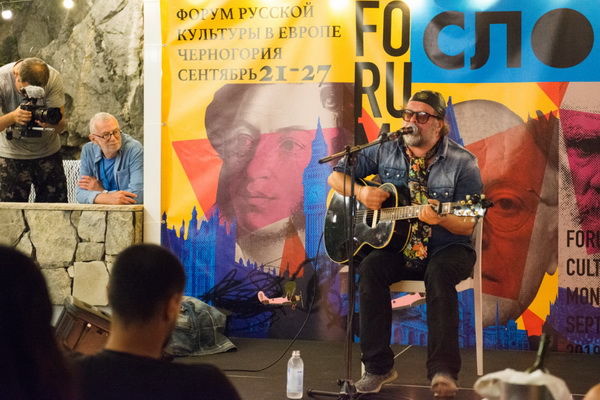
For artists (in every sense of the word), space and a tool of change are art. In September, guests from Berlin, London, Prague and other cities of Europe arrived in Budva in Budva. The festival was held by the Committee created by Marat Helman with the support of the sponsors - Oleg Reps and Neil Emilfarb, who invited artists to the stylish tourist complex "Duklya".
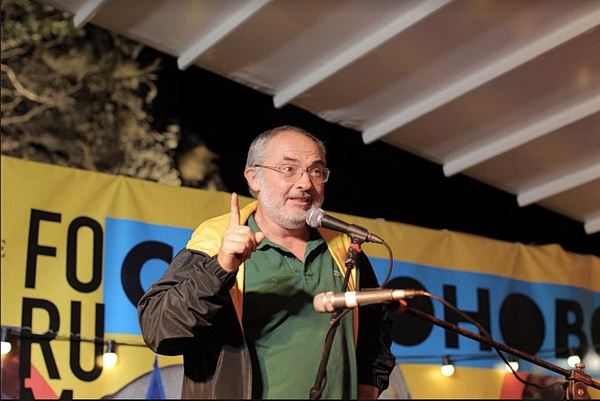
“Russian art,” Marat believes, “has spread so far beyond Russia that it is now comparable to English and Spanish, which has long and freely overcame the borders of the great-great-grandson and influenced the development of culture around the world.”
To be free in Russia - special art. And to communicate to artists is easier where concerts are not prohibited, they do not pour urine on the paintings and do not hang the “tradition” castle on the work. Well, strange, that they go to Budva? And in Prague - to Anton Litvin for the Kulturus festival. 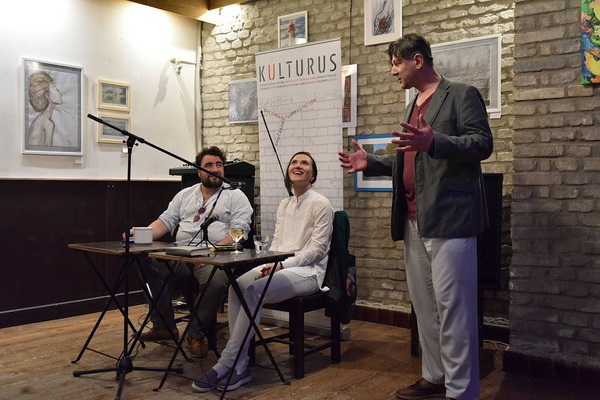
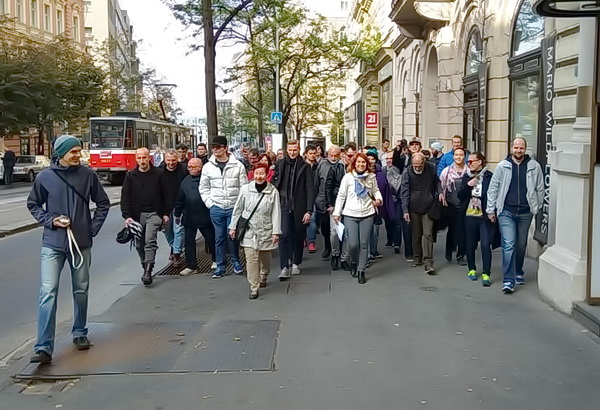
His motto of this year is Ruska Laska-“Love in Russian”. The emblem is the fork of Vasily Blondov, with peaks in the form of letters L, O, V and E. Designer Peter banks connected love and pitchfork on the forum poster. The sponsor became the publishing house of Artguide Editions and its founder Danil Stratovich.
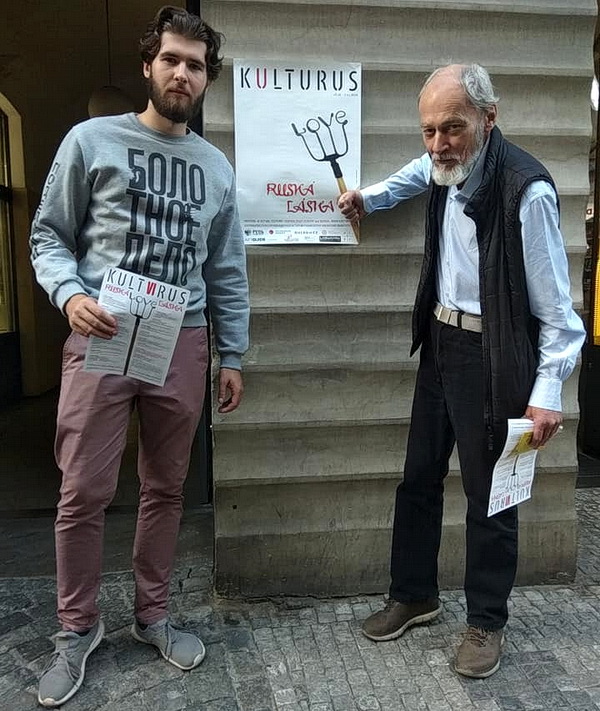
Among the guests of Kulturus, Lev Rubinstein, Artemy Troitsky, Viktor Shenderovich and hundreds of people from border art and politics. These are very different worlds. And the problems between them arise when politics breaks into art to conquer the artist. And he, in response, exposes a bow, brush, feather and is rebuffed - he goes to the festival. To Budva. Or in Prague. Or - to the forum in Vilnius.
“The theme of“ cultural resistance ”was first very presented here,” said Alexander Morozov, the moderator of the Russia and Ukraine: Scenarios of the Future at the Free Russia Forum, and the co -director of the Boris Nemtsov Center at Karlovy University. - She was discovered by the famous Lithuanian poet Thomas Ventzlova. And people were from many countries. In Russia, pressure on society is increasing, and participation in such meetings is expanding. ”
Bright “art content” is a feature of this year’s forums.
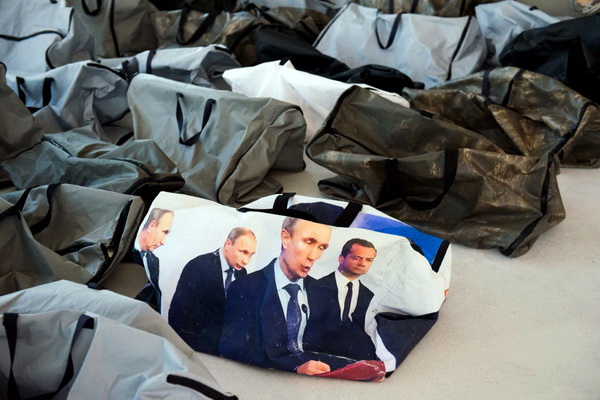
The poetic duet of Alexander Delphin and Dinara Rasuleva spoke triumphantly in Vilnius. The rat-poetr-art-password Vasily Shumov-a projection on the screen of wild quotes from the news and speeches of Russian politicians for a powerful electro-bit. The works of Konstantin Eremenko and the installation “it's time to blame” were pleased - a crowd of road bags. And the covers of the magazine "Results" looked from the walls as archaeological finds of the era of the gloomy policy. 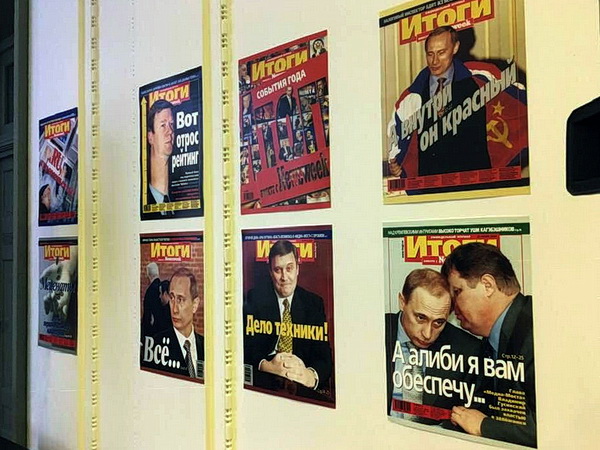
Civil drive
But politics did not disappear. In any case, judging by the performances on the forums of Nemtsov and “Open Russia” in Prague in October and November. She is in Russia. Just since the time of "results" has changed.
The result is sad. Delegates indicate the constant narrowing of the sphere of free and safe actions of citizens requiring honest elections, rotation of power, freedom of speech and arrangement of life based on democratic values.
And experts in response - about the "split of the elites." About the "silent majority, which is not." On the danger of the introduction of state ideology, the creation of a “new person” by the system , dividing Russia “through values into“ Europe ”and“ sultanat ””. About relations with Ukraine and the West "After ...". On "the degradation of the state and instability in the transition to the economy of diversity and human capital ." Which the bosses of the economy are not waiting. And those who are waiting are ready to fight with her. After all, human capital for them is a strange quirk.
Like civil society. They often talk about him in the forums and tenaciously hold in the field of view. Since many consider its structures - that is, organized, responsible and active citizens - the social base of democratization. But for this you need a powerful drive. And it requires methodical preparatory work.
"Russophobes do not lose heart"
So generalized the mood on the forums of the first channel. And all federal ones “shot”. And even more.
I also did not notice gloom. Like, however, and Russophobes.
However, what is the point of talking about the objectivity of television agencies today?
Which of the participants in foreign Russian forums could surprise the story “Vesti of the Week” about the fact that in Vilnius they “compose the next sanctions list”, “scribble denunciations to Washington” and reports “On the work done”? Like the words of Ren-TV that they "gathered in Prague to discuss our fate with you."
In such products, two cliches are used from time to time. First: “Russophobes” live “in expensive hotels”, drink “expensive drinks”, hang out on “social raautes”. Second: “they” even eat secretly, hide, threaten.
Clichy about expensive hotels - for envious. About secrets and threats - for the drowsy. Both mobilize the aggressive instinct. This is the basics of propaganda.
Like the "cut" of performances. They will cut, and now the speaker shouts: "Russia is an absolute evil!" Although he speaks not about Russia as such, but about the one where there is no lack of freedom.
In search of the genre
By the way, they also talked about propaganda. For example, "it is not always a lie, but always evil." Meanwhile, this is a craft or, if you want, an art that can create both evil and good. Depending on the goals set for him.
The goals of the three forums, which can be called political, on the one hand, were input, and on the other, they were similar. The organizers of the Nemtsov Forum see their task “Search for new strategies”. “Open Russia” intends to “develop a scenario of a possible future for Russia without a support on the current government, develop formats, ideas and approaches.” It was expected that in Vilnius a group of Andrei Illarionov would offer a “model of the future”, which worked on a closed mode in May.
According to the results of the meetings, the development of strategies, scripts and models is a matter of the future.
However, a report, completely dedicated to this topic, sounded at the Open Russia forum. Mikhail Khodorkovsky set out his vision of the new Russia on points. It is extremely brief: the dominance of law, democracy, strong government, a strong army, a strong large business, the development of megacities, good relations with the West. Russia is a country of good universities, good roads, high technologies. 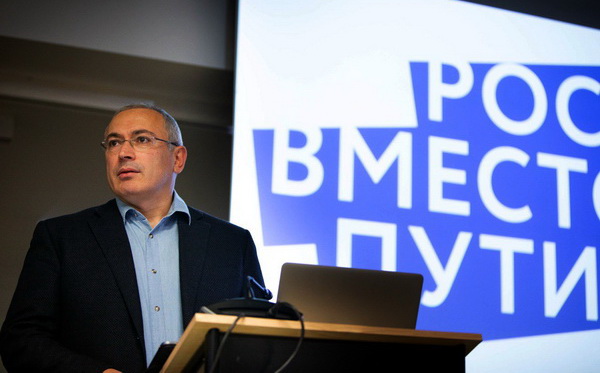
These are the theses of the project of the political program. Will it be possible to expand them into a strategic document? How long will the preparation of other “models”, “strategies”, “scenarios” and “routes” take? Is the forum genre suitable for this? 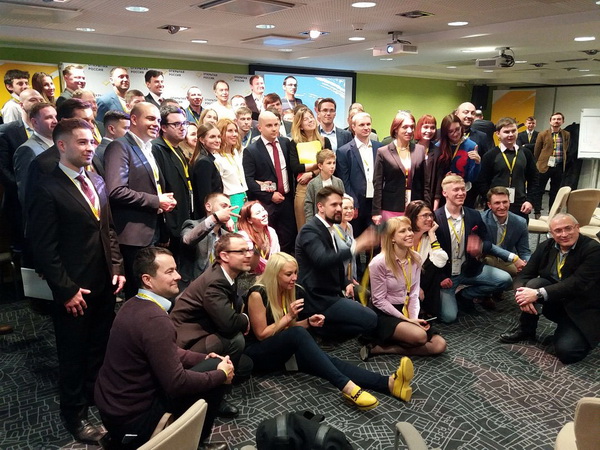
The question is serious. One of the participants in the Open Russia conference said that “democracy is not to solve something quickly,” but I think it can be expected that the results will be. There is an intellectual resource for this. Among the participants in the meetings there are many politicians with experience, bright mediason and strong scientists.
Will they turn somewhat played on forums of different scores into a symphony? The intrigue, however.
Photo from open sources and social networks.