
Translated material
SVR: Change of image
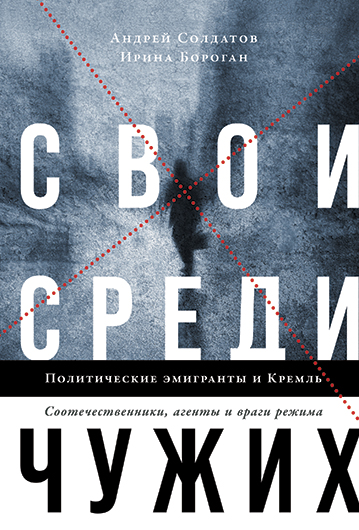
Kolta publishes the chapter from the Alpina Publisher publishing house of the Russian version of the book by Andrei Soldatov and Irina Borogan “His owners among strangers. Political emigrants and Kremlin: compatriots, agents and enemies of the regime. ” In the focus of the book of Soldatov and Borogan - the bloody story of Russian espionage, written in the footsteps of secret operations abroad.
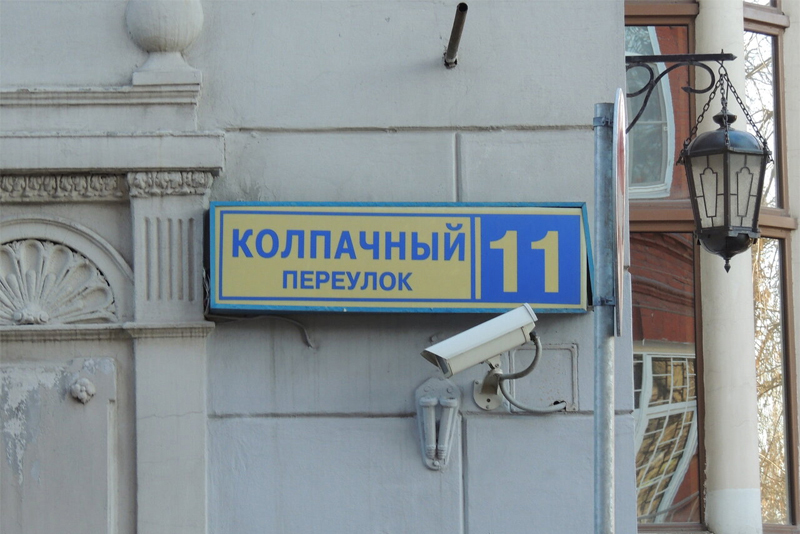
September 1992, Moscow. The director of the CIA rose from his place with a glass in his hand. Before him at a long table in the spacious hall of the SVR mansion in Kolpachny Lane, ten Americans and ten Russians sat opposite each other. Robert Gates has just turned 49, of which he served in intelligence and the National Security Council, engaged mainly by the Soviet threat, and a few months ago, President George Bush Sr. appointed him the director of the CIA. “I want to offer a toast,” he said.
The Americans dubbed this blue and white mansion between Beria's House. (In fact, at one time this house did not belong to the ominous chief of the NKVD, but to another - no less bloody - the Minister of State Security Viktor Abakumov.) Now the mansion was used by the SVR to meet with representatives of the press and Americans.
Gates flew to Moscow to establish contacts between intelligence of the United States and Russia. In honor of his arrival of the SVR and the Russian counterintelligence agency, which will soon become known as the FSB, a solemn dinner was arranged in the mansion in the cap. “Today I am here,” Gates began, “because relations between our countries require cooperation of our special services in areas representing mutual interest. The time has come when we must turn the page of history - of course, not forgetting about our past and real differences - and jointly take up the elimination of the threats that we are faced with the onset of a new era. ”
Russian generals smiled pretty. The concept of "cooperation" fit into the new image of the SVR as well as possible.
The following year, the director of the SVR Primakov flew to the United States. The head of intelligence of this level arrived in America for the first time after a trip there Kryuchkov. But Kryuchkov came secretly, under the guise of an ordinary diplomat; Primakov, on the other hand, flew on an official visit and in Washington met with James Wulsey, the director of the CIA in the new administration Bill Clinton. The next month, Primakov received Woolsey in Moscow.
At one of the meetings of the CIA and the SVR, among other things, they agreed to abandon the tactics of active events. “It was a gentleman's agreement between the American and Russian special services,” a former SVR employee told us. Service “A” was officially dissolved - at least, Russian colleagues assured so.
“There has never been a written agreement between us,” said Rolf Movatt-Larssen, who headed the Moscow residency of the CIA in the early 1990s and was present at that very dinner in Kolpachny Lane. “Just by the end of the 1980s , they and we realized that we should act carefully so as not to disrupt negotiations between Gorbachev and Reagan.”
Now the SVR was facing a new task - to gain the trust of the Americans. To do this, she needed to improve her image in the eyes of the Western public. The Russian intelligence had already been a carefully thought-out plan: in Yasenev, they began to work on it before the collapse of the Soviet Union, and now four years later, in 1993, it was finally come to realize it.
But this four -year delay ruined almost everything.
 © Alpina Plisher
By 1993, Russia has changed beyond recognition. Now it was a market country, almost without rules and sentiments. People who worked for the state, including in foreign intelligence, lost all social guarantees at once, and the complex in Yasenev with its carefully protected shops and massage offices dilapidated before our eyes. Smart and resourceful opportunists quit from the SVR with whole departments.
Among those who decided to try to catch luck elsewhere, there was a clever and sociable young officer Alexander Vasiliev. The former captain of the North American department of the first main department, he got a job as a journalist in the popular newspaper Komsomolskaya Pravda.
In the summer of 1993 , 31-year-old Vasiliev, a smiling, chubby man with long blond hair, published a sensational article. It described one of the most successful in the history of the KGB of active events of the A service “A”: in the mid -1980s, the Patriot Indian newspaper published an article that stated that the AIDS virus developed a Pentagon as part of “experiments on creating a new and dangerous type of biological weapon”. The story instantly scattered around the world, and millions of people believed in the conspiracy of the American military.
The journalist of Komsomolskaya Pravda was not the first to expose this disinformation of the KGB: in the West they had known about it for several years. But Vasiliev was the first to receive confirmation of this story from the lips of the director of foreign intelligence, Yevgeny Primakov. However, it was much more important than another: the author of the article claimed that the KGB launched this disinformation in response to the spread of the CIA of false rumors that the KGB was behind the attempt by Pope John Paul II. In other words, in the material of Vasiliev, the American and Soviet intelligence services appeared as equal opponents who simply exchanged blows, and the active event of the KGB looked like a logical response to the attack of the CIA. The foreign intelligence service could be satisfied: such a look consistent with the legend invented by it.
The day after the release of the article, Vasiliev was called the head of the SVR press bureaus Yuri Kobaladze. He invited a former colleague in a blue and white mansion in Kolpachchny Lane to talk. “I thought they would have a skin for this article,” Vasiliev recalled. But instead, Kobaladze made him a business proposal. He explained that the SVR is launching an ambitious publishing project: the Association of Foreign Intelligence Veterans agreed with Alberto Vitalo, the head of the Random House publishing house, on the publication of a series of five books on KGB intelligence during the Cold War. Kobaladze invited Vasiliev to join the team.
The KGB helped to publish the first such book even before the collapse of the Soviet Union. It was the story of the most famous defector of the Stalin time - Alexander Orlov (by the way, the head of Naum Eitingon in Spain). There were two authors: the KGB officer and the British historian John Castello. The book was successful, so the SVR decided to conclude a contract for five more books. The first was planned to devote the activities of Soviet intelligence in the United States in the 1930s-1940s . The second is the confrontation of the KGB and the CIA in Germany in the Age of the Cold War. The third - intelligence operations in the UK before and during the Second World War. The fourth is the Caribbean crisis, and, finally, the last, fifth - the story of the murder of Leo Trotsky. Two authors were supposed to write each book - Russian and Western. The fundamental consent of the Random House in the SVR received in June 1992, and since then Kobaladze has been looking for a suitable co -author for the first, most sensitive, books about KGB operations in the United States. In the end, his choice fell on Vasiliev.
Agreeing about the publication of books, the SVR clearly knew what she wanted: to release a well -retireed version of her bloody history for the Western audience, and authoritative American and British historians would give her respectability as co -authors. The SVR was not going to give Western researchers direct access to the KGB secret documents - this was allowed only to Russian authors, mostly former or existing foreign intelligence officers. In short, the leadership of the SVR was going to tightly control the entire process of writing books, and from the very top. “Primakov personally led from Yasenev negotiations at the final protracted stage,” recalled James O'Shi Wade, who at that time was the vice president of the Crown Publing division of Random House and conducted the project on the western side.
The project was positioned as a unique opportunity to look into the secret archives of the KGB, but not everyone in the West bought this explanation. In Yasenev, they really wanted to attract the British journalist Philip Knightley, who became famous for his investigations of the activities of the English special services and was very critical of them, it was he who was the first to expose the Soviet double agent Kim Filby as an officer of British intelligence, which the British had previously called a diplomat.
Knightley has since maintained contacts with Philby, came to him in Moscow and wrote his biography. But Knightley refused to take part in writing a book about the Cambridge Five. He rightly feared that the initiative of the SVR was pursuing a purely propaganda goal. When a book about Orlov was published in 1993, Knightli publicly called it misinformation.
Sitting in the Kobaladze office, Vasiliev considered the proposal. He knew almost nothing about the activities of the KGB in the United States. “Of course, I knew about the trial of Rosenbergs, but nothing more. In my time in Yasenev, all archives were strictly classified. To get access to them, a special resolution of the authorities was required. And against the backdrop of all these scandals with defectors and traitors in the late 1980s , no one wanted to incur suspicions, trying to find out more than you should. ” Intuition suggested Vasiliev that “all this [publication of books] was another“ asset ”. They just wanted to fool the Americans. ” He did not want to become a pawn in someone else's game. When he reminded Kobaladze that he was no longer an employee of the SVR, he assured the former colleague that he would gain access to the true documents of the KGB: Vasiliev will not have to be content with the information that the current employees deign to be provided to him.
Well, Vasiliev thought, in this case he has a chance to do something really important, making good money on this. He sincerely believed that Stalin's intelligence operations in the United States deserve to be proud of them - and tell people about them. “There was nothing to be ashamed of. It was a glorious past - our intelligence stole the secret of a nuclear bomb and changed the course of world history. In addition, she really did not participate in repressions, ”Vasiliev told us.
It was such a version of its history that the SVR wanted to present to the Western public. A former intelligence officer, Vasiliev was brought up on this legend and believed that the KGB documents would confirm it. It seemed that Kobaladze was not mistaken with the choice of the author.
He and Vasilyev hit their hands.
The next two years, Vasiliev every day from nine in the morning to five in the evening spent in a blue and white mansion of the SVR in Kolpachny Lane. He shared the table with another “historian”, the current Officer of the SVR, who worked on a book about reconnaissance operations in Britain - the very one that Knightley refused. Day after day, Vasiliev studied voluminous folders with documents that were delivered from Yasenev at his request.
As a former Yasenev employee, who knew the KGB’s internal procedures perfectly, Vasiliev knew what to ask. He hunted for pale green and brown folders with yellowed sheets inside-the so-called affairs of operational correspondence, abbreviated add. In these folders, real treasures were hidden: encrypted telegrams, which for decades exchanged Soviet spies in the USA and the Moscow Center. It was the most important and still unknown part of the history of Soviet atomic espionage. (Among other things, there were the reports of Vasily Zarubin and Lisa Gorskaya. It is thanks to Vasilieva that we today know the details of how Zarubin twisted his hands to Jacob, demanding to surrender the agents.)
Studying the documents, Vasiliev carefully rewritten everything to the notebook. When his notebook ended, he was allowed to take her home. In total, he filled eight notebooks.
Trusting his former comrade in arms, Kobaladze did not take a non -disclosure subscription from Vasiliev. This was his first mistake.
The leadership of the SVR simply lost sight of the fact that in the 1990s, intelligence did not scare people as the KGB did. The Soviet regime has long ended, and the SVR did not have the same terrible reputation as its predecessor. The SVR made another mistake when I did not offer Vasiliev money for work: the entire fee for the book was to be paid by the American publisher.
Thus, Vasiliev, not connected by any obligations, was a free bird. In January 1996, a former scout realized that he had a real treasure in his hands - and it was time to act. He later claimed that he had a bad foreboding: "The SVR was acting in the secret cell of the Communist Party, and they began to threaten me." But, most likely, the reason was much more banal. This month, the head of the SVR Primakov was transferred from Yasenev to the height of the Foreign Ministry to Smolenskaya, appointing the Minister of Foreign Affairs, and Vasiliev could simply be afraid that after the departure of his main patron, the foreign intelligence service would close the project and demand to return all its records.
Vasiliev scanned his notebooks and hid the disks of friends. Thanks to his acquaintance at the British Embassy, he quickly received British visas for himself and his wife and flew to London. A laptop was carrying a laptop with him in hand luggage Vasiliev, because he suspected that at the Sheremetyevo Moscow Airport they could search and start with a laptop - and several disks with an electronic version of his precious notebooks.
Having moved to the UK, Vasiliev, with the help of American historians, turned his notes into two books on the activities of Soviet intelligence in the United States in the 1930s and 1940s . These books - “Forest with ghosts: Soviet espionage in America - the Stalinist era” (1998) and “Spies: the take -off and fall of the KGB in America” (2009) - became the most shocking revelations of all that were published on this topic.
Vasiliev was neither a hero nor a fighter for the truth. He just saw the opportunity and did not fail to use it. But what he did helped to shed light on one of the most secret organizations in the world. In 2009, his notebooks, translated into English, were digitized and published on the website of the Woodro Wilson International Scientific Center. Finally, the United States received from Yasenev himself evidence of what important role the US Communist Party played in Soviet espionage-which was always categorically denied in Soviet and Russian intelligence. At the same time, the reputation of some prominent American nuclear physicists, especially the head of the Manhattan project, Robert Oppenheimer, was restored, who, as it turned out, was never a Soviet agent.
What was conceived as a cunning propaganda campaign turned out to be a catastrophe for the SVR. Vasiliev did not even have to become a defector - he simply flew out of the country. Times changed, the borders were opened, but the Russian special services were too slowly aware of the new realities. Meanwhile, books, as before, continued to work.
They were so confused in the SVR that they did not even try to start criminal prosecution against Vasiliev. "I am not a traitor, they invited me themselves!" - Vasiliev explained to us with a smile from his house in the UK. Indeed, if intelligence decided to investigate, her leadership would be the first to hit, but no one wanted to. Vasiliev was left alone, but he never returned to Moscow.
Of the five books planned by the SVR, only four came out - if we count the first, the authorship of Vasiliev. The book about the murder of Trotsky was never written - most likely, in Yasenev they decided that they were not ready to reveal the KGB archives related to the murder of the most famous Soviet political emigrant. The secrets of Naum Eitingon remain reliably hidden - and, possibly, forever.
Then it seemed that the failed “book” operation was the last initiative of the old guard, an attempt to influence the way to influence how history would remember them. In the end, at that time all the highest posts in Yasenev were still held by the generals who made their careers in the KGB. And the old dog, as the saying is said, cannot be taught new tricks.
But the years passed, and it became clear that even the departure of the old guard has changed little: the new Russian counterintelligence and intelligence services were not going to abandon old habits.
In the late 1990s, when we just started writing about Russian special services, we constantly heard from more experienced colleagues that they, as before, are actively engaged in disinformation, although no one knew the details. According to rumors, now operations of this kind were not called active events, but by assistance programs or assistance operations - it was believed that they should affect the policy or position of foreign governments in order to “promote” the Kremlin course.
In 1999, rumors were confirmed. Oddly enough, this happened thanks to the Federal Security Service itself. At a meeting with reporters, the head of the Center for Public Relations of the FSB proudly said that he was appointed head of the new unit-the Office of Assistance Programs, which also included the press service. Многие сотрудники ФСБ были возмущены: их собственный генерал выдал секретный термин, предназначенный только для внутреннего использования.
Еще через десять лет появились документальные свидетельства о том, какие именно операции по дезинформации проводит ФСБ. Летом 2010 года группа разочарованных сотрудников ФСБ организовала утечку документов, которые свидетельствовали о том, что за дезинформационной кампанией на Украине, организованной с целью помешать Киеву отказаться от закупки российского газа в пользу туркменского, стояла ФСБ. В украинских СМИ была запущена ложная история о том, что украинские спецслужбы якобы финансировали туркменскую оппозицию. После распада СССР минуло почти 20 лет, но ФСБ продолжала использовать старый инструментарий КГБ.
А что же внешняя разведка — продолжали ли в СВР использовать тактику ПГУ КГБ? Это было непросто выяснить: СВР, как оказалось, хранила свои секреты гораздо лучше, чем ФСБ. Но весной 2013 года, спустя двадцать лет после того, как Роберт Гейтс поднял тост за новую эру сотрудничества между разведками США и России, появился ответ на этот вопрос.
В довольно уродливой бетонной высотке на 67-й улице, между Третьей и Лексингтон-авеню, есть много разных офисов, в том числе и тот, что среди посвященных известен как «подводная лодка».
Официально в этом 12-этажном здании находится постоянное российское представительство при Организации Объединенных Наций. Это настоящая крепость: построенное в начале 1960-х годов здание тщательно охраняется — высокая ограда, камеры видеонаблюдения, расположенные под всеми мыслимыми углами. На другой стороне улицы находится отдел нью-йоркской полиции, поэтому неподалеку от входа в здание с российским триколором всегда стоит несколько полицейских машин.
В один майский день в 2013 году на восьмом этаже этой высотки два офицера российской разведки вели важный разговор. Восьмой этаж занимает резидентура СВР в Нью-Йорке — и это крепость внутри крепости. Здесь нет ни окон, ни телефонных линий, которые связывали бы резидентуру с внешним миром. Из-за утолщенных стен и перекрытий потолки здесь существенно ниже, чем на других этажах, а системы электроснабжения и вентиляции автономны, чтобы предотвратить возможность установки жучков, поэтому резидентура и стала известна как «подводная лодка».
Два занятых разговором офицера СВР сидели без пиджаков. В «подлодке» много лет действовало строгое правило: оставлять всю верхнюю одежду и пиджаки в гардеробе восьмого этажа на случай, если американцы незаметно подсунут в одежду жучок.
«Женя подготовил, так сказать, предложение», — начал первый.
«Угу», — пробурчал второй.
«Я должен его сейчас обработать», — продолжил первый.
«О чем оно?» — спросил собеседник.
«Я вам уже говорил: он набросал предложение по самолетам “Бомбардье”».
Речь шла о канадской компании Bombardier , производителе самолетов и космической техники, которая вела переговоры с российским правительством о возможном совместном проекте. Первый офицер объяснил, что задача была построить в России завод по сборке среднемагистральных лайнеров.
«Так в чем его идея?» — поинтересовался второй.
Внутри «подлодки» офицеры были полностью уверены в том, что они надежно защищены от чужих ушей, и говорили в открытую. Но они не учли человеческий фактор.
Где-то среди бумаг в кабинете лежала папка-скоросшиватель, принесенная на «подлодку» первым сотрудником. Недавно он завербовал ценного агента и на днях получил от него первый трофей — аналитический отчет, представлявший интерес для российской разведки. Он не знал, что его новоиспеченный «актив» был агентом ФБР под прикрытием. В скоросшивателе переданной им папки был спрятан жучок, который теперь записывал разговор разведчиков о Bombardier .
Первый офицер продолжил обсуждать предложение Жени, которое ему явно нравилось. Женей звали Евгения Бурякова, заместителя директора нью-йоркского представительства российского госбанка, а на самом деле — сотрудника СВР. Буряков работал в банке под прикрытием — то есть не имел дипломатического иммунитета.
Первый офицер заметил, что с подписанием сделки между Bombardier и Москвой есть проблема: против нее выступают канадские профсоюзы. Но на профсоюзы можно надавить, и в этом и заключалось предложение Жени.
«Таким образом, — сказал он своему коллеге, — он предлагает провести МС, чтобы надавить на профсоюзы и добиться от компании решения в нашу пользу».
Так кто или что скрывается за этим таинственным «МС»?
Сергей Третьяков, высокопоставленный офицер КГБ/СВР и заместитель начальника резидентуры СВР в Нью-Йорке до осени 2000 года (пока не попросил убежища в США), давно разрешил эту загадку. Еще в 2008 году он утверждал, что джентльменское соглашение об отказе от проведения активных мероприятий, неформально заключенное российской и американской разведками еще в начале 1990-х годов, изначально было уловкой. «Мы сказали [американцам]: “Хорошо, теперь мы друзья. Мы прекратим это делать”, — и СВР закрыла службу “А”, — рассказывал Третьяков. — Но служба “А” просто сменила название. Она стала Управлением МС, а “активные мероприятия” превратились в “мероприятия содействия”, сокращенно МС». «В СВР за них отвечали те же самые люди, кто занимался ими в КГБ», — добавил Третьяков.
Таким образом, МС, о котором говорили в «подлодке» в мае 2013 года, было все тем же «активным мероприятием» из старого арсенала КГБ.
В январе 2015 года ФБР арестовало Бурякова как иностранного агента, а два сотрудника российской разведки, неосторожно обсуждавшие его предложение в «подлодке», покинули Соединенные Штаты. Буряков признал себя виновным и был приговорен к 30 месяцам тюрьмы. В апреле 2017 года его досрочно освободили и отправили в Москву самолетом «Аэрофлота».
Через два десятилетия после распада Советского Союза на смену старой гвардии пришло новое поколение российских разведчиков. Хотя у многих из них не было опыта работы в КГБ (Бурякову было всего 16, когда рухнул СССР), дух организации мало изменился. Сотрудники постсоветской разведки продолжали держаться старых традиций и методов работы. Российская разведка оказалась самовоспроизводящейся системой.
Дезинформация была и остается важнейшим методом на вооружении российской разведки, ключевым инструментом в арсенале ее средств. В 1990-х годах внешняя разведка не стала отказываться от проведения активных мероприятий, увидев в этом лучший способ обеспечить свое выживание. Этот подход полностью себя оправдал. В 2000-е годы, сделав небольшой ребрендинг, разведка продолжила работать старыми методами и проводила активные мероприятия за границей точно так же, как это делала разведка КГБ в годы холодной войны.