
Translated material
Johan not forget the smell of the crematorium
In the German Munster, the trial of a former guard of the concentration camp continues. The case of the 95-year-old old man is listening
In the Land Court of Munstera, movement and commotion. At the entrance to the red brick building, photographers are trampled, bypass the yard, wait for the defendant - but are not sure that they will lead him through the main entrance. The door lined up at the door.
“I am on a wonderful process,” a gray -haired man loudly announces the bailiff at the entrance, smiles at the top of his mouth and folds his jacket and bag on the tape for control. The bailiff smiles too.
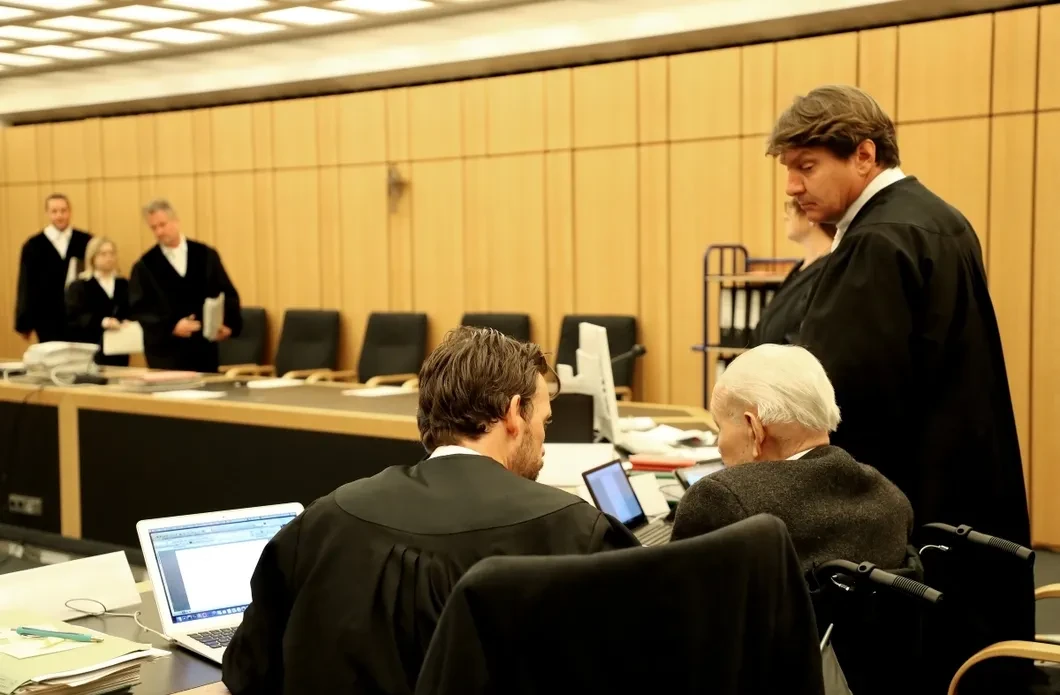
For the process, the largest hall of the meetings of this court was selected: wooden walls, glass ceiling, even yellow light. There are no windows here - time stops. The first two rows of seats are allotted for the press, the latter for students and spectators, on the contrary - the prosecutor and forensic experts, then on the elevation - the place of the judge. Three rows of chairs for 12 lawyers in black mantles will stand on the left, they represent the interests of soysts - those who went through a concentration camp. On the right place for two lawyers of the defendant.
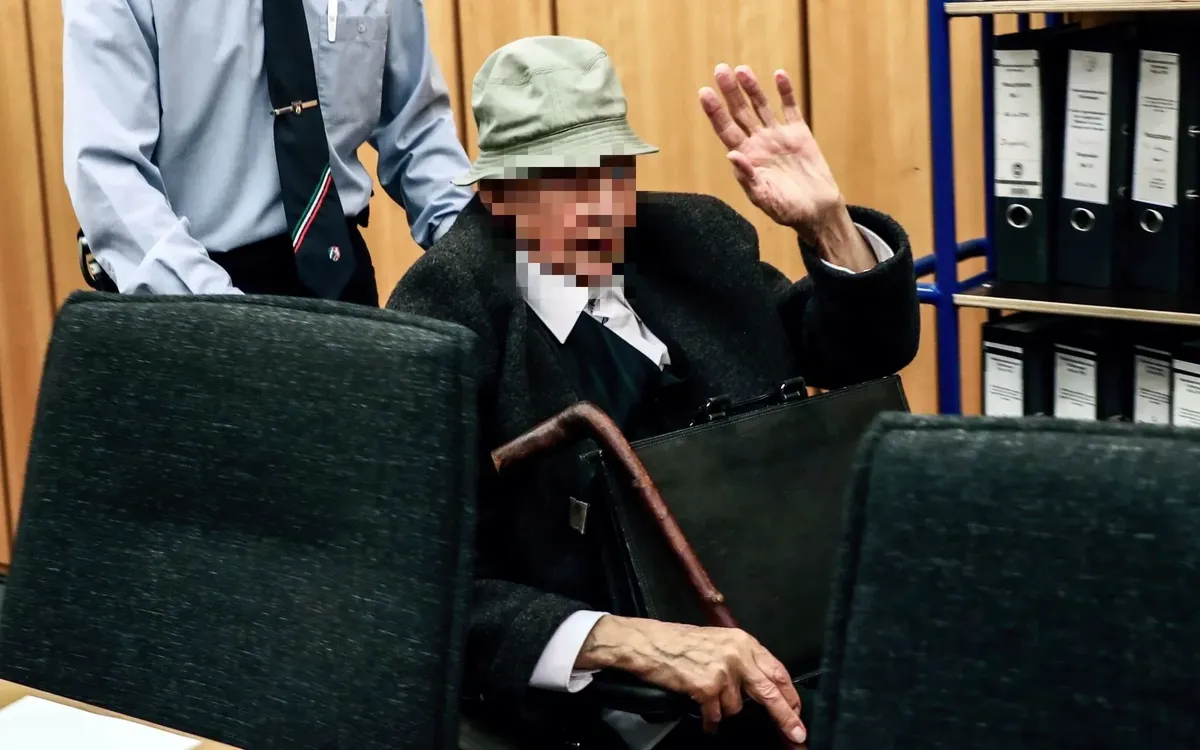
At exactly 10 in the morning, the door opens behind the judge’s chair - the bailiffs are imported into the hall of the defendant Johan R. in a wheelchair, the hum is replaced by clicks of cameras.
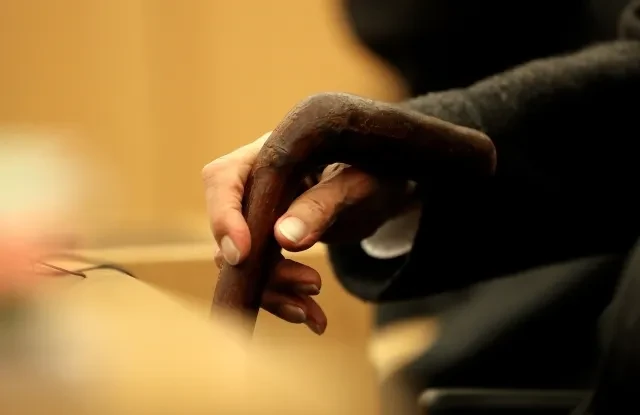
He removes a light green panama, rare white hair on the back of the head is disheveled, he does not try to correct them, a black woolen jacket stands on it with a stake, under his jacket-a white shirt with a ironed collar. Soon Johan R. turns 95 years old. In one hand, a man holds a cane, the other presses a bag from which a transparent tube of the catheter sticks out. Johan R. Without flashing looks at the lenses of cameras.
Following him, the judge enters the same door, the photo shoot stops, the court begins.
Historical context
“Do you understand me well? How are you? " - The red -faced gray -haired judge Rainer Brakans begins every meeting like this, Johan R. nods him and quietly, scriptingly answers “Yes”. The first thing Johan's lawyer R. Andreas Tinkle is asking for to ban the image of the defendant to journalists, referring to his advanced age, poor health, as well as the historical context and a threat to stigmatization.
The court eventually agrees with this.
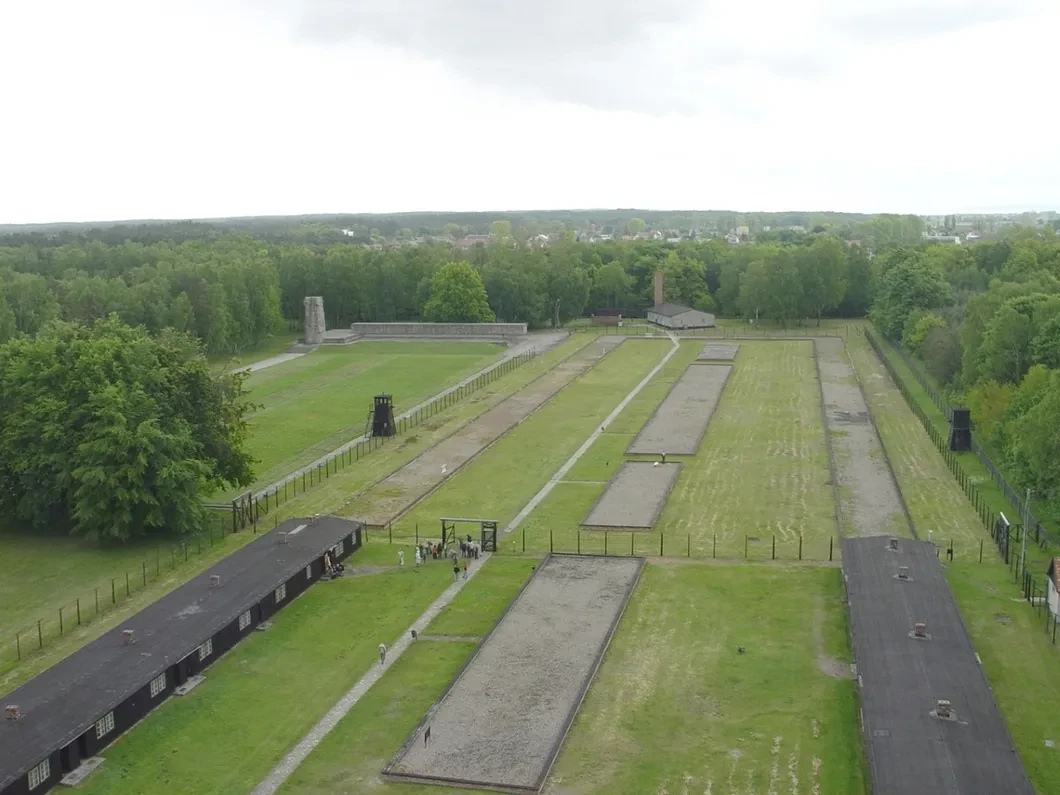
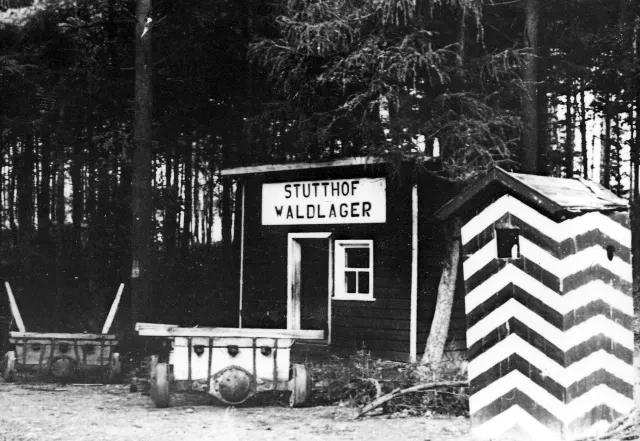
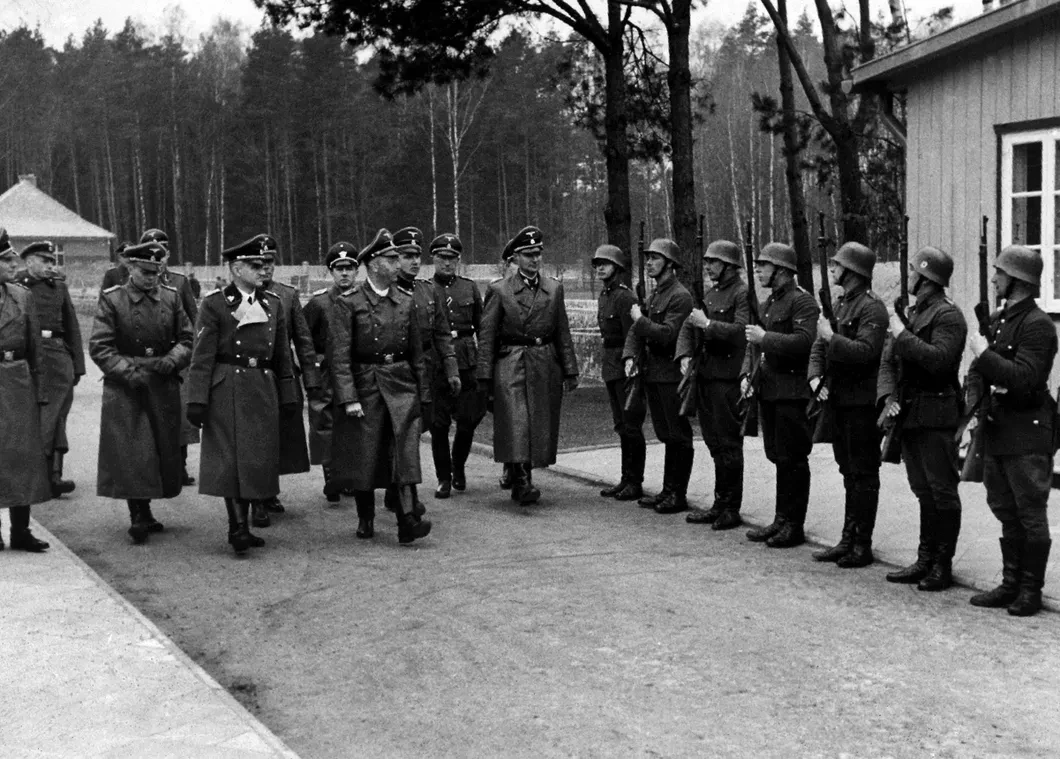
Johan R. was a guard of the Stuttgof concentration camp near Gdansk from June 7, 1942 to September 1, 1944. He served in the third company of the Dead Head detachment, his duties included the protection of the concentration camp, as well as the support and protection of command outside the camp. Now Johan R. is accused of involvement in several hundred murders. But then he was not yet 21 years old, so by German law his college for minors judges. And the maximum punishment that he threatens is 10 years of imprisonment.
Over the years, who passed after the Second World War, Johan R. married, started three children, divorced, received a degree, worked in the state organization with a landscape architect, retired at 65 and lived quietly near the city of Borken - this is about an hour of driving from Munster.
Why is he judged only now? Firstly, it was calculated quite late: with the help of accounting statements of the laundry concentration camp.
Secondly, now there is no need to find out how the accused of involvement in Nazi crimes could participate in each individual murder, says Jens Rommel, head of the Center for the Investigation of Crimes of National Socialists in Ludwigsburg.
Here are precedents: in 2011, Munich’s court sentenced Ivan Demyanuk, who was a guard in several concentration camps, by five years in prison for complicity in murders. In 2015, Auschwitz, Oscar Grening, was found guilty of involvement in the murders of about 300 thousand people and sentenced to 3.5 years in prison, but died before the sentence entered into force.
Concentration camp Stuttgof
Prosecutor Andreas Brandel reads the accusation against Johan r .:
On June 21 and 22, the Nazis killed more than a hundred Polish prisoners using the toxic gas "Cyclone B";
In the same way, in the summer of 1944, at least 77 wounded Soviet soldiers were killed.
Cyclone B did not kill a person immediately, for several minutes: “The cries of victims were heard outside the gas chambers
And to everyone who heard them, it was clear that the victims were fighting for their lives. ” The bailiff sitting next to me frowns.
However, the gas chamber was not the only way of mass murders in the camp.
- From 1942 to the end of 1944, more than 140 people, mainly Jewish women and children, were killed by injections of gasoline and phenol in the heart in the sanitary parts of the concentration camp.
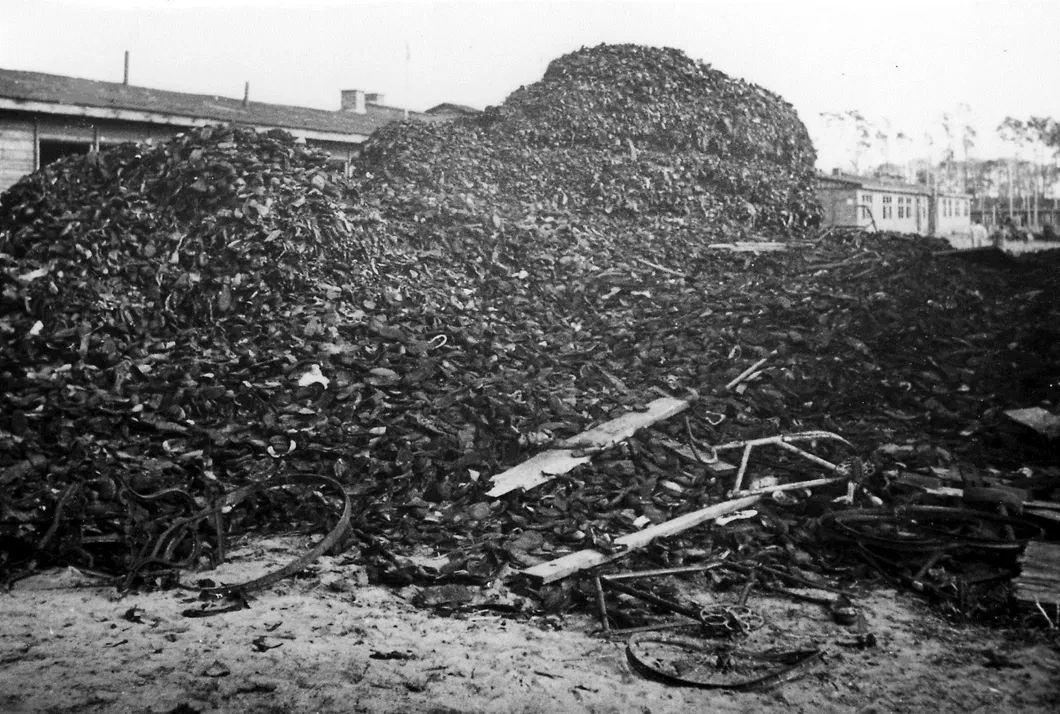
Within the framework of the “final solution of the Jewish question” from June 1944 to April 1945, in the Nazis adjacent to the crematorium, hundreds of people who were recognized as unusable to work: the workers of the concentration camp, which were disguised as the doctors, first examined them, and then leaned their backs against the wall, supposedly gathering to measure their growth.
A gun was attached to the measured rail on the other side of the wall, which shot people in the back of the head.
These murders usually began at 9 or 10 in the morning, two hours were required to shoot 40 people.
People died because of the hardest physical labor, hunger, poor clothes and lack of hygiene, from abdominal and rash typhoid, from frostbite. They were burned, hung, forced to stand in front of the barks, pouring water ...
Johan R. was known about all the methods of murders, that they were applied to a large number of people, as well as that all this could only happen with a complicity of people like him, the prosecutor Brandel said. His speech lasts 16 minutes, then he finally sits down. Johan R. All this time looks right in front of him, sometimes dropping his head on his chest, and as if he does not breathe.
Survivors
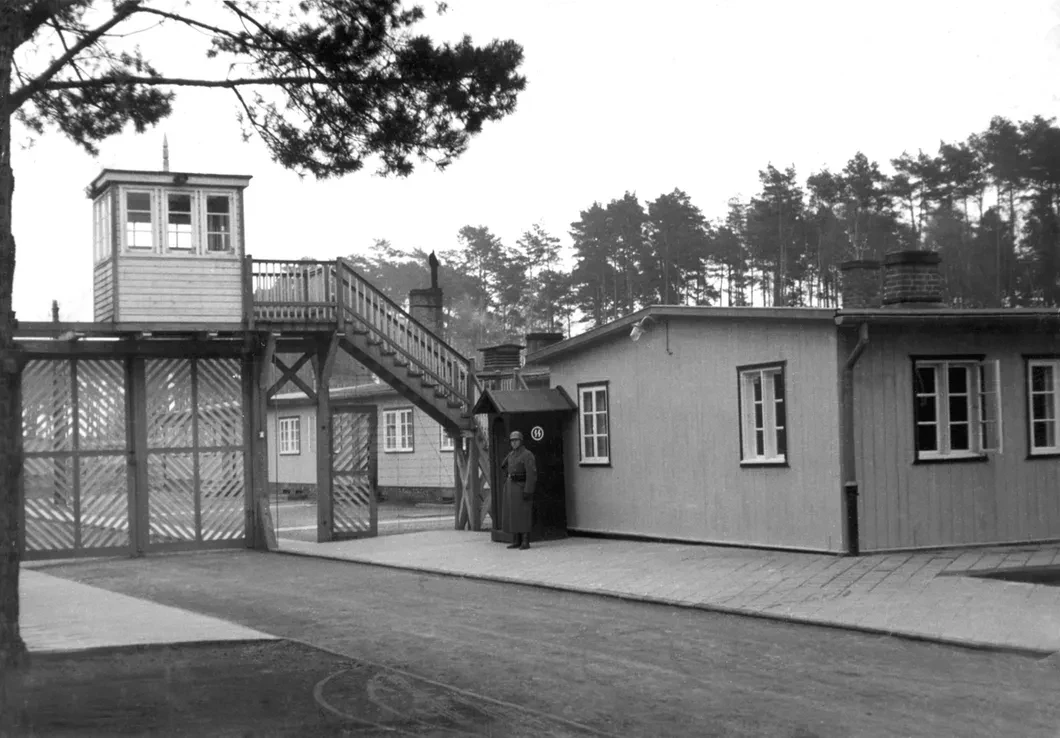
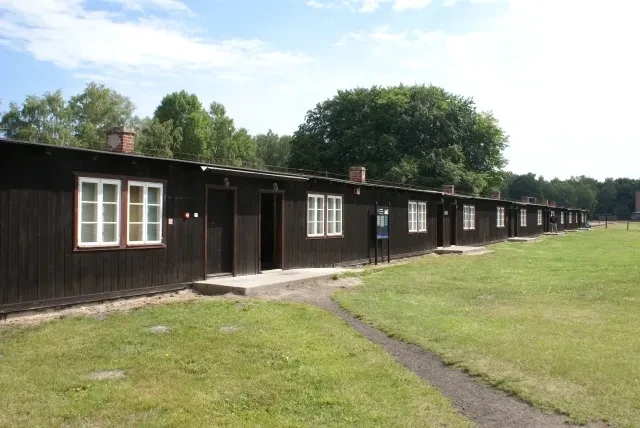
Stuttgof was founded immediately after the capture of Poland by Germany and at first was a prison for the Polish political prisoners, and later became subordinate to the Gestapo and became a concentration camp. About 110 thousand people passed through the camp, of which 65 thousand were killed.
Soystsy on the process in Munstere are now 17 former prisoners - from Israel, Poland, Canada, the USA. Some transmitted their speech for the first meeting through lawyers.
They do not want severe punishment, they want justice, albeit belated.
Marga Grizbakh was the last time she saw her six -year -old brother in the concentration camp Stuttgof, then he was sent to Auschwitz and died there. “I have no anger, no hatred, no rage,” she says now, but recalls that justice has no expiration date.
Judy Meisel was born in a religious Jewish family in the small Lithuanian city of Yoswayyai, her father sold a tree, her mother took care of three children. When Judy was eight years old, her father died of a heart attack and the family moved to the city of Kaunas. When Soviet power was established in the city, the family had to hide their Jewish origin. When the Nazi Judy came, her mother Mini, brother Abe and sister Rachel sent to the ghetto.
Lawyer Tinkle interrupts the story and says that his client does not hear anything. Johan R. is given black headphones, and Judy is now read out slower, louder and literally in syllables.
From the ghetto, Abe came to Dachau, and Mina, Judy and Rachel to Auschwitz, they were recognized as suitable for work and were transported to Stuttgof in commodity wagons. All her hair and nails were pulled out in the camp, gold crowns pulled out her mother from her mother’s mouth. Everyone had only one set of clothes, there was almost no food, people were dying slowly. In the morning, Judy saw piles of dead bodies in front of the huts.
“The last time I saw my mother, we stood naked along with a group of women in front of a gas chamber,” she recalls.
At that moment, Judy suddenly called the concentration camp guard, saying that she should go to the hut. She ran. It was November 21, 1944, exactly on that day to Johan R. The day was 21 years old. He could have been this guard, but he was already at the front. Judy was 15 years old, she and Rachel survived, their brother Abe, too.
“The accused along with other SS members made sure that no one could get out of this hell. He made sure that they could kill my beloved mother, by whom I missed my life so, ”says Judy. Johan R. does not blink, tears flow from his eyes, he leans and covers his face with his right hand.
Now Judy lives in Minneapolis, she is 89 years old, she has three children, her grandson Ben Cohen came to the court: he wants to hear the truth from Johan. Perhaps Johan R. did not decide to become a guard of the concentration camp, but he must be responsible for what he did when he was in Stuttgof, Judy continues. She immediately recognized him from the photo and said that women in the camp called him “a beautiful girl”, and his companions were “Buby”, which means a little boy, baby, and a dairy.
"I'm not a Nazi"
Johan R. was born on November 21, 1923 in the small city of Spyntul-George in the family of Transylvanian Saxons-these are ethnic Germans who lived in modern Romania. He is from a peasant religious family and now calls himself "very believers." In court, he speaks little and rarely, his lawyer Tinkle reads his explanation, who does not tire of repeating that his client remembers far from everything and that his memories are mixed with books and films that he saw after.
Johan R. helped the family on the household, they had two cows and a little land. For some time, the family was forced to move to Kronstadt-there his parents worked in the factory, but in 1937 they returned in Spyntul-George. He had two older sisters, one died a baby, the second lived until 28 years old. In 1941, he turned 18 years old, and in April 1942 he was called up for military service as an ethnic German, which, according to him, plunged his parents into fear and horror. “This was by no means a voluntary statement,” Johan R. emphasizes that he was forced, he was afraid to go to war, wanted to stay at home, but his parents were threatened with repression.
Historian Stefan Herdler, who is now heading the museum at the site of the Dora-Mittelbau concentration camp, objects in court:
"The SS troops were not interested in men who had no motivation."
Germany with the Sanizer countries had an agreement on how many men have the right to voluntarily join the German army. “Then some who were full of enthusiasm jumped into trains, had to be returned,” says Herdler. His opinion: the defendant himself submitted an application for joining the SS ranks, but not to serve in a concentration camp.
This is what Johan R. remembers.
At first he was sent to the city of Bustitsa for the examination, he was recognized as unsuitable for the front: there was not enough growth and weight. After in the wagons for livestock, he was transported to Germany along with other men: they did not eat for two days, then they received lentil soup under the vein. They were brought to the exercises to the Polish city of Dembitsa near Krakova, there he was recognized as suitable for the garrison service, but it was impossible to choose a specific place.
The training began: marching, studying a Nazi greeting, sang songs and watched films ... After training, Johan R. was identified in Stuttgof, he received a carbine and cartridges. “What bad and terrible then the living conditions were in the camp, how many deaths from hunger and diseases were known to me. But personally, I did not know anything about systematic murders. I also did not know about the existence of gas chambers, ”says Johan R.
According to him, he did not see the murders in the concentration camp, he did not notice the division by nations,
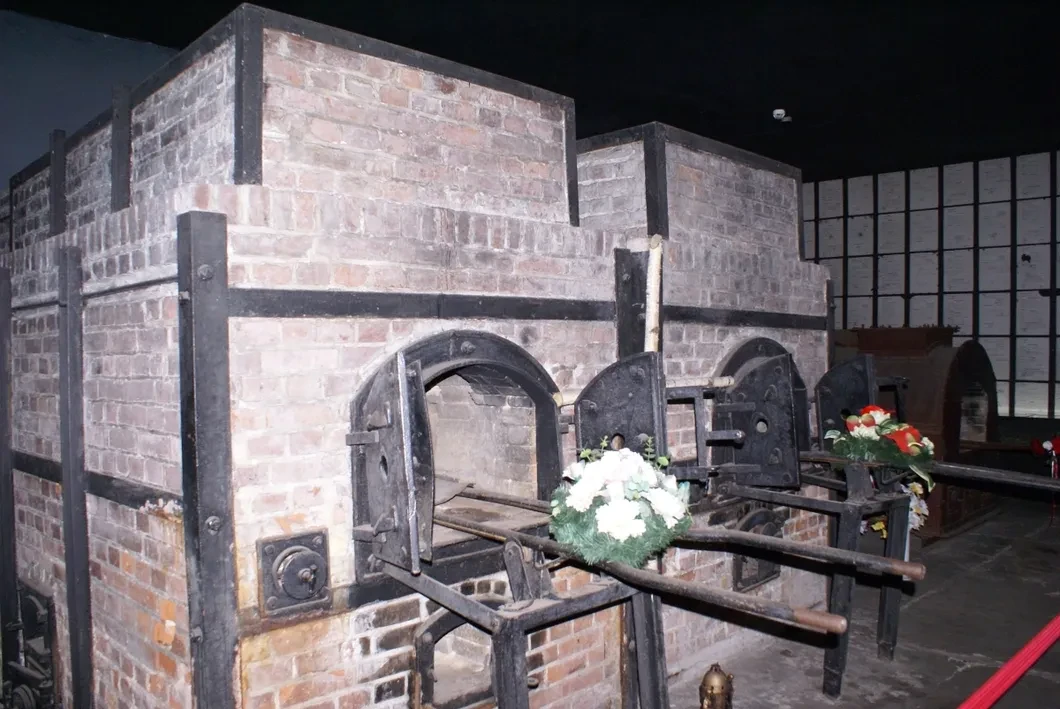
The crematorium seemed to him not so big, but no one loved to stand at the posts next to this building: “The smell was noticeable. These were emotionally the most complex posts. ”
Johan R. "ashamed."
In September 1944, he was transferred to the Western Front, why he does not remember. But he admits that he was helped by the commander of his company in the concentration camp Paul Ele - he treated him with a special location, perhaps because he lost his son in the war, and Johan R. was the youngest of the guards. In addition, once Johan R. brought at his request from a vacation in Romania a female watch - for the wedding of the daughter of Paul Ele. From that vacation, the defendant, he said, returned even more critical of what was happening in the concentration camp and was glad to go to the front, although he was afraid of it. Ele gave him his photo goodbye.
“I am not a Nazi, they have never been to them at the short time that I may still be in my life, I will never,” Johan R.
Questions
His speech hardly convinced anyone: the judge, prosecutor and lawyers to Johan R. has many questions, he has the right to keep silence, but prefers to answer them, albeit in writing. The defendant dictates the answers, lawyer Tinkle writes them and reads them in court.
It turns out for a long time, vague, but
Johan R.'s lawyers repel all attempts to ask him questions verbally, referring to his poor health and advanced age.
What exactly do you know about the fate of prisoners? How did they look? How were they fed? Did they turn to you with requests? What were they dressed in? What did they die from? What were you taught during preparation for service in a concentration camp? Were there shoots? Did you pay for work? Were there children in the camp?
Answers: The living conditions were bad, but I did not have access to the camp. They looked hungry, died from the cold, poor conditions, diseases - I recall how the guards were vaccinated. I did not receive money for work, there was nowhere to spend it, but maybe they came to some expense. Often he worked at the observation tower at the entrance to the concentration camp, but did not see the prisoners in commodity wagons, because he was on duty mainly at night. I never saw the killings there, I only knew that the bodies of the dead were burned. There were no shoots. I saw young prisoners, but how many years they were, I do not know.
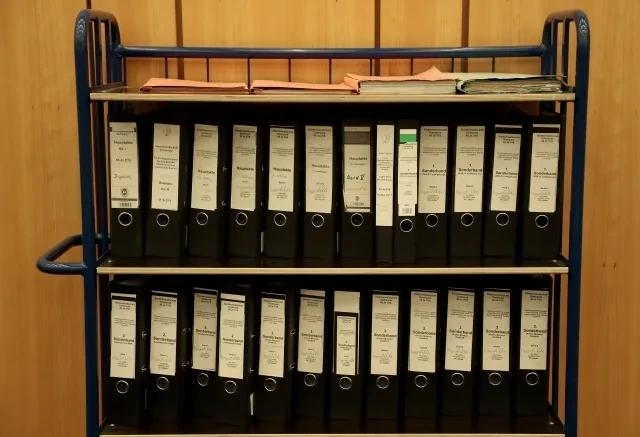
Did he see this book? The judge holds to Johan R. several album sheets-this is a copy of the illustrated book “Correctly, Rightly”, on it they taught guards of concentration camps in the SS Travniki training camp. From afar, one sheet is visible: on the left the “correct picture”, the prisoner runs, the guard shoots him in the back, on the right is “wrong”, the guard is simply standing on it and looks after the runer.
Johan R. picks up sheets, raises his eyes and grins. He slowly leafing through a pack, slobbering his finger, carefully looks at each sheet, and then he says loudly and clearly: “No, never saw it.”
"Is it true?" - calmly asks the judge. "Jawohl!" - Johan R. answers loudly, not ceasing to smile.
What did he discuss with the commander of the company Ele? Did he have a photo of Ele? He does not remember, but they had a special relationship. He kept a photograph at the front in a soldier’s certificate, believing that the picture brings him good luck. But the fragment of the bomb hit him in his left shoulder, the certificate was damaged, and then everything was taken from him when he was captured by the Americans. When a lawyer Tinkle reads this answer about Ela, Johan R. cries, his shoulders are shaking.
Accused in the hospital
Johan R. was originally recognized as a limited capacity to participate in the process, so that two meetings were scheduled a week, they lasted no more than two hours. He was taken to court every time an hour before the process, he was given a trial, but in general the man almost does not walk, sleeps poorly, worries, says his lawyer Andreas Tinkle after one of the meetings.
In the process, for example, a schedule recorded in the video of the prisoners of the concentration camp, a report on the situation in the Stuttgof camp itself, the lawyers of the soysters asked the court to leave for the scene. But the accused withstood only five meetings, and then fell ill and got to the hospital due to heart failure. The judge suspended the process until February.
Irina Chevtaeva, for Novaya Gazeta