
Translated material
I mean - "Party"
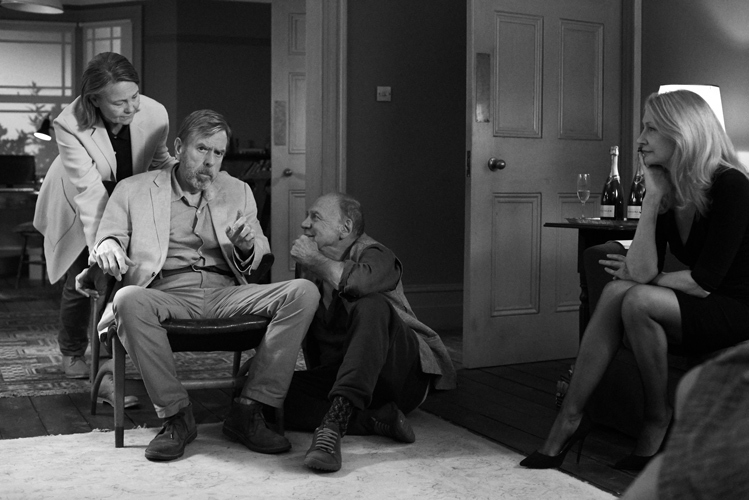
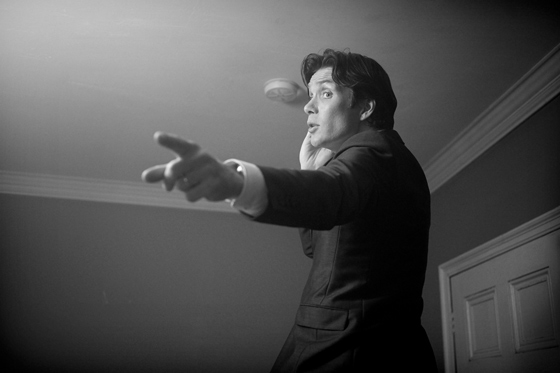
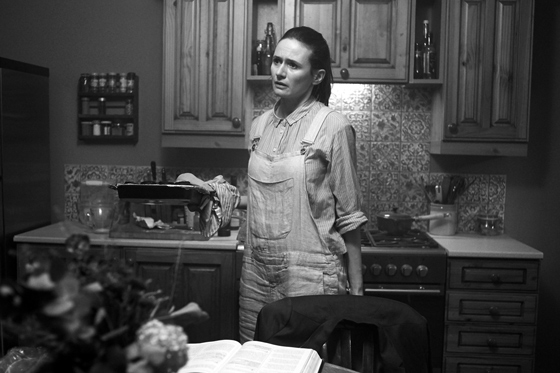
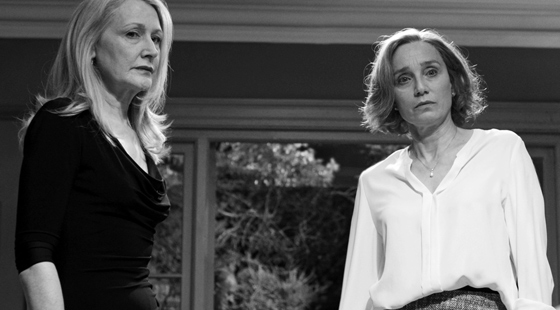
The sad old man depressively dramates red under the moan of the southern blues (on vinyl), while his wife energetically bothers in the kitchen: today in the Bill’s house (Timothy Upel) and Janet (Christine Scott Thomas) - a party on the occasion of a small victory on a large path of left movement: Janet, an opposition politician, has just been appointed Minister of Health in the shadow room. Guests gather in a spacious house: a friend of the wife April (Patrisha Clarkson), independent in judgments and an acute lady in his tongue, with her frostbitten German husband Gottfried (Bruno Ganz), a sluggish spiritualist in a vest, plus a multi -aged lesbian couple (Cherry Jones), professor of female sciences, and her pregnant three Horror - boys!) Spouse Ginny (Emily Mortimer), cook. A minute to a minute should arrive at the mistress’s colleague, Janet, with his husband Tom (Killian Murphy). But Tom arrives alone - and immediately sniffs two paths, locked in the master's bathroom.
 © Weltkino Filmverleih
The mobile phone calls continuously, which Janet is courteously holding in the bra: at the other end - the secret love of the hostess. Finally, without finishing the next glass, the half-dead (and this is not a metaphor) Bill with a creaky voice will make some announcement, after which a cozy liberal micromy in this house will shudder and go disgusting cracks. But this is far from the last confession-outline that will sound this warm evening.
Filted like a alarm night in front of Brexit, the film-performance of Sally Potter is almost the funniest social sitcom of recent years, in many ways similar to the "pierceravada" Christie Puya. The film Potter, however, clearly holds on the theatrical roots of this genre: “Party” is still not a cast, but a compressed cartoon, terrible at an hour with a slight concentrate of all that madness and powerlessness that has accumulated in a progressive, conditionally left intellectual environment during its self-propelled institutionalization.
 © Weltkino Filmverleih
Gags and puns in the Potter script are obviously exaggerated, intentionally slightly strokes-but here the satire gets into the target: exactly the ideas and massive online campaigns are just as caricatured and stuck up for all the good against all the bad people, whose participants often become people like those on the screen. In the film, bets seem to be higher - real politics, real, not virtual, power - but is this a mirage and this? A third -party voice of the dietary verdict becomes ... a completely distraught class enemy, a failed banker of the volume, whose household worldly living wisdom seems to be the very unceremonious invasion of the real (revealed, which is especially funny, in the form of sex, and not money) that can spoil any progressive salon (great temptation to start looking for Chekhov’s motives here). Of course, the general morality of the play - you are animals, comrades - not new: at this trouble -free reception, all social comments in the cinema of all time were generally built, from Bunuel to the “massacre” of Polanski or the recent Cannes winner - the “square” of Estlund. Potter herself claims that her enchanting dialogues are rather not a record of unspoken, that people usually do not dare to pronounce, and the whole film is a kind of “farewell look”, sad sadness about the groove in the left camp, for interfraction fuss and demagogy, the consolidation and lifting of the right -wing sector, rude and uncontrolled provincial nationalism. But for the Russian viewer, sophisticated by disputes in social networks, the comic effect will be caused by the recognition of universal stamps of thinking and rhetoric, to crystal clarity of the virtual Russian -speaking pseudo -policeman crystallized in the plenums. Fortunately, a detailed analysis of all the point blows inflicted by Potter's “friendly fire” is impossible - what could be worse than retelling the not in the words a joke?
 © Weltkino Filmverleih
In the end, it is also worth noting the eighth artist - the operator Alexei Rodionov, who is constantly working with Potter (remember the baroque luxury "Orlando"?). In the “Party” Rodionov, on the contrary, uses minimal means, his camera seems to expand the closed space of the house, turning it into the stage-or, conversely, collapses it to one close-up, for the most part of the caricature and sculptural. Yes, the script of the “Parties” belongs to the world of the theater - but it is Rodionov who turns it into a hundred percent cinema, in which shadows and objects play along with characters.