
Translated material
Fun business
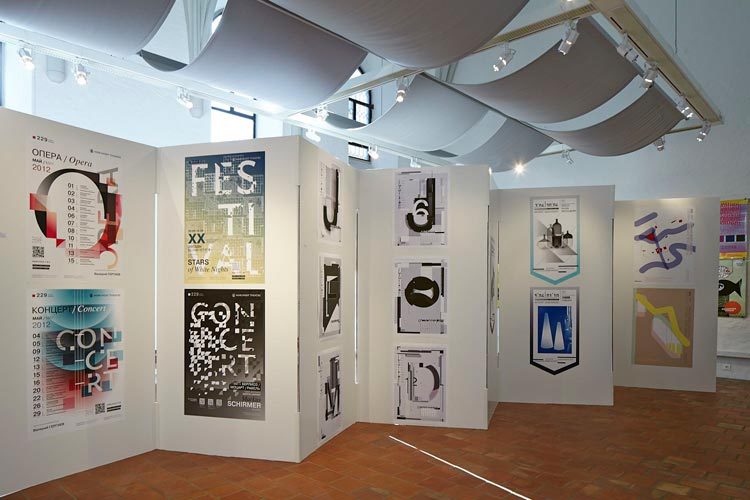
The exhibition of the Swiss poster from the Lucerne Weltformat continues to travel around Russia: the last stop of the Kazan Center for Modern Culture “Smena” was the last stop for today. Next in line is Vladivostok, where the exhibition will last until spring. One of the project participants, the Zurich designer Noel Loy, told Olga Mamaeva about what the Swiss poster is not like others and why the main thing is not to be boring.
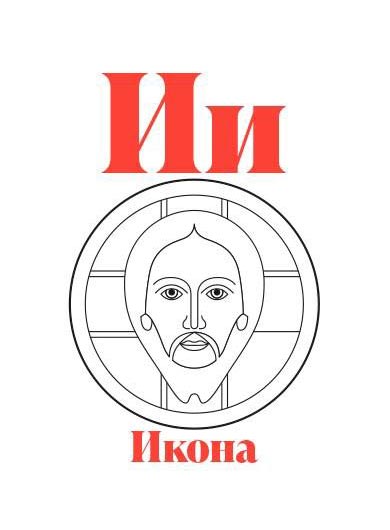
- One of the posters that you selected for the exhibition is dedicated to the Russian alphabet. Where does such an interest in the Russian language come from?
-In the last couple of years, I have traveled a lot in Russia, Belarus and Ukraine and was truly fascinated by this part of Europe, which before I knew so little. To better understand the Russian or wider, Slavic culture, in 2012 I began to learn Russian at the University of Zurich. Over the year, which lasted studies, I learned to talk a little and read in Russian. All this time I carefully studied textbooks on the Russian language and modern Russian culture, which were impossible to read - interesting material was served very boring. Therefore, I decided to unite my two passions: design and Russia. I am currently working on a book on the study of the Russian language. I hope that there will be not so much spelling errors in it as they were on my poster.
 © Noël Leu
- The Weltformat exhibition has already visited many Russian cities. Is there a difference in how it was accepted?
-The exhibition was held in Moscow, St. Petersburg, Nizhny Novgorod, Perm, Yekaterinburg and Krasnoyarsk. The audience is very friendly everywhere, people are open and are glad to listen to what we can tell them about our country and about design. On the one hand, this is strange, given that the art of a poster (and it's still about it), in general, not the most relevant genre, on the other hand, I got the impression that there are many young designers in large cities, especially in Moscow. Some of them were educated abroad and brought to Russia a western view of design. Nevertheless, they try to find an approach to graphic design, which has powerful roots in Russian culture. And I see that the audience is also interested.
- Is this topic in Switzerland is of interest?
-I think that the influence and popularity of graphic design in Switzerland is more than anywhere else in Europe. The Swiss design made a name for himself in the early 50s of the last century and still holds a high bar, in a sense even setting fashion in this area. In general, a scene in Switzerland is quite lively even compared to larger and more influential European countries. Its influence is noticeable in everyday life: in shops, theaters, banks. But, in my opinion, the modern Swiss design lacks a fresh look at itself, new ideas, new images. Everything that we see today is already very well known.
The poster should not be born in boredom and provoke to boredom.
- It’s just the most interesting thing. What exactly distinguishes the Swiss graphic design from, say, Russian or any other?
- I think the difference is that the Swiss design is based mainly on the principles of the so -called conceptual thinking, for which the true meaning of the object is important, and not the ways of its presentation. In addition, he incorporated many features of other European schools - those countries that surround Switzerland. This complexity is the most important feature of our entire culture in general.
- What are these features, for example?
- Graphic, contrast - on the one hand, expressiveness - on the other.
- That is, the Swiss school is separate from the pan -European one?
“Perhaps, but I would not say that there is some kind of fundamental difference between them.” All differences lie mainly in the stylistic field.
 © Moscow Design Week Noel Loy
- Who, in your opinion, is best represented by a Swiss school?
- I am sure that such a person does not exist. Whatever name I named, we can discuss only the individual style of one designer representing the Swiss people, not a national school.
- Who was your teacher?
-I did not have any one person about whom I could say that he taught me everything and opened design for me. I learned about all this from my friends, who also independently mastered this profession. I studied at several Swiss universities-the Bilsk School of Visual Arts, the University of Arts and Design, Bernean University of Arts-and took something of my own from everywhere. I have formulated my main principle in working on the poster for a long time - let it be fun both to me and the audience. The poster should not be born in boredom and provoke to boredom. This is a cheerful and provocative genre.