
Translated material
After the theory
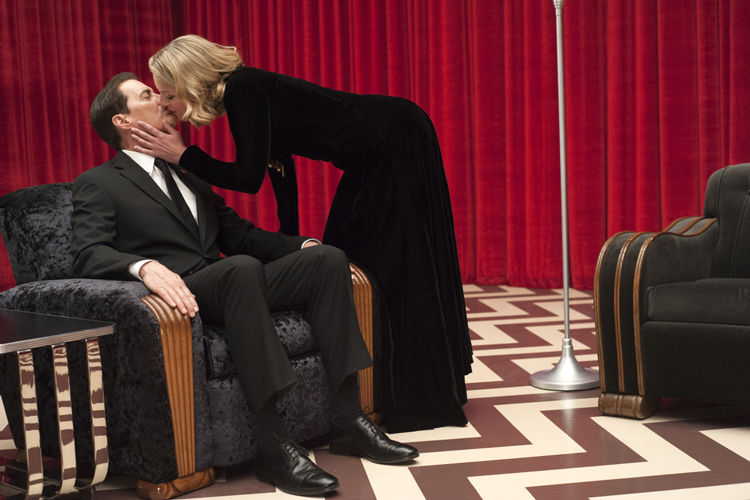
Twin Pixes is a series of TV shows. The thirty -part epic, invented in 1990 by Mark Frost and David Lynch for the ABC channel, was ahead of her time, set a new bar for a television show and became a milestone not only in the history of television. The first two seasons of Twin Pixes gave rise to a whole corps of cultural and philosophical literature. The exit after 27 years of the third season, completely removed by the linch himself, is certainly an event and a topic for a big conversation, to which we will return more than once. At the request of Colta.ru, the responsible secretary of the philosophical and literary magazine Logos, editor of Foresight magazine, Yakov Khozhonko, begins.
Five years later, bad forebodings, leaks and anxieties to the world, the first four episodes of the continuously promised 25 years ago continued the cult film epic, David Lynch, Twin Pix. Discussing four episodes of the declared 18 is a practically doomed task, which should modestly abandon any, not related to professional and critical obligations.
Those who are fresh in memory of 30 episodes should well remember that strange synergistic effect that gave rise to watching both seasons, coupled with full -length prequel (the film “T Win Peaks : Fire Walk with Me ” , 1992 - Ed. ). The emergence of Twin Peaks, which is irreducible to the sum of the events taking place in it, excludes the judgment of the whole in parts. What can be reflected in connection with the consistent cult “dumb” is about the relationship of the film text with its interpretations, the special (and deceptive) theoretical seduction of the heritage of the Lynch, the possibility of the co -creation of the author and the interpreter and the compatibility limits of conditionally creative and conditionally analytical optics.
Lynch became a kind of director-for-philosophers, involving the conceptualization of even those film critics who did not show such a tendency before.
The circle of directors who are in high demand from the interpreters, especially interpreter-philosophers, relatively narrow, and relations between them are quite romantic, even mating, character with sustainable partnership, exchange of esoteric messages, InSide Jokes and other forms of exclusivity. Hitchcock, Polanski, Tarkovsky, Kubrick, Trier, etc. They are included in a kind of cultural fislosophical canon, a visual archive with which researchers either work directly or use as an illustrative material. Lynch's seduction as a reason for philosophical speculation fundamentally diverges with how this voltage along the Author - Interpreter axis described Susan Umbable in “Against Interpretation”: “Now is the time when the interpretation is for the most part reactionary and suffocating. Like the stinking veil of automobile and factory smoke over cities, interpretation evaporates around art poison our perception. In a culture undermined by a classic discord - hypertrophy of intelligence due to energy and sensual completeness, interpretation is to renew intelligence art. ”
 © Showtime
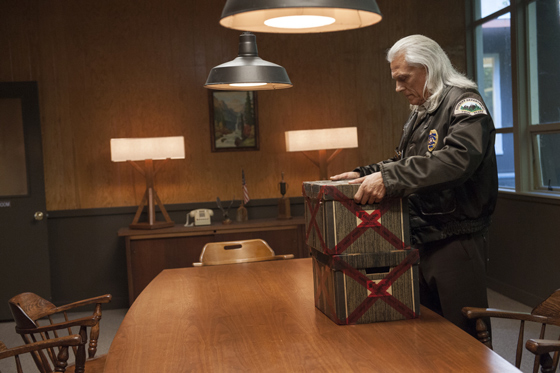
In the 90s, David Lynch became a privileged source of quotes and “literalization”, an ideal expressor of the postmodern Motto . The slipping from the direct dialogue (his manner is widely known to joke in the questions about the meaning of the next film play), but openly teasing the interpreters, Lynch became a kind of director-for-philosopher, involving the conceptualization of even those film critics who did not show such a tendency before. With his light hand, Freudomarxism has become the most popular analytical optics. Moreover, unlike the Siblings of Vachovsky, who experienced (and recognized) the direct influence of the French postmodernists up to Baudrillard, the linch from direct intellectual references has always evaded, which excited the additional appetite of researchers.
The philosophical contagiosity of Lynch curiously complements the infectivity of the actual cinematic. The two -volume “Kinoid of the pervert” of the glory of Zizhek and Sophia Faines develops theoretical intuitions, a decade previously worked out precisely on Lynch's material. Having taken a ten -year pause after a hermetic and more pleaded bewilderment of the “internal empire”, Lynch provided his intellectual heirs to a dual service. On the one hand, this silence made it possible to work with a complete project, which over a relatively short 30-year term has passed a full creative cycle-from early formalist experiments through the formation of a cult, the temptation of mass to experimental esoteric sources. On the other hand, in the absence of new material for interpretation, these peculiar Lynch S Tudies underwent inevitable vulgarization. In the end, it is not so difficult to read the “big others” and “small objects a ” in one or another movie texts - a skill that is just as easily mastered as its limits quickly.
 © Showtime
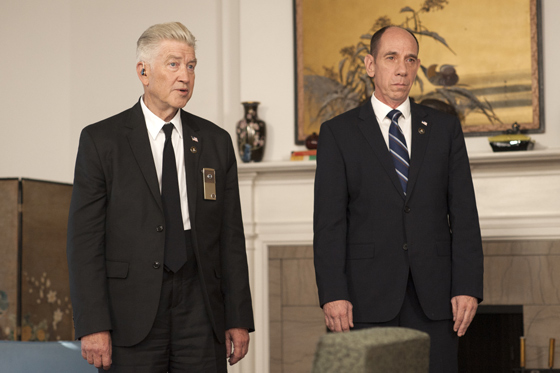
By the time of launch of the third season, Twin Peaks, a set of theoretical works dedicated to Lynch in general and the most famous television project in particular, became an independent and integral phenomenon. Twin Pixes in 2017 turned out to be burdened with the obvious load of intellectual obligations and spectator expectations, which the first episodes simultaneously deceived and blew up. Lynch still remains more than the most sophisticated cultural films of speculation, which for the past decade had to bury and embalm it. His eloquent silence seemed to confirm this exhaustion of the reception, allowed him to place him on a regiment among other highest achievements of cinema, at the same time paying tribute to genius, but also closing the topic. But Lynch has something to say, and he has nothing to be silent about. It is hoped that the theory will be what to answer.