
Translated material
Dogs Bite Back. "Back?" Forward! "
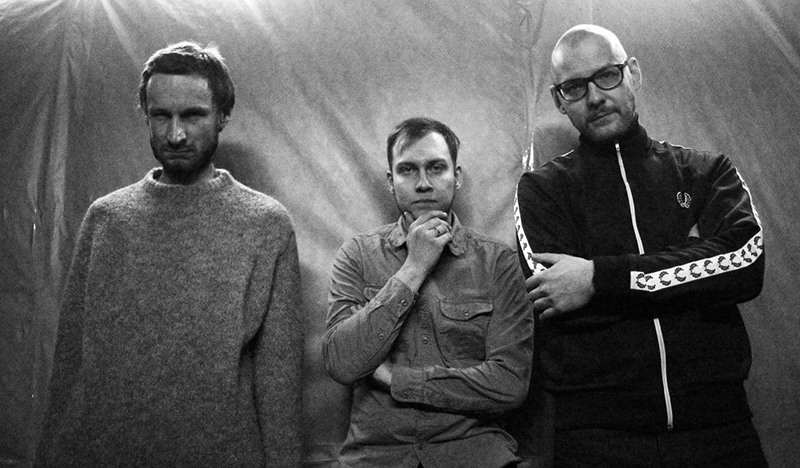
The DOGS BITE BACK trio, maybe a new one, but it contains musicians who are very well -known to fans of experimental jazz. The St. Petersburg Ilya Belorukov and Konstantin Samolov have been promoting improvisational and experimental music for many years in the framework of a variety of projects - joint groups (for example, Wozzeck ) and prefabricated compositions, Intonya and Spina! REC labels. Basist Dmitry Lapshin (Brom, Dopesdromen, Lenin Package, ex-“Trampers” ) is an equally important and active figure of the Moscow Improvisation Scene. Before the release of their debut album “Back? Forward! " Ilya Belorukov told Colta.ru about how to work in two cities, and about his transition from a saxophone to a modular synthesizer.
Ilya Belorukov
In February 2017, Kostya and I, under the auspices of the INTONMA label, made a concert for the Portuguese Free Dzhazovoy team of the Rodrigo Amado Motion Trio . At that time, I again had an interest in playing something more active on the alt-saxophone after many years of concentration on electroacoustic and quiet music. And I thought that you can try to do this with Dima at the double bass. So we found ourselves on stage in front of Seth Amadu. After that, we played a few more concerts, and at the end of 2018 I ended up in Moscow with a modular synthesizer, and we tried an electric duet, Dima played a bass with lotions. After the rehearsal, the idea arose to such a composition to invite a drummer, and already in January 2019 in St. Petersburg it was possible to rehearse from the bones. In July of the same year, we played a debut concert and recorded the first album.
 © Dmitry Lapshin
The distance between us, of course, does not make it possible to rehearse regularly, so we try to work tightly for two or three days when Dima comes to the concert. In fact, this approach can coolly work in the context of improvisational music, when we simply do not have time to get bored with each other when meeting, but we manage to miss the joint game, accumulate energy and think about ideas in a common chat. We also began to do semi -composite things and some riffs, but Covid has a little suspended us, now we must catch up.
I have been working with various electronic devices for a very long time, there were different periods and hobbies: from processing a saxophone with lotions and/or effects on a laptop to a piezodate on a bike, a signal from which falls in a feedback circuit on a no -in -minister. In 2016, I came to the fact that I want to divide the saxophone and electronics, concentrating on one tool during the game. Limiting itself in the means, it is possible to more deeply investigate the capabilities of the tool. Of course, periodically, something is combined for a particular case.
 © Dogs Bite Back
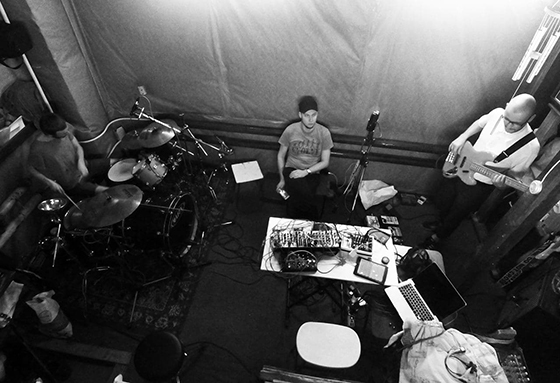
Modular synthesizers began to be interested in eight years ago, when they were still less common, but met in the arsenal of European or American improvisers. I often played with virtual modular systems, looking at the iron. There was a desire to purchase a small synthesizer, but only when the half-milk Make Noise 0-Coast came out, I realized that this is what to start. Later, Sergei Kostyrko, now the synthesizer, and earlier the bass player with whom we played in the “Benzole Dead” and “Mars-96” (Kostya knocked there), gave me several modules and a case for them, and then I myself began to slowly understand that I needed to collect. For example, it was important to stay with a sane size and setup as a whole, so that it could be taken into tours and rehearsals.
The main task was to get a tool on which you can quickly respond to a changing sound environment during improvisation. As a rule, electronic workers in the context of Improv play more slowly than acoustic musicians, and this feature has to work. There are more possibilities, but in fact it turns out that you do not have time to control all the processes that are happening somewhere inside the synth or assume too much the role of automation of parameters, and acoustics at the same time have already changed the sound and direction of thought. Including this challenge to myself, I quit in Dogs Bite Back , trying not to lag behind the rhythm sections during the twisting of the handles. Modular synta just helps to assemble a system that will meet my requirements in terms of the convenience of the game and the ability to quickly change something. The old good MIDI keyviling and/or touch control on the iPad also help, which makes me a keyboard player in a group to some extent.