
Translated material
Better (not) in chorus
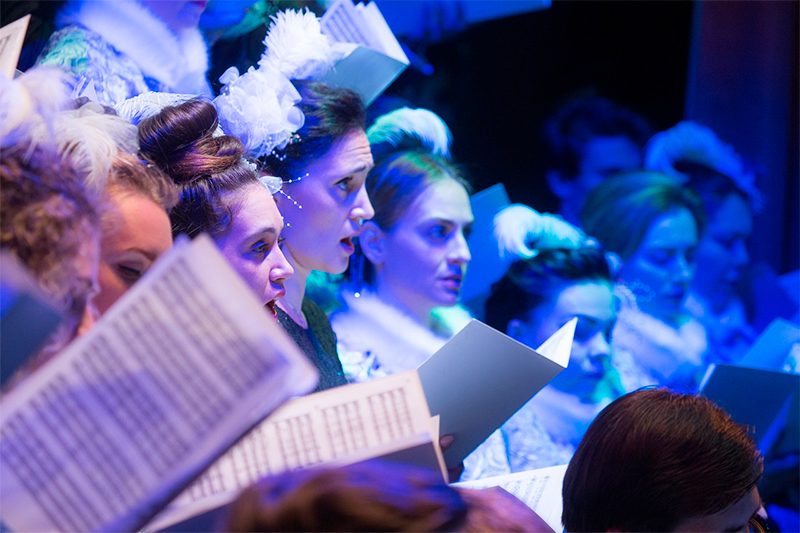
The metropolitan-opera chorists, who were without work due to the forced departure of the troupe for long quarantine, received financial assistance from several hundred fans in the amount of almost half a million dollars. The leadership of the largest theater in the world, in which only the main auditorium is about 4,000 seats, and the scene is extended 80 feet, sees in the philanthropic movement the manifestation of solidarity with the singing team, excommunicated from the profession due to pandemia. A huge amount of donations indicates the scale of the problem with the employment of artists and the uncertainty of plans for the further functioning of the opera sites and Philharmonic.
The Russian choirs had to think about the prospects of their concert activity after the Ministry of Culture and Rospotrebnadzor recommended that the music theaters be excluded from the productions of mass and choral scenes. They do not yet have to count on money in the form of charity contributions. The “crisis of the genre” remains to be resolved in two ways - to include common sense and a workshop cohesion in existing realities. At the same time, the dialogue with officials comes to the fore. The parties need to clearly register the rules of the game and avoid categorical solutions.
“You can argue for a long time why there were choirs, not ballet in such a situation, although this is also collective art and involves the close interaction of artists on the stage,” says Alexander Ryzhinsky, rector of the Gnesins Russian Academy of Music. “Additional explanations are needed, because we can be in a situation after which it will be very difficult to recover.” In his opinion, it would be reasonable to collect an extraordinary conference of the All -Russian Church Society and prepare counter proposals for Rospotrebnadzor, taking into account the specifics of the choral business.
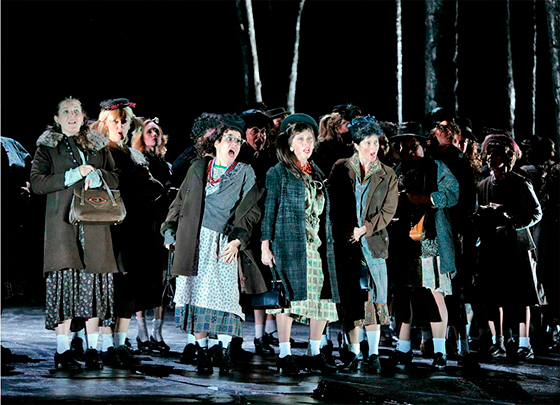 © KEN HOWARD / METROPOLITAN Opera Scene from the opera Macbeth to the Metro-Opera
In the very definition of the choir as a “collection of singers”, a slow -off bomb is laid. To answer the question of how much a person can get together at a time for ensemble singing, under normal conditions, is not difficult - a musical score and determines the number of its performers. In addition, there are several types of choirs: chamber - a number of 32 people, classic - about 80 people, large - about 100 participants. All these nuances look in a new way when it comes to the procedure for involving choirs in the musical picture of the day with an eye on the recommendation of Rospotrebnadzor.
The memo of the department regarding the work of musical organizations in restrictions due to the complex epidemiological situation shocked the leaders of Moscow opera theaters who hastened to collect a press conference with a proposal to specify the concept of mass. The first to respond to this call was the Department of Culture of the city of Moscow, having prepared a 15-page document, where the requirements for the work of the capital's culture institutions are set out in detail. It, in particular, says that up to 70 performers can be on the stage at the same time.
“Now I clearly understand what planned concerts will take place for me and which I have to postpone it,” says Nikolai Azarov, the artistic director of two singing groups - the State Choir of the Moscow Regional Philharmonic and the Academic Choir of the Russian Song of Orpheus Radio. - Solo choral performances certainly do not fall under the ban, and this is a huge layer of a wide variety of music - both folk, secular, and spiritual. Many essays, if desired, can be executed by adjusting the number of chorists to the recommended restrictions. I had before 42 people before I did an excellent job of Rachmaninov. ”
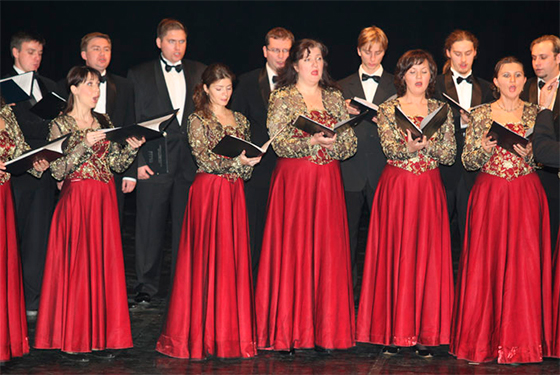 © RGMC Academic Big Choir "Master of Choen Singing"
The prescribed restrictions make you recall the original arrangement of the artists of the academic large choir of the “master of choral singing” during the performance of the Leo Kondorovich team at the Dresden Opera Ball of this year. Groups of singers are located throughout the huge Semperoper hall, while retaining a slender ensemble sound. The “creative” approach to new requirements allows you to fantasize on the topic, so or not so sat down. For example, a symphony orchestra during an opera representation is usually located in an orchestral pit, and not on stage, so this group of musicians can not be included in the recommended parameters. It is possible to adapt the stupids in opera productions and exclude “optional” choral scenes from them, by and large, but the stopping of the scores should be extremely selective. If musical theaters completely abandon operas with choral scenes, then the repertoire will be very impoverished.
“For some time you can take the opera, where there are no choral scenes at all or they are minimized and are applied. But if we talk about the annual period, then you can not focus on such a truncated repertoire policy or change the drama of operas due to the exclusion of choral scenes, ”Ryzhinsky argues. - After all, the Russian opera at 90–95 percent is music with a strong choral component. The same “Boris Godunov”, where choral scenes play a key role in the score and are an integral component of the plot, is a symbol of Russian national art, an integral part of cultural life, the Bolshoi Theater without “Boris Godunov”, in my opinion , is impossible. ”
It is also difficult to imagine that in December of this year, at the final celebrations on the occasion of the 250th birthday of Beethoven, his last-the ninth-the symphony can be performed without the participation of the choir in the famous "dress to joy." And no matter how much in expert circles they recall that Bethkhoven was very difficult to include a large number of singers in the performers of the score, it was the choir version that is considered classical and the most grandiose in terms of emotional impact. Remove the choir-and you will get some kind of joyless ode.