
Translated material
La Traviata
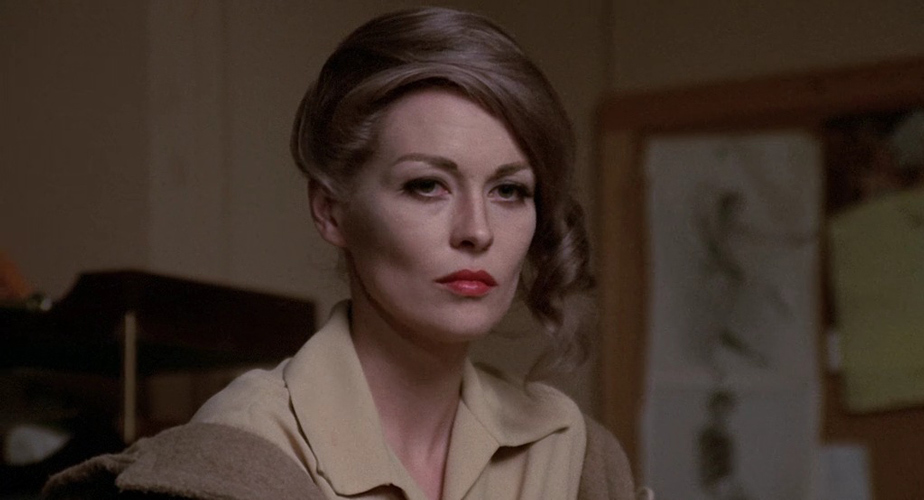
Today, June 25, in the summer cinema of the Garage Museum, a display of the restored version of the “Secret of the Fallen Child” (it is also the “Riddle of the illegitimate”). Maxim Semenov talks about this deceptive to the 1970 film.
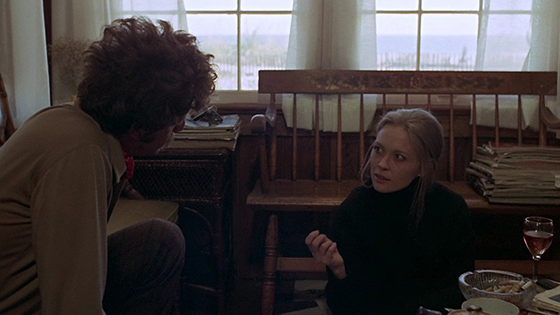
He is a photographer. She was a famous model. Now they met in her house on the east coast. He wants to make a movie and interviews her. She is trying to collect her past from the remaining rather random fragments. But what happened to her?
It is now she lives lonely on the ocean. More recently, there were glory, admiration, elegance, Paris, elegant pictures with thin bends of hands and lovely young people. Then everything suddenly disappeared somewhere, gave way to problems, depression and loneliness. And now there is nothing left, how to sometimes leave the house and look at the old man, who comes to her house to go fishing. But why? Why? Heroes are trying to answer this question, and the drama of someone else's life begins to unfold before the viewer.
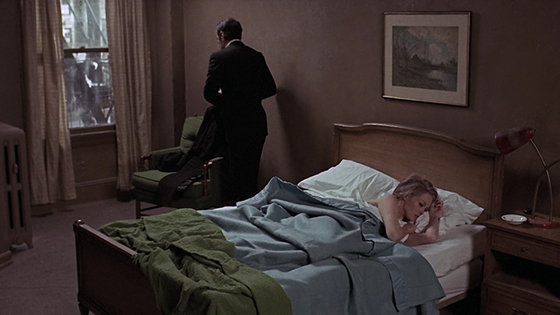
You might think that “The Secret of the Fallen Child” by Jerry Shatzberg is another film about a beautiful and suffering heroine. Since the time of the film, there were a lot of such: from the "dying swan" to the "neon demon." The window into the world of beauty, in which even misfortunes should be some particularly noble. The viewer looks at this window, admires the beautiful (in the ordinary life of the beautiful, as it is believed, a terrible deficit) and goes home with a sense of deep satisfaction. However, such a description is least suitable for Shatsberg’s film. Yes, he watches the world of fashion, and this world looks beautiful with him, but the main thing is not in that. All this beauty, this eternal expressiveness of verified poses and well -rehearsed smiles, is not an end in itself. This is only a plausible background for human history.
 © Jerrold SChatzberg Productions
Shatsberg himself said that, starting to shoot the “secrets of the fallen child,” set himself the goal of “taking off as beautifully as possible, but also as true as possible.” The specifics of the selected material helped him in this. Shatsberg, before that, the former successful fashion photographer (Aaron, the main male character, is partly autobiographical), actually repelled in work from his own observations and memoirs of his longtime girlfriend, model Anne Saint-Marie. These memoirs were processed by the screenwriter Carol Eastman (the one who wrote the scripts for the “shootout” of Monte Hellman and the “five light plays” of Bob Reifelson).
So, the memories of a living person, in addition, is a person who is familiar to the director, rethought by one of the leading screenwriters of the new Hollywood. Through all this, fragments of the original plan shone: before the Eastman and memoirs of Saint-Marie was another scenario about a model written for Shatzberg by one French screenwriter. Due to creative disagreements, they stopped work, but individual elements of the first plan were still included in the final version of the script. First of all, this applies to the title. The phrase “downloadfall child” , usually translated as “illegitimate” or, as the “garage” does, as a “fallen child”, in reality, does not apply to the main character, but to the story of abortion, which existed in the first version of the script.
 © Jerrold SChatzberg Productions
The result of the interaction of all these layers was the creation of the main character - the Lou Andreas Sand model, who (and this will hardly seem too exaggerated) belongs to the most complex, truthful and deep female portraits in the history of cinema.
Working on the picture, Shatsberg uses completely simple means. Nervous installation. A sharp change in personnel - random associations, sudden images arising in the heroine's memory. In addition, the details of the memoirs of what the viewer sees in the frame often diverge: Lou Andreas Sand is an unreliable storyteller. All this creates the impression of the story of a very personal, very subjective. Shatsberg also loves silence, sometimes not showing the “main event” in the frame, but only hinting at it. Or mounts the sound path and the image arguing with it (something similar can be found in its other masterpiece-in a “panic in a syringe park”, an idyllic conversation of lovers is imposed on shots with a secondary character in a clouding of himself). All this is extremely clear, but it works - and it works excellently. The same can be said about the plot. It is hardly the “secret of the fallen child” that the viewer will surprise the viewer with unusual turns of the story. It seems that everything shown in the film is well (even too good) is known, because the cinema has shown many times. All disasters, all the falls of the “fallen child” are obvious almost from the very beginning, but the intonation of the story, so human, makes you forget about it. In the end, the misfortunes that happened to each of us have already happened to someone and have been described by someone thousands of times. This does not make our experience less important or less unique.
Subscribe to the COLTA.RU channel in Yandex.Zen to miss nothing