
Translated material
Killed by return
From September 1, it became easier to take a loan. There will be nothing to give them away
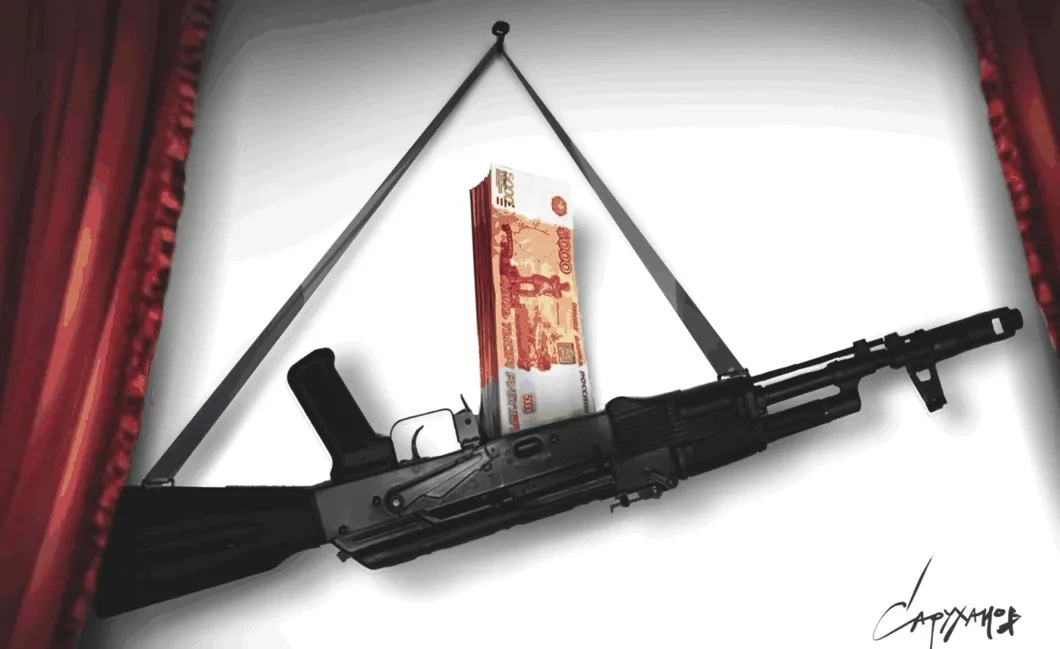
The “credit issue” spoils people no less than the apartment: on average, Russians spend every tenth of earned ruble on mandatory loan payments. Now this load can become even higher: from September 1, the Central Bank of the Russian Federation softens the requirements for banks to issue unsecured consumer loans. For such loans, risk bonuses will be reduced by 40-50 percentage points.
This will allow banks for the same amount of capital to keep more than the debt of individuals on the balance sheet and increase the lending of those who will have to give a significant part of their income to pay debts. The issue price is 168 billion rubles of additional capital, which can be aimed at lending to people. Why did the authorities suddenly decided to revive consumer lending if only a year ago an obstacle to economic growth saw it?
Magic key of economic growth
A year ago, everything was quite the opposite. The then Minister of Economic Development invented, as it seemed to him, a magic key that allows us to launch economic growth. For this, according to the minister, it was necessary to reduce the volume of consumer lending.
Look, the chief reasoned, in 2018 retail lending increased by 23%, reaching 14.9 trillion rubles. But loans to business have increased only 10.5%to 33.4 trillion. And in 2019, citizens began to be credited even more actively, and where people were ready to take a loan of 18% per annum, the business did not agree to a bet above 8%. (According to the report of the Association of Banks of Russia (ABR). Is it not obvious that it is more profitable for the bank to give money at 18%, and not at 9%, the Ministry of Economic Development claimed?
But if we deprive bankers of this opportunity, tightening the requirements for the issuance of unsecured loans to consumers, so they will immediately offer more money to manufacturers. And in addition, we know that it is precisely what consumers pay with the help of loans - imported goods, foreign trips and other pampering, supporting a foreign manufacturer, and not domestic.
And we deprive the consumer of access to extra money - you see, he will buy Russian.
All this works a little wrong, objected to the central bank. Firstly, people do not take loans from a good life - their income is reduced since 2014, and prices, let's say, grow faster than Rosstat reports on this, unlike GDP, which is almost not growing. Real income has not grown in six years, and the debt of citizens to the banking system has increased one and a half times.
Secondly, the raw material oligarchy is generally no matter what interest rate on loans in the domestic market-they have access to global financial resources. And the industrial oligarchy can always count on direct assistance from the budget and on loans of state banks at the very low rate.
At the regional level, the owners of the regions will always find a way to maintain a close to their business with budget orders and special decisions. Tint Networks have “live money” of consumers. State enterprises, the exact number of which even the Accounts Chamber does not know, do not know the price of money at all.
And in the remaining part of the Russian economy, the loan rate is determined primarily by risks of non -return. If the bankers consider these risks high, it means that it is, and the rate level in this case shows the state of the business climate a hundred times more reliable than all the Ding Business ratings combined.
Thirdly, the growth of the rate on consumer loans is the reverse side of reducing people's income. Bankers do not want to take risks here, and if they see a trend for the fall in the income of borrowers, it is natural that they will increase the bet to earn on those who are still able to pay.
People will have money - loans will be cheaper. Not the other way around.
Fourth, they resembled in the central bank, 20% of goods in Russia are purchased on credit, and trade is the only industry that is good, bad, but all the time shows growth, and also creates a large number of jobs. We will clamp the lending - we also lose this driver of the economy.
But in the dispute between the Ministry of Economic Development and the Central Bank, the ministry won - to a large extent because all the time it pressed the magical word "import substitution". And from October 1, 2019, the regulator sharply increased the norms of compulsory reservation on unsecured consumer loans for bad borrowers.
If you want to give out money to such people - give out, only reserve more funds in your accounts in the Central Bank itself so as not to burn out in the event of a borrower default. But something went wrong.
Dubious result
In fairness, let’s say that after the poor borrower it became more difficult, the rate on loans to individuals decreased by three percent by 18% to 15%, but there was no strong reduction in the pace of consumer lending - at the beginning of 2020, the total amount of people's debt to banks amounted to 17.7 trillion rubles (of which “consumer loans” were half).
And the rate on loans “for business” decreased by 1%, from 7 to 6%, but no explosive lending growth occurred there - the total debt of non -financial organizations to banks for 2019 increased from 33.4 trillion to 33.8 trillion rubles - a lot in absolute figures, but a little in relative indicators - private individuals borrowed from banks 7 times 7 times. more.
The statistics also did not record high growth of GDP. It can be seen that economic growth had to be launched somehow wrong. And then the government changed, oil prices fell, and the authorities were not up to the fuss with consumer loans.
One way or another, the Russians approached the quarantine with a record debt load: on April 1, on average, people were owed to banks 10.9% of their monthly income. And although banks, without any instructions of the regulator, sharply reduced the issuance of loans, and also twice the average limit on credit cards, the only month, when the debt of individuals was reduced, was April (119 billion rubles). In May, people occupied another 48 billion rubles from banks, in June - another 170 billion. So as of July 1, 2020, the total amount of explosion debt reached 19.909 trillion rubles, follows from the statistics of the Central Bank of the Russian Federation.
Since the beginning of the year, this debt has grown by 809 billion rubles, or 4.2%, and over the past 12 months - by 2.141 trillion rubles.
The most popular was the consumer loan, which was taken by more than half of the borrowers (51%). And in July 2020, Russian banks issued consumer loans another 8.2% more compared to June.
On average, the level of castle of families (calculated as an average debt to income), according to the results of the II quarter of 2020, reached 30%. According to the ONF project “For Borrowers' Rights”, the average credit debt to the household in Russia has increased by 12%, or 37 thousand rubles, reaching 323.8 thousand rubles - almost ten median salaries.
At the same time, most borrowers (61%) spend less than 20% of family income on a loan repayment. At the same time, according to NAFI, a 27% family, “in a difficult financial situation,” spend more than 30% of monthly income on the payment of a loan. As we already wrote, quarantine sharply divided not only the “rich” and “poor”, but also “poor” and “very poor” - the latter became even more difficult to cope with credit obligations. The share of overdue debt increased compared to the first quarter of 2020 from 4.3% to 4.4%. The average "delay" amounted to 14.3 thousand rubles. (A year earlier - 13.3 thousand rubles).
And nobody has to count on the relief of the “credit burden”.
Why would the authorities decide to allow borrowing even more?
Food loans
If you evaluate the results of quarantine for the Russian economy as a whole, then you can see interesting things. No sharp “upward movement after the crisis”, which the bosses liked to discuss, of course, did not happen. But not everything is so bad.
Exporters depending on world demand for their products are not easy. In an industrial complex, by and large, closed directly to the state order or on the state policy of “market restrictions”, also “everything is complicated”.
But where people pay “live money” for the goods they need, everything is much better. This is especially true for everyday expenses. According to the first results of quarantine, the most prosperous segment of the domestic market was agriculture, which could increase both production and profit. People buy food ... That's right, in the networks of food stores. There, too, everything is quite safe. Well, the banks were “in order”, they received less profit than last year, but these are profit, not losses.

Here you can look for the answer to the question why the authorities suddenly decided to support consumer lending.
Looking at the results of the Russian economy, the obvious conclusion suggests itself: in most Russians, income is associated with the industries that are in decline.
Actually, these income decreased - according to Rosstat, in the II quarter the real disposable cash income of Russians (income minus the obligatory payments adjusted to the consumer price index) has collapsed by 8% - record since 1999. The accumulated outcome over the half-year people became poorer by 3.7%, and the standard of living rolled back to the marks of 11 years ago.
It turns out that people - in the literal sense of the word - "eat" accumulated or already borrowed "past banks" - in the so -called Microfinance organizations, or among usurers. By the way, the authorities understand this perfectly. As the director of the Department of Combating unscrupulous practices of the Central Bank of the Russian Federation Valery Lyakh told reporters: “We are now waiting for a certain growth of illegal creditors who will also be intensified. This is a trend of not a specific quarter or half a year, this is a trend for the future several half -years forward. Objectively, for 1.5 years we see exactly an increase in an illegal creditor, associated, inter alia, with a change in regulation, as well as with a general -social orientation. ”
Indeed, according to the national rating agency, in comparison with the I quarter in the II quarter of 2020, the level of delay in microloans increased by 4.2%. Of the 177 billion, which people owed to usurers, in the “problem area” there are more than 74 billion rubles (42%). Among the borrowers, who should be banks and MFIs, 31% turned to the MFI to pay overdue debts to the bank. Now there is only not enough for people to start taking loans in banks to pay the delay in front of the MFI.
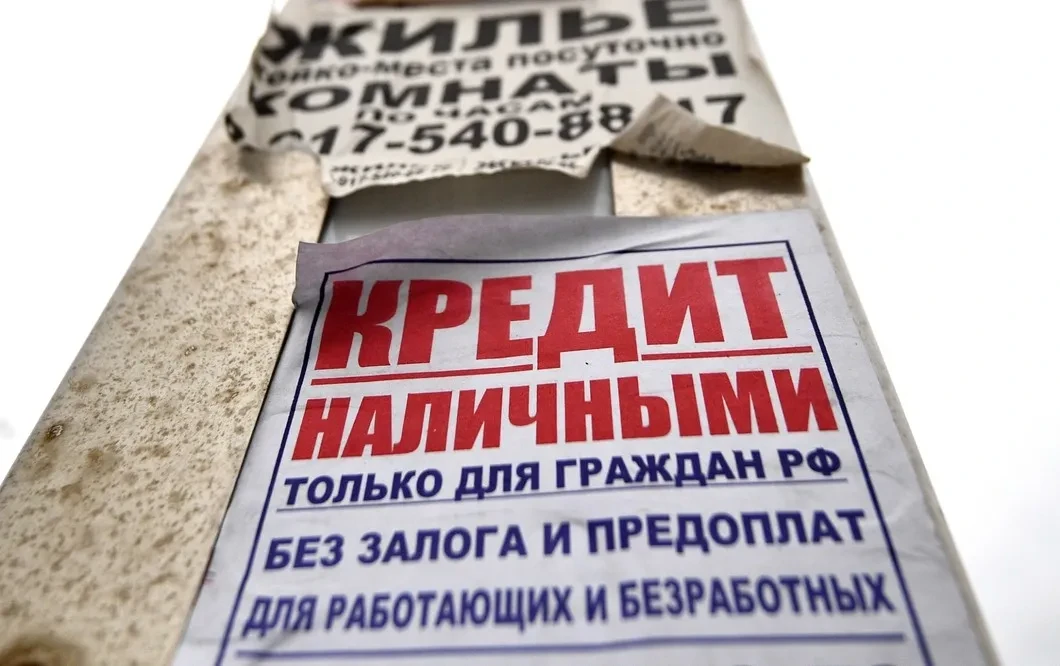
So the “general social orientation”, translated into Russian, means that people will not increase money in people in the near future. And the relief of access to loans in this case is a completely rational step: if people still do not have money, but they need something, then they will borrow this money from anyone, the boss argues.
It is stupid to pass by such an opportunity, let them borrow money from us, and there we will see.
By the way, measures aimed at restricting the activity of collectors and future laws that facilitate personal bankruptcy are all elements of one strategy aimed at “replacing” income - loans. Only if earlier loans were borrowed “for things”, now they will take “for food”.
PS
Keep in mind - from the point of view of economic theory, encouraging the issuance of unsecured loans to “bad borrowers”, the authorities simply sponsor certain industries: through a mortgage - a construction sector, through “educational loans” - state universities, but through loans for those who “do not have any money at all,” food production.
You, dear borrowers, in this matter are intermediaries who take over the biggest risks.