
Translated material
Screaming of architecture
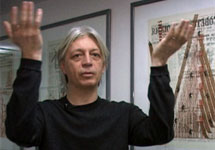
*About the author:
Yuri Avvakumov - architect.*
The rally in defense of Moscow’s architecture was held under the monument to writer Griboedov on the Square of the writer Turgenev. The speakers listed the missing, destroyed architectural monuments in recent years, and the list of losses seemed endless. Irreparable losses, because, as the reconstruction of the Knossos Palace in Crete does not make up for, but in fact it distorts the history of the actually existing palace, the Moscow remakes do not continue, but completely rewrite the history of the city and countries.
The gathered at the rally seemed to be a group of people by the fire at the sorting station from the novel by the writer Bradbury "451 according to Fahrenheit." Only by Griboedov they recalled not burned books, but destroyed by the city authority of the building. A novel written about sixty years ago about a tyrannical future, in which people take books from people, and along with the books of memory, erase individuality, replacing personal experiences with collective viewing of television programs, has now turned out to be completely relevant. Here are the teams of firefighters, burning books, they are bailiffs today, and the views in real time, and the writer’s discussion about “insulting the memory of the dead” and that “somewhere again the process of saving values should begin, someone must again collect and save what is created by a person, save it in books, in gramophone records, in the heads of people, to protect at any price from any price Moths, mold, rust, decay and people with matches. "
The city ceases to exist in "451 on Fahrenheit", it is bombed, but immediately the movement to its revival begins. "When we go to the city" - the last words in the book: these are the keepers of book memory go on a trip to fight ash. Monuments of architecture, monuments to writers, cultural monuments are, of course, values, but the main value is a person’s memory - while it is alive, there is culture, and, excuse me for pathetics, humanity.
It is interesting that in childhood, when many of us read this “science fiction”, it could never have occurred to anyone that the “fire brigades” would not be opened by the Nazis -fascists from 1933, but by our contemporaries and compatriots - raiders and developers, officials and builders. It’s sad for me to talk about this, but this trade union also includes architects, that is, representatives of the workshop, for whom history has always been the basis for owning construction skills. I do not want to suturely condemn those who were in the "Sonderkomandy" performers - the builders, according to Mr. Resin, had recently been about a million, a tenth of the population for Moscow. They build as they know how, according to the law, they often try to make it better in their abilities for others and their conscience, but this is the sincerity of the driver of the trolley, tied to their wires, like a dog to a chain.
The main problem for us is not professionalism, but ethics - architects depressingly few among the defenders of the "city and the world." When in 2004 the cultural public wrote a letter to the president with a demand to protect Moscow from Luzhkov’s criminal activity, among three and a half thousand Muscovites who signed it, only seventy architects turned out to be two percent. There were only two of them on the Archnadzor Saturday rally, there may be three.
Where there is civil society and construction is conducted in a civilized way, the basis of the profession of the architect is just ethics - not separately, like flies and cutlets: with ethics for a rally, with aesthetics for construction - but in united, when advanced environmental technologies are beneficial for more than one, but to many, and the barbaric way of doing business is enjoyed even within the limits of the same generation.
We so enthusiastically built the best city in the world, rich and healthy that we did not notice how we raised an old, sick monster, which was time in the cemetery. What now to do with this incense old man in a brand new cap and dirty boots? Maybe cremate and dispel? Destroy and forget how the monster dealt with his predecessors?
“It doesn’t matter what you are doing, it is important that everything that you touch, change the form, does not become the same as before, that a particle of you remains in it. This is the difference between a person, just cutting grass on the lawn, and a real gardener,” his grandfather told me. “The first will pass, and he will not have been the gardener,” the writer of Bradi will live.