
Translated material
Freedom and love
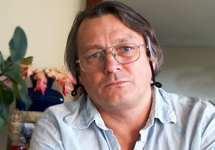
The accused in the "Swamp case" Leonid Kovyazin and Alexei Polikhovich intend to marry. Both are in custody. Marriages will be registered in jail.
"State registration of marriage conclusions with a person who is detained or serving a sentence in places of imprisonment is carried out in the premises determined by the head of the relevant institution in agreement with the head of the civil registration authority," says paragraph 7 of Article 27 of the Federal Law "On Acts of Civil Status".
Clause 5 of the same article says: "At the request of the persons entering into marriage, state registration of marriage can be carried out in a festive atmosphere."
I think that marrying will wish a solemn situation. Despite the bitter taste, this is a big and joyful event. The prison is not entitled to take this joy from the prisoner.
In Russia, marriage with a detainees or convicted is a long tradition. She was laid by Natalya Borisovna Sheremeteva in the 18th century. The daughter of the deceased Petrovsky Field Marshal, she was an enviable bride - the dowry was given a huge one. She was 15 years old when the first groom of the Empire was welded to her-Prince Ivan Dolgorukov, Favorite of Peter II, a desperate Bonvivan and Lovelas, who spent the 14-year-old emperor as he pleases. The sister of Ivan Catherine at the same time was engaged to the king.
Natalia fell in love with the groom with all the sincerity of the first girlish love. In the years written in the declining of " heating notes ", she speaks of her then state as follows:
It seemed that there was no drawback. A sweet man in his eyes, in the reasoning that this union of love will be inextricable to death, and, moreover, natural honor, wealth; From all people, respect, everyone is looking for mercy, is recommended for my patronage. Think, as a girl at fifteen years old, I was not other than I thought, like the whole sphere of heaven changed for me.
But this holiday continued very shortly. Not even a month had passed since in January 1730 the young emperor suddenly died. In the new Empress Anna Ioannovna, the Dolgorukov clan immediately fell into disgrace. Relatives advised Natalya Borisovna to terminate the engagement with the disgraced prince, but she considered it below her dignity:
I could not agree to such an unscrupulous advice, and so put my intention when I gave my heart alone, live or die together, and another no longer participation in my love. I did not have such a habit to love one today, and tomorrow - another. In this century, such a fashion, and I proved to the world that I am true in love: in all the illuminates I was a comrade to my husband.
They played a modest wedding, and Natalya went with her husband into exile in Berezov, a terrible Siberian wilderness at that time. Eight years later, Ivan, together with other relatives, was arrested by the denunciation of the ardent and, after accompanied by the torture of the "search", was sentenced for an imaginary anti -government conspiracy to wheeled. In 1740, Natalya Borisovna with her sons was allowed to return to Moscow. Rich and influential relatives turned away from her. With the greatest difficulty, putting her eldest son on the feet, she cut her hair in the nun and under the name of the old nectaria lived her age in the Kiev-Florovsky monastery along with the younger demented son. There in the cell, she wrote her notes, which cannot be read without compassion. Closing about her bitter fate, she never regretted the decision made and continued to love her husband:
I console myself with this when I remember all his noble deeds, and I consider myself happy that I lost him for myself, without coercion, from my goodwill. I had everything in him: both the gracious husband, and the father, and the teacher, and the prospector about my salvation ...
Not knowing anything about Natalia Dolgorukova, her act was repeated by the Frenchwoman-fashionist Polina Göbble, in love with the Decembrist Ivan Annenkova. In order to marry a state criminal, the highest permission was required, and Polina achieved him. Leaving her mother -in -law, the illegitimate daughter, she with great difficulties reached Chita, where the wedding described by her in the memoirs took place:
The cheerful mood disappeared, the jokes fell silent when they brought in the shackles of the groom and his two comrades, Peter Nikolayevich Svistunov and Alexander Nikitich Muravyov, who were our Shaffers. The shackles took them off on his porch. The ceremony did not last long, the priest was in a hurry, there were no singers. At the end of the ceremony, all three, i.e. The bride and saphers, put on the shackles again and took it to the prison.
If, when reading the notes of Dolgorukova, the heart is compressed with pity, then the memoirs of Polina Göbel-Annenkova are delighted with the presence of the spirit. In inhuman conditions, she managed to preserve even a natural sense of humor. In the spring of 1829, the "Decembrists" were on demolitions. This is how the memoirist describes the reaction of the local authorities:
We were very amused by how the old man our commandant was embarrassed when he found out that we were pregnant, and he learned this from our letters, as he was obliged to read them. We wrote to our relatives that we ask you to send linen for the children expected; The old man returned to us letters and then came with explanations:
But, ma'am, let me tell you that you have no right to be pregnant, ”he said in great embarrassment. Then he added, wanting to reassure us:
When you have childbirth, well, then another thing.
He know - why it seemed to him the latter more possible than the first.
Annenkov was allowed to leave Siberia only in 1856, at the beginning of the new reign. They settled in Nizhny Novgorod, where they died, leaving seven children.
If the history of the Annenkovs is well known from the film "Star of captivating happiness" and Alexander Dumas’s novel "Notes of the Fencing Teacher", then a similar plot with the Frenchwoman Camilla Le Dantu and Decembrist Vasily Ivashev know much less. Unlike Polina, Camille did not have a novel with a brilliant cavalry guard. She was only the daughter of governess in the Ivashevs' house and decided to marry him when he was already sentenced to 20 years in hard labor and began to serve his sentence. Ivashev accepted the proposal "with a sense of amazement and gratitude." She received the highest permission to travel and marriage in 1830. Camilla could not stand the harsh conditions. Nine years after arrival, she caught a cold and died by premature births. She was 31 years old. Her husband died in a year and two days. Their three children were brought up by a aunt on the father under the name of the Vasilyevs. In 1856, by decree of Alexander II they returned the surname and nobility of his father.

Among the Russian Nihilists, Narodniks and Narodnaya Volya, fictitious marriages were widespread - this path of female emancipation indicated the youth of Chernyshevsky in the novel "What to do?" It was in such a marriage that the future outstanding mathematician Sofya Kovalevskaya entered to escape from the guardianship of her father and leave to study abroad (they did not accept women at that time at that time, and for a trip abroad the girl was required, a married woman-her husband). In 1884, she wrote the story "Nihilista", whose heroine, the young noblewoman Vera Barantsova, marries the revolutionary Pavlenkov, convicted of hard labor.
I went to his lawyer, I ask: "Is it really impossible to come up with anything?" “Nothing,” says the lawyer. “Whether he is still married, then there would be another thing, there would be hope! After all, we have a wife, if he wants, has the right to follow her husband in hard labor ... But, to misfortune, Pavlenikov is single ...“ You understand, ”Vera continued, again falling into a business calm tone,“ as I heard these words, I immediately became clear to me that now it was necessary to do. It is necessary to ask the sovereign of allowing us to get married with Pavlenkov.
Vera is not familiar with Pavlenkov, she saw him only in court and deliberately chooses this path of self -denial, not, of course, to enter into real family relations with him
And suddenly everything was so clearly introduced to me; My whole life in the future turned in front of me, as on a map. I’ll go to Siberia, I will be there, I will console them, serve them, serve them, send them to their homeland.
In his naive, but such sincere sacrifice, faith, the young young lady, follow the footsteps of the best heroes of Russian literature: Sonya Marmeladova goes to Siberia for Raskolnikov, non -lexhludes - for Katyusha Maslova ...
This plot has a documentary basis. In 1876, Sofya Kovalevskaya turned to Dostoevsky, whom she knew from her youth, with a request to help her friend, niece of the widow of Pushkin Vera Goncharova, to receive permission to date and correspond with Isaac Pavlovsky, who was under investigation in the case of Narodnik propaganda. With the assistance of an outstanding lawyer, a friend of Dostoevsky Anatoly Koni, who then held an important post in the Ministry of Justice, permission was given. Pavlovsky refused to participate in court, which went down in history as a “process of 193s,” and was sentenced to the term of preliminary imprisonment. Goncharova and Pavlovsky got married already in exile, in Paris. Abroad, Pavlovsky was disappointed in the revolution and, according to some former associates, "had the most corrugated influence" on Leo Tikhomirov, who was also accused of the 193rd case; Both deserved the reputation of the renegations. It is believed that Pavlovsky was one of the prototypes of the hero of the Chekhov " story of an unknown person ." So the sacrifice made by Vera Goncharova turned out to be in vain.
Unlike many defendants in the 193rd case, the Pervomartovites-participants in a successful attempt on Alexander II-could not rely on condescension. The mistress of the conspiratorial apartment of Gesu Gelfman was arrested on March 3. She was in the fourth month of pregnancy. The father of the child, a member of the Executive Committee of the "People's Will" Nikolai Kolodkevich, was arrested on January 29. She was tried together with the leaders of the party Zhelyabov and Perovskaya, the manufacturer of throwing shells with Kibalchich and the performers Rysakov and Mikhailov. It is later, on the "process of 22".
March 29, after the death sentence to all six accused, Gelfman filed a petition to the name of the director of the police department:
Being sentenced to death, in the last hours of life I have the honor to humbly ask me to allow me to date with the nobleman Nikolai Nikolayevich Kolodkevich, who is especially dear to me in these last hours of life. I dare to hope that I will not be refused this request.
A day later, when the sentence entered into legal force, she treated the similar petition with the prosecutor of the St. Petersburg Court of Judicial Chamber:
In view of the sentence of a special presence of a government Senate, who has a sentence, before my death, in the last hours of life, I turn to your excellency with a respectful request to allow me to date with the prisoner, for my reasons, in the St. Petersburg fortress by the nobleman Nikolai Nikolaevich Kolodkevich. Do not refuse this dying request.
Pleve sent the paper at the discretion of the director of the police department Baron Velio. He imposed a resolution: "A date between two criminals is not allowed by the rules."
On the same day, Gelfman, through a lawyer, notified the prosecutor of her position. In such cases, the execution was postponed to childbirth, so as not to punish the child. The next day, Gesu was examined by doctors in the presence of persons of prosecutorial supervision and St. Petersburg mayor. On April 1, the court decided to delay the execution of the sentence 40 days after birth. On April 3, five Pervomartovites were hanged. Gelfman was transferred to Trubetskoy bastion. She never saw Polodkevich.
In Europe, the efforts of emigrant revolutionaries Kropotkin and Lavrov began the campaign for her salvation. In early May, the Russian ambassador to Paris, Prince Orlov telegraphed at the Foreign Ministry: Veuillez Me Dire S'il Ext Exact Que La Peine de Hessia Helfman a été Commuée. Journaux Parlent de Son Avortement (please tell me if it is true that the sentence of Gese Gelfman is softened. The newspapers write about abortion). He was answered that this information was deprived of any reason. On July 2, under the pressure of public opinion, Alexander III, who needed an alliance with France, replaced Helfman with the death penalty of unlimited hard labor.
She resolved from the burden of a female baby on October 12. The birth was accepted by a label-medical, an outstanding Russian obstetrician Ilya Balandin. He was later accused of careless attitude to his duties; It was even alleged that the birth "were conceived as an operation to deprive Helfman of life." One way or another, Gelfman died on February 1, 1882. Her daughter died a year later in her educational house.
During the years of Stalinist terror, of course, there could be no question of weddings behind bars. On the contrary, the divorce procedure with an arrested or convicted husband was in every possible way. This, however, did not always save from arrest: the ex -wife should also be repressed if the bodies believed that she knew about the counter -revolutionary activity of her ex -husband, but did not report where she should. Russian Wikipedia, however, quotes without any comments the performance of the People’s Commissar of Internal Affairs Nikolai Yezhov at the February-Marial Plenum of the Central Committee of the All-Union Communist Party of Bolsheviks of 1937. Here is an excerpt from this quote :
In many cases, the arrested was given the opportunity to serve his sentence with their wives. (Laughter. Molotov . In any case, we did not sit like that before.) So, I.N. Smirnov was serving his sentence with his wife. Even the novels were tied there in the isolator. Such a romance ensued at one Socialist -Revolutionaries with Rogacheva - this is the sister of Nikolaev, Kirov killer. They turned to the secret and political department to Tom Molchanov to marry, they allowed them, they got married, they brought them into the same camera, they were born a child, and they lived together until the last months. They allowed, as I already said, to transmit alcohol ... But what they write after the examination about the Suzdal insulator: "The cameras are large and bright, with flowers on the windows. There are family rooms ... daily walks of prisoners of men and women for 3 hours." (Laughter. Beria . Rest House.)
Here, from the first to the last word, a lie, aimed primarily to finally drown the former People's Commissar Henry Yagoda, accusing him of indictors. One of the leaders of the Left Opposition, Ivan Smirnov, was serving a five -year term in the Suzdal Prison of Special Purpose until August 1936, and then became the accused in the first Moscow process and was transferred to the internal prison of the NKVD. In April 1933, his wife Alexander Safonov was sentenced to three years in Central Asia, in August 1936 she was also brought to Lubyanka and a witness to the charges in the first Moscow process. She and Smirnova arranged a confrontation , which excludes cohabitation. The ex-wife of Smirnova Roza Mikhailovna since 1933 was kept in the Upper-Ural isolator. In December 1937, she was again arrested and shot in Ukhtpeclaga in May 1938. The sister of Leonid Nikolaeva Ekaterina Rogacheva was already married at the time of her arrest in December 1934. In a statement to the party control commission under the Central Committee of the All-Union Communist Party of Bolsheviks (b), she wrote : "She did not participate in any oppositions, honestly worked as an employee ... I suffer because of a crime of a brother. I have two children and I have no help from my relatives."
Under Khrushchev and Brezhnev, marriage with the prisoner was an extremely rare event. The specialist-legalist wrote about this in 1971: "The marriage capacity of the convict was limited. His entry into marriage is allowed only in exceptional cases, on condition that before the arrest he developed the actual family (cohabitation) and there is a child in this family." The permission for such a marriage was given by a high -level official. At the same time, the author of the article notes: "The restriction of the marriage capacity of the convicts is contrary to our legislation."
And only in July 1991 did the instruction of the Ministry of Justice “On the procedure for registering acts of civil status in the USSR” entered into force, which removed all obstacles to marriage with the convicted or under investigation.
I still haven’t had to hear about the marriages of the current Russian political prisoners, but in Belarus it is already a common phenomenon. Entry into such a marriage has an obvious practical meaning: spouses receive the right to long -term dates, including outside the colony, for up to five days; A wife or husband remaining free can dispose of the property of a prisoner or prisoner.
But the main thing is, of course, invaluable moral support, knowledge that theyare waiting and loved . From Suma and from prison in Russia are not raped. And you can vow of love and fidelity in the ultrasound. This is an act of free and independent people.