
Translated material
Theories of games
Announced the Nobel Prize laureate for economics
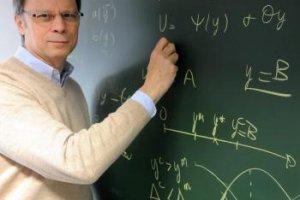
In 2014, the Nobel Prize for Economics received French economist Jean Tyrole for the analysis of market power and regulation in industries with several large firms on October 13. Olga Romanova talks about what the first Nobel Prizes in economics were given, what is the “prisoner dilemma”, “Maryazha Theory” and the theory of games.
The Nobel Prize for Economics is actually not quite Nobel-Alfred Nobel for some reason did not reckon the economy to the category of classes that change humanity. The prize has been awarded since 1969 and is officially called the Alfred Nobel memory economy. And here's what is curious: many work on the economy, which had since been awarded to the prize, was directly related to medicine (on the distribution of donor bodies, for example, as a 2012 Rota and Shepli Prize), to the problem of war and the world (Robert Aumann Award, which built the model of resolution of military conflicts), and for mathematics (most of the game’s theory, and this is a section of mathematics), and this is a section of mathematics), and this literature, for some studies are written in such a way that they are read as a good novel. The names of the Nobel laureates in the economy can be safely pronounced with a breath of: Anthony Samuelson, Vasily Leontyev, Friedrich von Hayek, Leonid Kantorovich, Milton Friedman.
The very first nobel for the economy - Ragnar Frisha - was awarded for his contribution to the theory of consumer demand - the industry of economic science, which studies the behavior of the individual. The brilliant Frish loved mathematics more than literature or psychology, and even criticized his colleagues for a tendency to the “literary language”, but how the economists-Nobel laureates study the personality, makes their real engineers of human souls. No wonder the most common journalistic cliche in the description of work on the economy was the title of "Games played by people."
The most popular Nobel works on economics are devoted to the development of the topic of behavioral choice, betrayal and forgiveness. “If among the population everyone is deceiving each other, and one behaves on the principle of“ eye for an eye ”, he is losing due to losses at the start. In such a population, the optimal strategy is to always betray. ” Do you know what it is? This is not at all tired of the Foundation for the fight against corruption of Alexei Navalny. This is Bayes-Nash's balance. It was precisely for this that the Nobel Prize in the Economics of 1994 was awarded.
The "prisoner dilemma" appeared in the 50s of the last century. The classical formulation of the dilemma is as follows: two people are detained on suspicion of committing similar crimes. The police, having isoled them from each other, offers them the same deal: if one testifies against the other, and he keeps silence, then the first is released for help from the investigation, and the second receives the maximum term of imprisonment. If both are silent, their act passes through a lighter article. If both testify against each other, they receive the minimum period. Everyone chooses, be silent or betray.
It would seem more profitable to betray. But no. By behaving separately rationally, together participants come to an irrational decision: if both betray, they will receive a smaller gain in total than if they were cooperating. This is the dilemma.
John Nash developed the "prisoner" dilemma to her higher stage, which he called the "blonde dilemma." He illustrated: in the bar, the company of Kholostyakov meets a company of girls, in which there is a beauty-blonde. You can rush to attack a blonde, on the contrary, you can rush at everyone except a blonde. And only cooperation, trust and contractual capacity of bachelors can resolve the dilemma, and the blonde will be uh .... will marry one of them.
No, economists are not engaged in flirting at work. They build models of rational behavior that large corporations (Coca-Cola Company and Pepsico, Airbus and Boeing, for example) use in their relationships, for example), so as not to bring each other and the consumer to complete exhaustion. Such behavior models are used by smart people in politics: for example, if you are not too strong opposition with different views and your name is Navalny, Nemtsov and Udaltsov, then you have to negotiate and trust, not betray, and then you can fill up the blonde. Two others will not be in the lining either. Mathematics and economics tell you this, and Nobel blesses.
Robert Aumann, Nobel Laureate in the 2005 economy, was awarded the award for "expanding the understanding of conflict and cooperation problems through analysis within the framework of the theory of games." Aumann proved that the disarmament can never lead to the world - for about the same reasons that citizens in a civilized country do not give bribes to the police: the police are afraid to be caught for receiving a bribe, and the violators are afraid to be punished for trying to hand it away, and in this case, both the policeman and the offender pose a potential threat for each other, which retains them from the offense.
By the way, Robert Aumann greatly sets out his theory in his famous Talmud lecture, which he read, including in Russia. Find it in any search engine, you will not regret it.
And the Nobel Prize was awarded for Maryazha's theory in 2012. Elvin Roth and Lloyd Sheplin were awarded for work on choosing the best way to distribute a limited number of resources between users. Two sets of elements are given - men and women. Everyone wants to find their half to taste. It is required to create perfectly stable couples, and with a guarantee: none of the spouses should experience mutual attraction to someone else's partner (unrequited traction is allowed). To solve the problem, the algorithm is as follows: first, every groom goes with the offer of a hand and heart to the number of one of his list. Further, the brides meet the most liked candidates in vague “can be”, and the rest are removed from the list. After that, the undiscluded grooms go with bouquets to the vice-factories, and the young ladies choose in the second circle, putting one mark “can be” (if the new groom liked more than the previous one, the first is crossed out). Everything is repeated until all the grooms are able to achieve the favor of all brides. Everything, they dismantled everyone. And this is an algorithm for the distribution of students in colleges, doctors in clinics, donor bodies in patients and other resources for consumers.
And all this is the theory of games. Which in one form or another is familiar to humanity. Economists-Nobel laureates deduced the formulas of reasonable behavior not only in the economy-the formula acts in politics, sociology, business, family relations, even these methods are used to develop the optimal strategy for the budgeting of Formula 1. Do you know which strategy is the most optimal? The most successful and selfish individuals in the name of their selfish good should strive to be kind, forgiven and not envious. It is proved by science, approved by Nobel.