
Translated material
Permanent Representative of the Russian Federation at the OSCE: Navalny and Udaltsov - hooligans
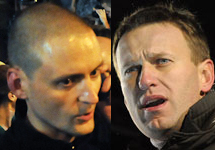
The constant representative of Russia under the OSCE Andrei Kelin responded to the official request of the organization in connection with the arrest of Alexei Navalny and Udaltsov. According to Slon.ru, for the first time in a long time, the OSCE reminded Russia that she, as a member of the Council of Europe and the Organization for Security and Cooperation in Europe, should respect freedom of speech and meetings, and fulfill the obligations of a member of these organizations. The Supreme EU Commissioner for foreign policy Katherine Ashton on May 11 expressed concern about the arrests of Navalny and Udaltsov. Russia responded to this concern with a three -page text, in which the names of the oppositionists never mentioned.
The official position boils down to the fact that "the organizers and participants of the event in Bolotnaya Square, who called for a deviation from the agreed route of the procession and mass disobedience, provoked riots. During these riots, the promoters, journalists, police officers, reporters of the NTV television company, and the equipment of reporters were injured. From the answer of Kelin it follows that all of the above suffered due to the violent actions of some "organizers and participants in the event", does not speak of the violent actions of the police at the OSCE, but mentions separately about 29 injured police officers, "three who received bodily injuries: traumatic brain injuries, concussions, injuries and borrowings of various parts of the body, as well as chemicals, as well as chemicals. Eye burns ". Those who at the same time sprayed substances that caused burns, police or demonstrators are also not said.
"In this regard, we sincerely do not understand the meaning of the statement of the representative of the EU. In order to qualify the detained provocateurs as the leaders of the opposition, they do not lead political parties, they were rather hooligans."
In the response of Kelin of Russia, only two paragraphs were given, 90 percent of the text are devoted to problems with the rights and freedoms that are in the EU itself, and which Katherine Eston "should pay attention to."
“The Foreign Ministry referents have worked well,” says Konstantin Eggert, an international Kommersant Observer. “A typical document of the Foreign Ministry of recent years, where any questions are issued in the style of counter -propaganda: who are you to ask us these questions?”
On May 18, the international human rights organization Amnesty International recognized the Russian opposition to Alexei Navalny and Sergei Udaltsov as prisoners of conscience. This was announced by the head of the Russian branch of Amnesty International Sergey Nikitin. “Based on the information that Amnesty International has against Navalny and Udaltsov, we understand that their actions fall under the definition of“ prisoners of conscience ” - these people tried to realize their right to freedom of demonstrations, rallies and processions, were detained, and later placed behind bars,” said Nikitin.
Alexey Navalny and Sergey Udaltsov, who were detained several times during festivities, received 15 days of administrative arrest. The maximum term for the arrest under the article on disobedience of the police also received three detainees in Bolotnaya Square, who refused to admit their guilt: Evgeny Frumkin, Nadir Fattyakhetdinov and Valery Kuzmenkov. The appeals in these administrative cases were rejected.