
Translated material
Taran from the depths
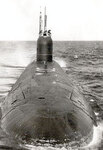
The submarines plow the depths without the rules of the "underwater movement". They can be touched not only by each other , but also by surface vessels. At the same time, carrying rockets with nuclear filling plus a few tons of explosives in the warhead warheads in their mines. Unhindered and imperceptibly for civilians, they can maneuver in areas of lively shipping. The man-made “Shark” is enough trawl of the fishing seiner and drags the ship with fishermen to the depths, disappears the bottom of the dry cargo, “attacks” the oil tanker ... On Friday, February 9, the American Los Angeles sent a Japanese educational fishing vessel to the bottom. There were 36 people aboard, of which 13 schoolchildren. Nine has not yet been found. There is no guarantee that someday the atomic submarine will not stick to all its war heads in the bottom of the sea ship with thousands of passengers on board. And the probability of this is higher than the risk of a collision with the iceberg. Since the atomes are numerous and ubiquitous. The monitoring equipment at the surface and underwater environment, no matter how smart it is, is powerless before a blind case and a “human factor” (fatigue, nervous breakdown, etc.). It is already necessary to sit down at the negotiating table today and establish uniform underwater traffic rules for all. No matter how funny it sounds for the admirals of all countries that are used to putting their professional interests above human life. Today, Russia is able to keep one atomic submarine on combat duty in the world ocean. Nevertheless, the signature of our country under this kind of agreement should be one of the first.
Not a single surface vessel is safe from Taran from the depths.
How does this happen? Quite ordinary. I will give a case from my own practice.
Mediterranean Sea. The central detachment of the Project 671rtm Project. November 24, 1987. 8.22 in the morning of Moscow time.
A short fragment from my camping diary. Record by fresh traces.
"They discovered PLVP (a submarine of a probable enemy. - V.E.). They kept contact for about two hours. After the loss of contact, they began to emerge at the connection session. I stand behind the hydroacousticity and see how the mark from the surface target begins on the screen. Unusually quickly. Immediately reaction of Michman Proshina:" At the same time, I hear a report to the central of the first compartment: I hear from the first compartment: I hear The commander’s noise. ”The commander is instantly:“ Fill the fast! ”And again the same, but already screaming. After which there is dead silence. For a second or two. Everyone seemed to be petrified. And then the rumble of a quick immersion tank. At one point, the boat ducked from 20 m to 100. The boatswain on the rudders fed the first:“ Six meters and flew under the rudder and flew under screws ".
He drew attention to the deadly pale face of the senior lieutenant s-ko. It turns out that he was on a submarine that collided two years ago on exercises with the Great Anti -Ship "Admiral Nakhimov". Then there were no casualties. The boat after losing the depth managed to "be blown up" and reached the base. Now let's go to do the "Parsing of flights". Motsak, although calmly, is outwardly, it seems that it will not seem enough for anyone. "
Mikhail Vasilievich Motsak is the senior on board in that campaign, a representative of the flotilla headquarters. Now he is Vice Admiral, chief of staff of the Northern Fleet. His name became known to the whole country on the days of the Kursk tragedy.
As for the "analysis of flights", it basically got the hydroachastis. Although the share of guilt was on the entire shift, which tracked the situation around the boat, which analyzed the surface situation, etc. It is characteristic that the emergency preceded the almost two -hour pursuit of the NATO submarine. This is always an exciting, intense action. The duration of contact is directly related to the size of the benefits that will spill on the crew after the combat service: to whom the early title, to whom the order, to whom is the vacation, etc. In combat conditions, contact is the right of the first shot. In a word, after such gambling, as a rule, some relaxation follows. The statistics of accidents and disasters under water suggests that boats burn and explode most often on the way home, when the "autonomous" count is already behind.
And we, most likely, popped up under some large yacht or passenger vessel of the average tonnage. The blow would fall on the cabin of the boat. After such a ram, the surface vessel would hardly have resisted, but the boat could also take a decent water into the central compartment, lose control ... And in this area a depth of about one and a half kilometers.
Similar cases, let's say, without five minutes by disasters, is full of life of the inhabitants of the incident compartments. And the life of those who, without suspecting anything, will plow the sea surface. An entry in Zhus (a journal of events accounting) will be made about the probable underwater ram. She is reliably slapped by a secrecy stamp on the basis. And in the best case, it will become some kind of lesson in the classroom with commanders, navigator and hydroacousticity.
And this will not happen - without extreme need, flaws fraught with international disasters in neutral waters are not pulled out into the white light. For example, becoming this case known to the world community at one time - the question of threatening to shipping in peaceful waters from Soviet submarines would be raised. Which in itself would be useful. Moreover, to streamline the routes of submarines not only to us, but also to the rest of the countries whose submarines are no less dangerous for peaceful navigators. And this has not yet been done. Under your cruise ship, no one and nothing prevents the submarine from maneuvering, lifting sliding devices, emerging at the connection session, working out emergency blowing of the tanks ... As before, in the depths of the oceans and in seas with lively shipping, conforming only with their cards, the vints of submarines with megatons of nuclear charges on board. And the probability of meeting them is far from zero.
In the photo A. Ivanov: A multi -purpose atomic submarine