
Translated material
Shame and temple
Why did Latvia turn the local branch of the Russian Orthodox Church into an independent church did not meet protest
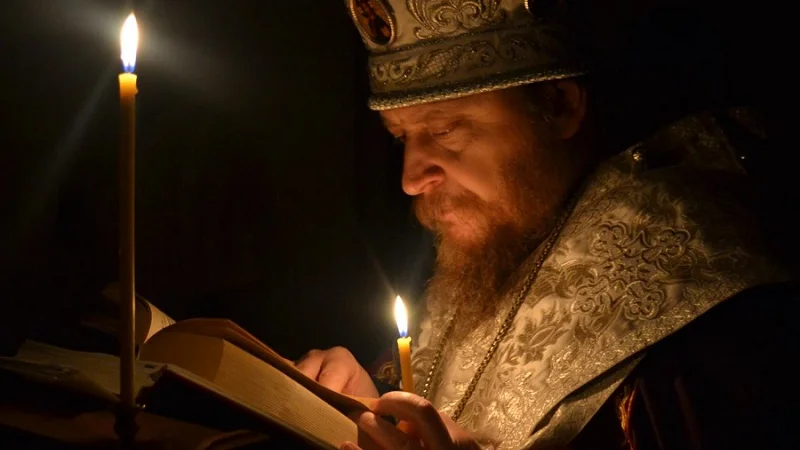
The Government of Latvia notified the local branch of the Moscow ROC that it will now cease to be a branch, and become an independent church. We are waiting for protests from the Ministry of Foreign Affairs of the Russian Federation. And from whom are we still waiting for protests? More from anyone - the Moscow Patriarchate in the current geopolitical situation no longer has subjectivity.
But what about the principle of statelessness in the affairs of religious organizations? The fact is that organizations of the Russian Orthodox Church are no longer perceived as religious. This is the result of the latter not even eight, but for ten years, counting from the sentence for Pussy Riot, to forgive which “it would be incorrect” (this phrase Cyril took an honorable place in his sermon “Gospels inside out”).
Many have already forgotten, but not so long ago, at the beginning of this century, everything was wrong. The most noticeable difference is quantitative: in the occupancy of temples. But it is not the most important. It is itself a consequence of a qualitative difference:
For those who came to the Russian Orthodox Church in the wake of the “Renaissance” of the 90s, the attitude has changed to it. For most, it has changed so much that they left it at all.
But those who have not left, it also changed, and in the same direction, is simply less radical. This changed attitude of parishioners to their church characterizes the current Russian Orthodox Church.
We will talk about conscious parishioners. These are not necessarily those who know the symbol of faith by heart (we can do without high criteria), and at least those who can answer the question of who they have the ruling bishop. It is important to distinguish between. If you just ask visitors to churches, which bishop is remembered for their services, then most will be difficult to answer. Buyers of Pyaterochka would be in the same position if they began to ask the name of the network owner. Such consumers of religious goods and services cannot be called conscious parishioners. They have their own criteria for the quality of the consumed, and these criteria are not related to the name of the owner of the institution. Even with the historical forms of Christianity, they are barely connected and do not necessarily assume faith in any deity.
The secular authorities are well aware of both in Latvia and in Moscow:
From the change of owners of retail chains, the number of customers does not change. The number of buyers does not depend on the owners, but on the retail space.
But there are also conscious parishioners. Quantitatively, they are in an insignificant minority, but qualitatively more than others determine the face of the Russian Orthodox Church in front of the outside world, especially to secular society and those authorities for which the opinion of society has a meaning. If they had not changed over the past 10 years, the current actions of the Latvian president would not have occurred to the Latvian president himself.
What has changed among conscious parishioners, that is, those who understand the hierarchical structure of the church and know something about the need for bishops in it? In short, they became ashamed with their bishops. There was still solidarity in the zero here, almost family relationships, or at least an imitation of those. Now - alienation.
It is similar to Soviet times, but there was a compelled alienation, and the flock sympathized with their bishops as prisoners in gold cells.
The real status of the Soviet bishop within the Soviet nomenclature from the flock was hidden. And the status in the nomenclature of the post -Soviet is impossible to hide. Therefore, the attitude to the Bishop of the Russian Orthodox Church in her flock is the same as the attitude to the deputies of the State Duma among their voters: the latter also do not really remember the names of those for whom they abandoned the ballot.
All administrative cases of the Russian Orthodox Church within this structure itself only concern the ROC administration. Touching the interests of this administration, it is impossible to touch the life of parishioners of the Russian Orthodox Church. Therefore, the President of Latvia can afford all decisions regarding the local branch of the Russian Orthodox Church to notify its leadership post -fact. In addition to the Ministry of Foreign Affairs of the Russian Federation, there will be no one to object.