
Translated material
Actors
Character and his name
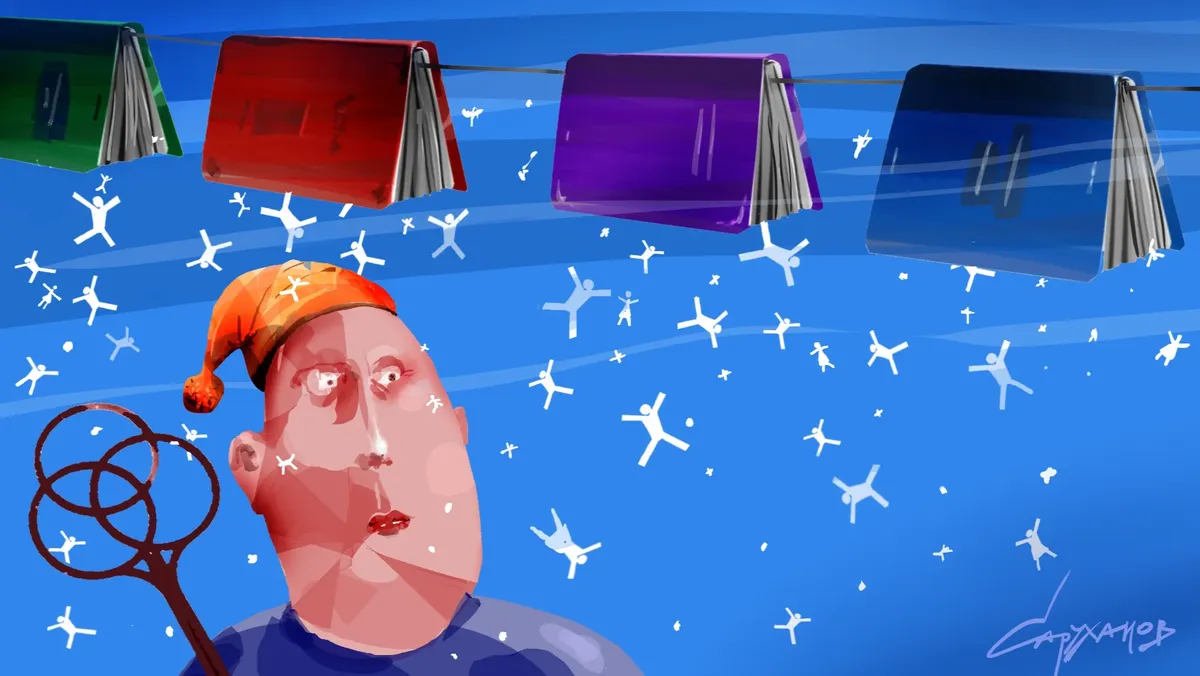
China
The artist of the era of Qing, who was part of the bohemian group of painters “Eight eccentrics from Yangzhou”, once wrote a portrait of his friend. To do this, he turned to the generally understood language of the flora and drew a modest orchid and bamboo branch.
In the black and white plexus of skillful, but supposedly random strokes, the flowers of orchids are barely visible. This makes the scroll a encryption for his own: in order to enjoy beauty, you must first find it among the ordinary landscape, who is also almost absent. But this is only the beginning of the message.
The orchid differs in that it grows in plain places and blooms alone - for itself. Speaking in our opinion-"writes to the table."
Without counting on someone else's approval, she does not chase him, preferring to quietly revel in her own perfection. Translated - humility more than pride.
In Old China, it was so supposed to behave the then intelligentsia - Caste "Liteity", which collected pollen of classical scholarship, inaccessible to gross aliens - the ruling dynasty of the Manchuri. This scroll is simultaneously a message to a friend and its portrait, which complements the second element - bamboo.
The favorite plant of sages, bamboo permeates the entire Chinese culture. At the same time, every child who saw a fishing rod can draw his scheme. But it is almost impossible to write a bamboo (not tolerating delaying a brush and a predatory with a brush and a predatory one, striving to blur into a blot of black mascara) is almost impossible. I tried, killing the whole summer to cope with the branch on two leaves.
Bamboo avoids symmetry. He is whimsical and free from the units of order, in addition, the internal that conveys the hieroglyph “Lee” and means the submission to the nature incomprehensible to us. To get used to her (and get rid of her), Wen Tun, the best master of this plot in the last thousand years in the history of Chinese painting, fenced his house with a bamboo thicket and aged with him.
“In the morning he is my friend,” wrote Wen Tong, “in the evenings - a companion.”

But the rest of the Chinese bamboo serves as an example of resistance. As a noble husband, he bends under the wind, but never breaks. To convey this on paper, you need to draw what does not lend itself to the brush: wind, cold and loneliness, because even in the dense grove, each barrel lives on the hibernal - so that the forests are not visible behind the trunks.
Having connected an orchid with a bamboo in one scroll, the artist spoke about his friend all the important, exhausting his character by a set of enviable features.
Delivered for yourself, but not share it with unworthy. To bloom somewhere for yourself, not for others. Grow without afraid to break. Silently tolerate the inevitable impulses of the wind, knowing that they can’t destroy you. Green even under the snow. Despise the willingness to get into operation, equal to the other. But the main thing for the artist was the confidence that his friend would easily and gladly read all the non -trivial meanings laid down in the picture, and recognize himself in it.
If in the east of people, and everything else, nature depicts, then in the West it can be shown through man. It is more difficult to create it on paper than in life, already because it is rarely done by chance.
Germans
I fell in love with the German romantics long before I read them really, except, of course, Hoffmann, whom every Russian knew and which I forgot how Berlin's friends, every German child, was nastivated. I had enough fired aphorisms so that they became epigraphs for what I dreamed of reading and, if I were lucky, write in a book, where “everything seems so natural and nevertheless so wonderful ... where the ordinary is given the highest meaning, and the usual one is a mysterious look” (Novalis).
German romantics - unlike others - knew how to find exotic not in Hellas, like Byron, and not in the Bakhchisarai fountain, like Pushkin, but at home, without getting up from a chair and without leaving the library. In it, an alchemical transmutation of reality into fiction took place in it. As a result of the transformation, the first, everyday reality, melted under the pressure of the second, becoming more and more unsteady, mysterious and tempting, like all otherworldly.
I found an illustration of this reverse metamorphosis at the most prolific and consistent author of a romantic galaxy. In the play by Ludwig Tiku with a nudity design, the name “Swear-Highlight” is not offered a metaphysical alternative, but the hall, not actors, but spectators, not the plot of the play, but the mischievous life of those who watch it and who take their secrets with themselves.
“The curtain falls ... The audience diverges home ... They have gone, and no one will say where, no one will ask about anything, there is no one who would return from that terrible, terrible desert.”
We, and not the heroes of the play, have to live in this “desert”, where everything is not Ponaroshka, as on stage, where the ball is not an artistic plan, but a stupid accident. Honoring horror with a habit, we tolerate when we are driven from the theater on a cold and unpredictable night.
About the characters, brightly lit by lights and the author, we know everything, and they are nothing about us. From the point of view of the heroes of the play, we, spectators, live in Magnum Ignotum, in the great unknown (as agnostics call the afterlife). To go into it is to die.
Which happened in the play of Tika. Having lost it with her kuter and absurdity, one character, as it happens with us, announces his last decision: “The most venerable audience! I got to the verge of suicide: I intend to leave the scene ... a dark country! What is it - on the other side of the souffler and ramp? ... What is there, among you, calmly looking for shadows? " To commit suicide, it is enough for him to go down into the hall and mix with us, fictitious - with the living.
The secret of this merger determines the writing skills and leads to the birth of a character.
Character
I myself am afraid of them to trembling and driving them from my pages, because I do not know how to cope with them. After all, a real character should be a stranger to the author, and let him go to himself - outsider and unwashed - unpleasant, even dangerous, because it is not known what he will make in your head and manuscripts.
When Fellini took off Casanov, he did not enter his own office, afraid to catch this stallion in him. Out of hatred of Casanov, the “memoirs” of which the director read only after he signed a contract for the filming of the film, Fellini created his antipode on the screen with a “gaze of glass eyes, indifferently gliding in reality and absorbing its void.” But changing signs, signs and aspirations to the opposite - does not mean to get rid of the character. Reflecting the author in a crooked mirror, he still sits on his neck.
It often seems to me that in books there are no strangers to the author at all. Instead of them, under the binding, parody doubles-disabled doubles are hidden, similar to us, like a monkey to a person. Sometimes we recognize ourselves in Pavian, more often - in chimpanzees, occasionally and in his youth - in Bonobo. That's why I do not trust the characters and I can’t learn to write in the third person.
On the one hand, this is the most natural for literature, which is invented for this to tell about others. On the other hand, the character’s phenomenon, like an ax under a compass, shifts goals and overwhelms the route.
In old age, Tolstoy shared the shame for pulling the mask over himself in his books and pretended to be others. And this despite the fact that no one did it so endlessly convincingly. Dostoevsky’s characters have from one crazy house in which there is a place for the author. And in Tolstoy they, as it seems to us, was indeed not familiar with each other until the author brought them.
The presence or absence of a character is a criterion that separates fiction from “non -fiber” (even if the latter is poetry).
The character’s exit to the stage radically changes both her and the nature of literature. The character is a trusted person who is the author precisely what he trusts to live and speak for himself, including when he is opposed or contradicts everything that is dear to the writer. To decide on this, you must be a classic or graphomaniac.
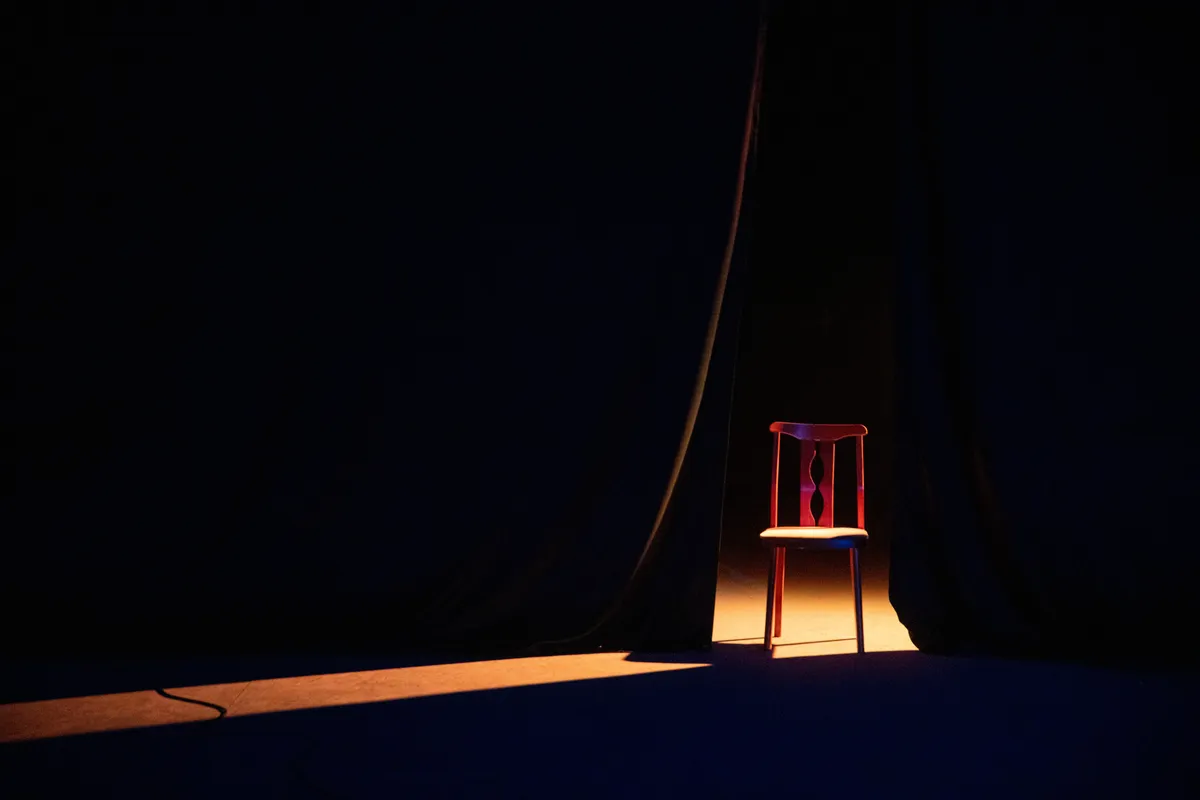
Problems with the character begin immediately - with christening. Since we glue fictional people from acquaintances, it is very difficult to name the invented name. It seems a rough homemade product that impedes itself as the original. The invented surname does not grow to the character, but gives him out - like a crookedly glued beard.
I saw how Dovlatov was tormented with this. Unable to overcome the fear of falsity of fiction, he left their real surnames to the actors, which he prettyly infuriated Estonian readers when the “compromise” reached them.
But sometimes the character only remains that the surname that contains a plot or joke. In the story of Valery Popov, an author who, incidentally, is never pretended to others, gets acquainted with a middle -aged serious man:
“Stonyakova,” he introduced himself.
- Are you a Japanese? - I was confused.
- No, I just told the passportist that I want to take my wife’s last name.
Conception
Trying to withdraw the character, I trained on my cats, knowing that they were obviously different. I let them into the page and gladly watched what they do there, for example, Tygydyk.
This barbaric, with three s, is called an attack of romantic madness, which is characteristic of a cat, when - closer to the night - in them the instincts unknown to me, changing the sedentary, to put it mildly, temperament for a violence.
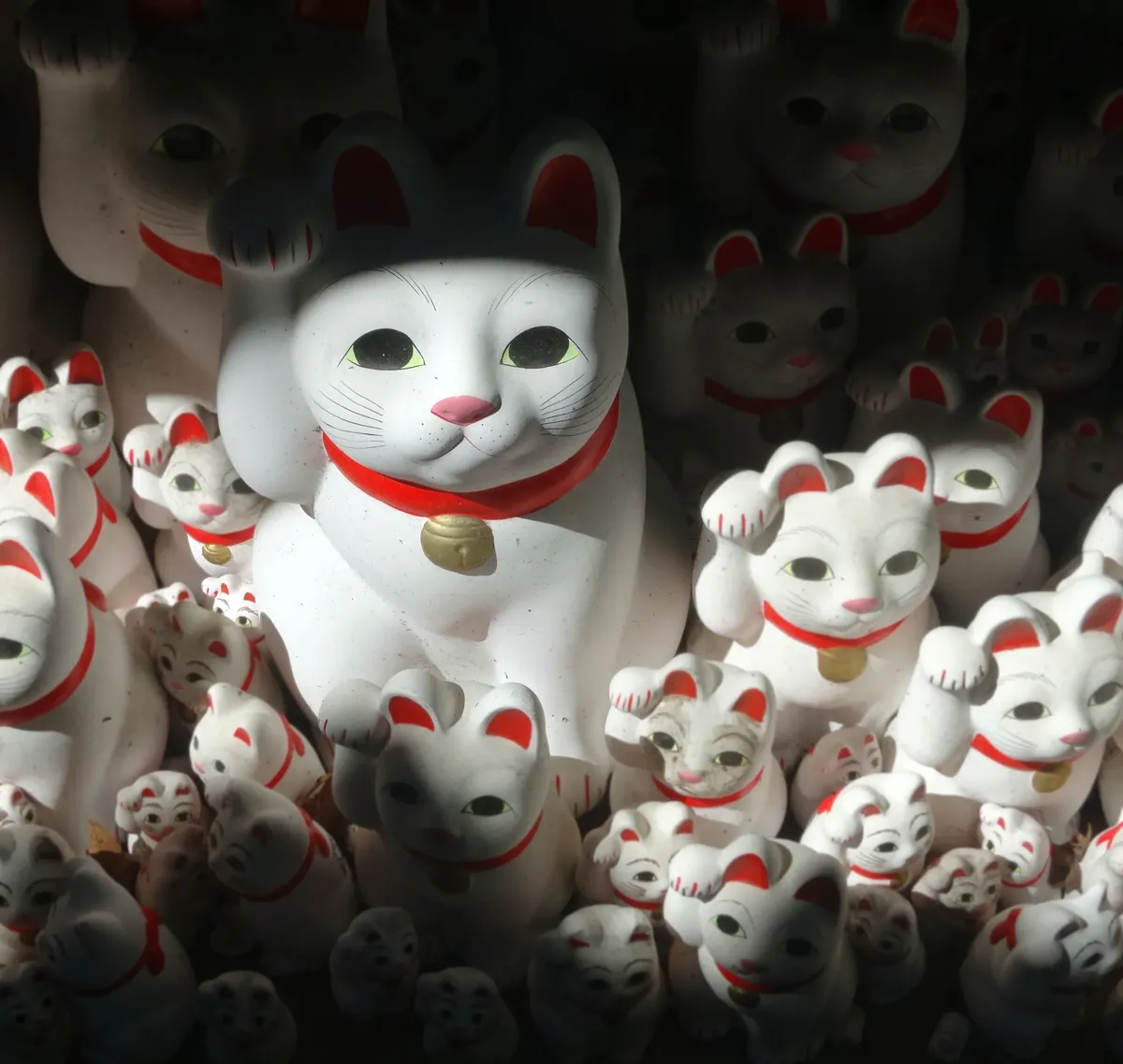
Having abandoned the rational, that is, selfish behavior, which is originally inherent in them, they are chasing invisible (me) demons. Reflecting their imaginary attack, cats are rushed for without any reason around the house, jump onto the bookcase, swing the TV, screaming without meaning, drop non -hardly standing objects, fight in the park with each other, turn their favorite cardboard box, ignore their food and do not even go into the sake of combing a peaceful thing. time. Their motives for me are as inexplicable as the binge of Marmeladov in the “Crime and Punishment” or the ruin of Dmitry Karamazov in Mokr.
The cat, however, comes to the author in a finished form - there is nothing to add to him, he cannot be embellished, it cannot be spoiled, complicated, and even more so simplified. The cat is a cat, and we must put up with this tautology.
With people differently. They obey the arbitrariness of literature, but only to the limit, because the characters, like cats, also take from somewhere. Follow the metamorphosis is an exciting activity, because the character is not more like a sperm to an old man. And the most interesting stage, as in the case of childbearing, is conception. You can spy on this process through the keyhole of notebooks. Especially those where life is seething and accumulating.
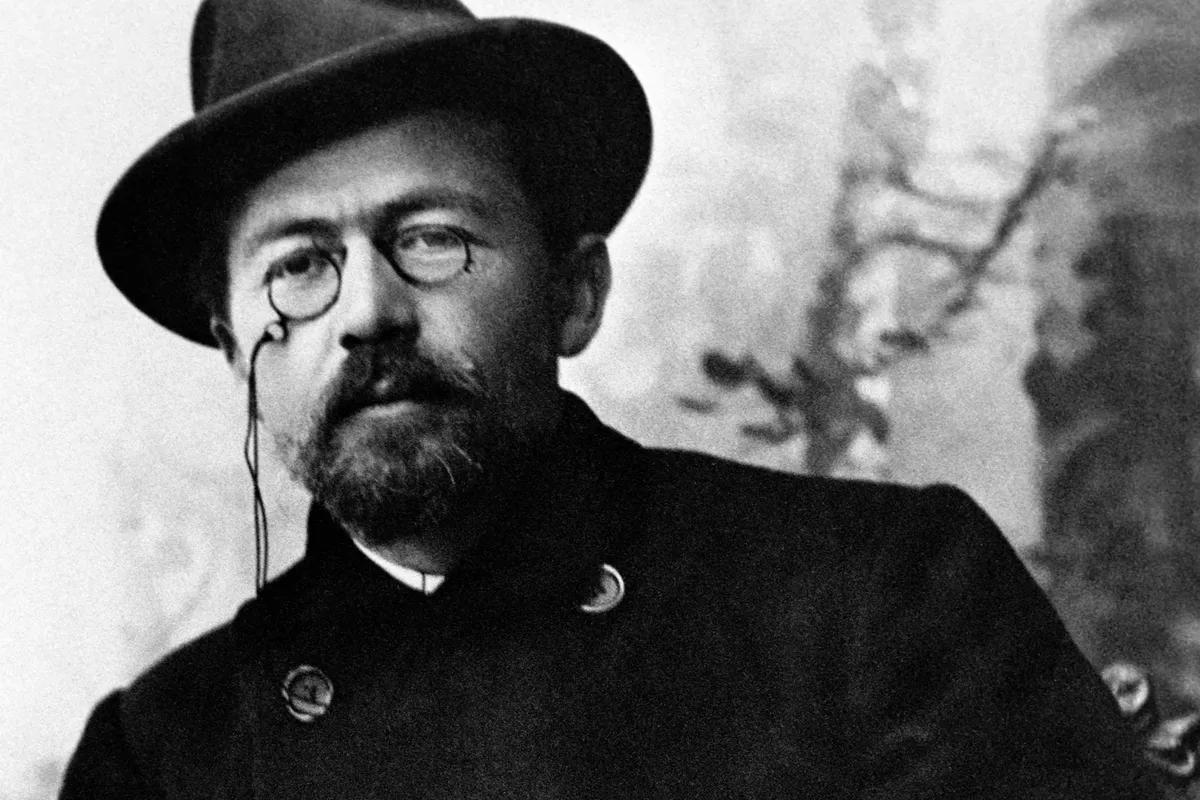
Chekhov
His notebooks are limb, where the protoplasm of Chekhov's literature wanders. In anticipation of embodiment, characters are not yet ready for literary fate, not yet ready for literary fate.
First of all, the author is looking for a flaw in them. Round and whole here are not suitable (if this is not a bun). Knowing how a person’s doctor from the inside, Chekhov considered imperfection, including bodily, a catalyst for a reaction that turns raw materials into a character. The defect is a hole in another that allows you to look into it, draw into action and start into the plot.
Stronging for clarity, Chekhov selects grotesque details that stick out from his watercolor poetics.
So, among the records, a “hunchbacked but tall” man appears, about which nothing is said about what does not prevent us from imagining this on stage. Or a lady, so unusual that Chekhov mentions her twice: “I want to think (judging by the face) that she has gills under the corsaire.” Another portrait: "She did not have enough skin on her face: to open her eyes, she had to close her mouth - and vice versa." Finally, the record that was ahead of Babel to the generation: “They divided the corpse, but did not have time to remove the gloves; Corpse in gloves. "
If all this company was united on one canvas, a picture of a German artist like Kirkhner, Otto Dix, Gross or Becmann, who wrote after the First World Warpecks and freaks, did not drop into caricatures.
Chekhov - too. This is why none of the mentioned characters surfaced in his writings. Instead, he chose pretty people in the heroes of people and made funny and unhappy from them. Otherwise, it is impossible, because this requires a recipe for a dramatic conflict in a notebook: "A person has eyes icorn only during failures." They pursue the Chekhov losers for not entirely clear reasons, which are rooted in the depths of the “gloomy” soul and come to the surface all in the same records.
One mentions "a rich Russian woman who has never seen lilacs in Russia." In another, a young man who "gathered a million marks, lay down on them and shot himself." The third, and twice, describes a person who "was happy only once in his life - under an umbrella." If there is nothing to complain about, the wounding surname remains, especially the Jewish: “Jew Perechik”, “Jew of Chepchik” and just “Eternal Jew” .
Finally, a completely innocent Fedor appears in the records, which is said only that he "drinks a lot of tea."
In Chekhov plays, tea is more important than a gun: it pours a river, replacing a stage action and drawing up pauses.
Sinyavsky, by the way, argued that tea played with Gorky in “Mother” equally important role.
“A samovar,” said Andrei Donatovich, “the only human character of the book, so he was introduced whenever it became necessary to soften the tilted rhetoric of the novel.
Dialogue
The world of characters is only on the stage, where they are called the characters, including when they do not act at all, like Beckett. Having deprived them of a meaningful lesson, he replaced him with a dialogue, too, however, not leading anywhere. “You need you,” one hero explains to another, “to give me remarks.” The dialogue saves the drama of the absurd, because if the characters do nothing (say, wait for the one), they must take themselves and the audience with a conversation, albeit about nothing. Behind this empty conversation, they are shorting the theatrical eternity, which we try on with horror.
But even worse to get into Chekhov’s drama. Monologists are not trusted here, but dialogues, in essence, are not. Everyone speaks each other, even their sisters. As if Chekhov (a strange feature for the author) had an allergy to the tongue and he considered any speech inferior, false and so useless that she brings Masha from the “three sisters” to hysteria: “So they say all day, they say ... you live in such a climate, that’s the snow will go, and then these conversations are.” The only meaningful and important dialogue that develops the action and forms the plot of the play is a love confession. But it looks like a futurist:
Masha: Tram-Tam-Tam ...
Vershinin: Tam-Tam ...
Masha: Tra-ra-ra?
Vershinin: Tra-Ta-Ta.
“Words, ” said Zhuang Tzu, “ is not for the road that they are pronounced, but for swallowing them.” So Chekhov has the most common remark in plays - a pause.
When one has nothing to say to the other, then nothing is divided into anything without a trace and everyone dies alone.
The hopelessness of communication throws a black shadow on the most secret way of paired coexistence - marriage. In Chekhov, this is the union of unlucky, constrained by one chain.
“If you are afraid of loneliness, ” advises the Chekhov notebook, “ do not get married.”
We
For many years, the only character available to me was not me, not him, but we. In the co-authorship of six books, a thousand articles and columns without an account, a Gomunkulus about two heads and with a double surname: Vile-i-Genis was self-proclaimed. It was not easier to write on his face than from your own, but not so scary. For everything, the character was responsible with the features inherent in him: unbridled curiosity, hunting for a change of places and immodesty in the drink, for which the patriarch of the Russian press of America, the editor of the “new Russian word” Andrei Sedykh, sweeping us “two with a bottle”.
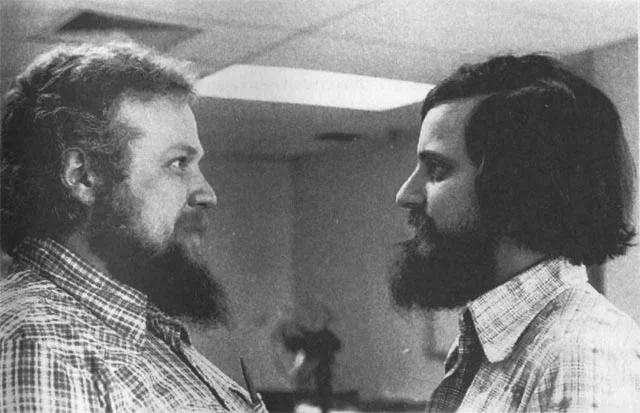
For the first time we were divided by the radio. We could not speak the “Freedom” microphone in chorus, and we had to take pseudonyms. Petya called himself Andrei Dvinsky, I was Sergey Snegin.
Fictional names made characters that were noticeably different from each other, although not like a rapcel. Dvinsky sounded solid, Snegin is cocky. This was not related to reality, we composed both parties together. The roles dictated a voice.
My, the sound engineer noted displeasedly, sounded in pioneer, which is understandable: I was the youngest in the editorial office and ran more often than others to drink. But Petit had a wonderful voice for the radio: convincing, moderately ironic and always calm. True, Vile had a small speech defect, which even I, although we spent most of the day together, never guessed. It turned out when we talked about the glorious weekend in the Efimova program.
“On the lake,” Petya flooded, “there was a vodka station.”
“America,” Marina admired, “they’ll pour a glass everywhere.”
“No, no,” Vale was angry, “I said the“ Vodka Station ”.”
“I understood that way,” Marina was confused.
It was then that it turned out that Petya did not pronounce the solid l, because of which the “boat” sounded like “vodka”. But this did not prevent our character, because not so often we rode a boat.
I
At forty, I was again born. This time - as a new and completely unfamiliar character. Although his name was just like me, I looked closely at him not without fear. The newborn was defenseless and this went to the reader. The same Chinese said that they love those who do not inspire fears, and here babies outside the competition. Но я боялся пересолить и строил свою авторскую личность из противоречий: пронзительная искренность со старательной ученостью.
И если первую я выдавливал из себя, скрипя зубами, то вторая лилась сама, когда я забывал прикрутить кран.
Дело в том, что я всегда был одержим знаниями, как другие — спиртным. Мне еще не встречался факт, показавшийся лишним или скучным. Хуже, что, вставив его в свое интеллектуальное меню, я испытываю непреодолимое желание угостить посторонних, невиновных и читателей.
Зная за собой этот порок, я уговариваю автора сдабривать текст сатирой, юмором, иронией — по отношению к себе, разумеется. Этому я тоже научился у Довлатова, который тщательно следил за своим авторским персонажем, не позволяя ему высовываться, опережать читателя и подниматься над ним. Мало что мы так ненавидим, как заумь и снобов (для последних Бахчанян придумал специальную машину — «снобовязалку»).
Книга за книгой я растил свое бумажное «я», пока оно не стало заметно отличаться от автора. Which is understandable. Я старел, а оно оставалось тем же: задиристым, азартным, непоседливым. Другими словами — Шариком, как меня зовет жена, когда хочет похвалить и обидеть.
Мне пришлось сжиться с этим «я», учась у него терпимости, воодушевлению и готовности разобраться с другими без жертв. Собственно, именно это же меня в нем и раздражало, но выхода уже не было. Стоило мне сесть за стол, как персонаж вырывался на волю. Он заменял меня настолько бесповоротно, что мне оставалось только убить его.
Но писать «он» вместо «я» — значит перейти на другой язык, то есть начать все сначала, в третий раз поменяв местоимение. Боюсь, что на это, как на вторую эмиграцию, не хватит одной жизни.