
Translated material
The gallows sincerely
The Russian authorities were going to erect a monument to the punisher of the 19th century Muravyov. What he became famous in Russia, Belarus, Poland and Lithuania
A defined story about how the former revolutionary Muravyov tried on all the archetypes of Russian guardians.
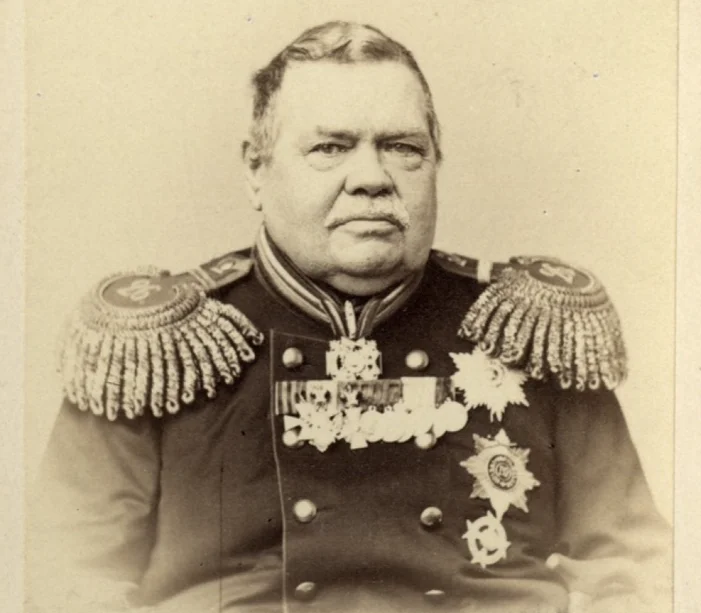
"Always unconditionally submitting to the will of your imperial majesty"
(Standard appeal from the reports of the count M.N. Muravyov-Vilensky).
The famous in the year before last and later almost forgotten statesman of the Russian Empire Mikhail Nikolaevich Muravyov in early 2023 unexpectedly returned to the current political agenda.
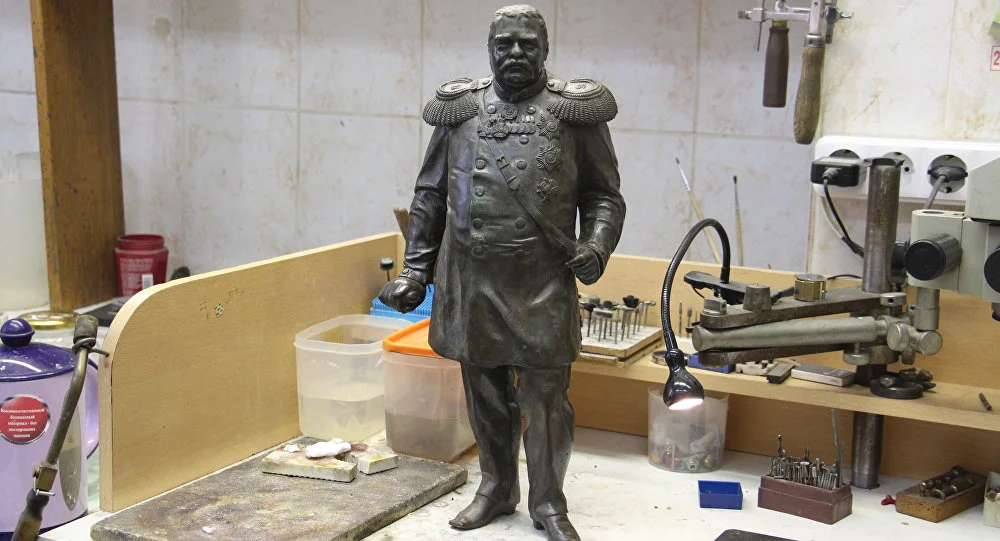
The head of the western Russian region - the Kaliningrad region - Anton Alikhanov unexpectedly proposed to establish a monument to this historical figure, and with a non -informative explanation : "Perhaps the monument will be appropriate." Why is it unclear.
Muravyov, although he headed at one time all the northwestern territories of the empire, but has no direct attitude to Kaliningrad-
Königsberg, during the life of Muravyov-Vilensky (aka "Robeler") in the kingdom of Prussia.
Not otherwise than an exclus does not have more urgent problems how to try to annoy the neighbors, and already, for well -known reasons, not the most well -built.
But Mikhail Muravyov really played a noticeable role in the history of Poland, Belarus and Lithuania. And, of course, Russia.
An attentive look at the life path of this official breaks the cover from many models of building a gosquir in Russia to this day.
Perhaps someone will become a lesson.
A man from the cover
Moreover, Times magazine. Not to be confused with either the American magazine Time, or with the British, but the newspaper - the weekly Times. More precisely, "Illustrated Times."
Illustrated Times is a very popular edition of its time. On January 2, 1864, Mikhail Nikolaevich Muravyov, who had not even completed the main work of his life - the pacification of the Polish uprising, was awarded the portrait in this journal.
The fact of this publication is known from the famous philosopher and publicist Alexander Herzen (he then lived in London), who did not hide his hatred of Muravyov.
Alexander Herzen - On the publication of the portrait of Muravyov
“Before this portrait, we stopped in silent surprise ... This is the limit, this is a border. We did not see such an artistic correspondence between the beast and its appearance either in the statues of Bonarroti, or in the bronzes of Benvenuto Chellini, or in the cells of the zoological garden ... We must give nature justice, she is the greatest artist! This portrait should go into offspring, it belongs to history. ”
Leaving these statements on the conscience of Alexander Ivanovich, we only note that the appearance of Mikhail Muravyov was indeed memorable.
And in the midst of conquering the Polish uprising of 1863–64. She became famous far beyond the borders of the Russian state.
Illustrated Times, although after that it lasted only a decade, but at the time of publication was one of the most popular magazines of its time. It was released by the famous London publisher Henry Vizetelli, who actually created the phenomenon of Boulevard Roman. It was also the key publisher of William Tekkeste and Emil Zola (translated).
Why such a glory overtook the already middle -aged Russian general?
He went to her for a long time, and, it seems, quite consciously.
Contemporaries reported that many reports about his atrocities against the Poles and the sympathizers were pronounced by his own orders. Messages, of course, almost always had a real basis.
It’s even scary to imagine the level of fame that the muravi-lover could master, having in the hands of modern means of communication and even more so whole media holdings.
Unarmean
It is interesting that almost the title of “trunter” also appeared thanks to Brava, Mikhail Muravyov. In 1831, in Grodno, where he worked as a governor, one of the local servants, most likely noble gentry, asked the question: they say, are he not one of those Muravyevs, of which someone was hanged after the Decembrist uprising.
Mikhail Nikolaevich immediately found: "I am not one of the ants who are hung, I am one of those who themselves hang."
This story is not at all a historical joke, according to some sources: one of Muravyov’s assistants in Vilna Vilna in the 1860s named Alexander Chumikov (subsequently known in St. Petersburg, the teacher later confirmed that everything was so.
Yes, and the unspoken “title” himself was quite liked by Muravyov. It turns out that he considered the irony successful.
So much as to even renounce the native of his own. Sergei Muravyov-Apostol, who headed the uprising of the Chernihiv regiment in 1825, for which he was executed, was Muravyov-the future trouser-a relative, albeit not the closest.
The craving for the offspring of an old noble family leading the genealogy since Ivan III has opened at an early age.
Of course, just obliged the clan! There were many Muravyevs, including those who occupied noticeable state posts.
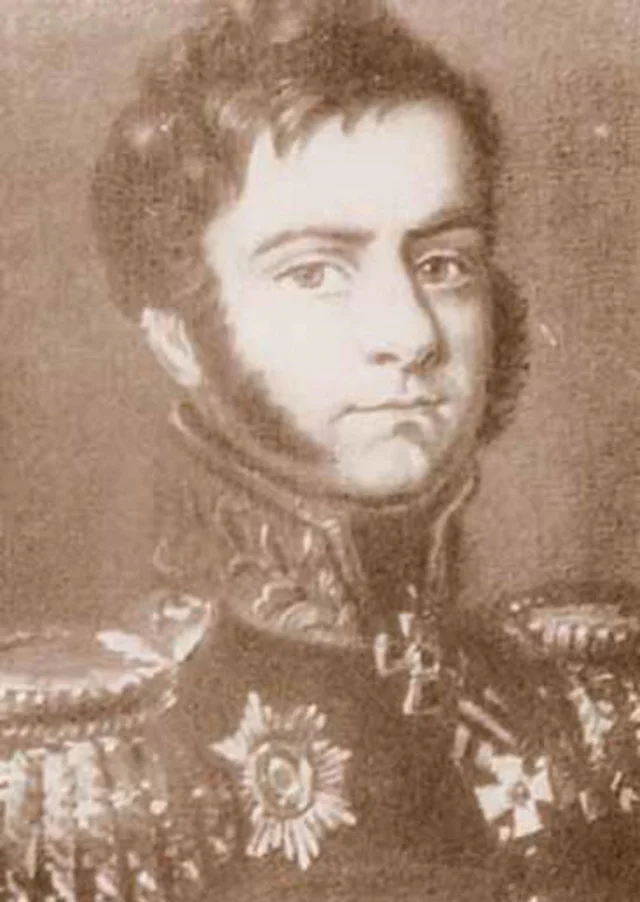
Mikhail Nikolaevich Muravyov was born in 1796, received a brilliant home education, already at the age of 14 (!) Having entered the Moscow University at the Faculty of Physics and Mathematics. At 15 he founded the Moscow Society of Mathematics. Society organized public lectures and seminars in mathematics, translated the best French and German books in mathematics and military sciences.
At the beginning of 1812, in the incomplete 16 years, Mikhail Muravyov was already an examiner at the main headquarters! True, to be honest, not only thanks to their talents. The conductor for such achievements was the work in the Moscow Military School for the Column-Minous, which in 1810 was established by his father, Major General Nikolai Nikolayevich Muravyov and was even located in the Muravyevs’s own house on Bolshaya Dmitrovka.
Dad added his son to the apartment -breeder as a warrant officer, but in the war with Napoleon Michael, he nevertheless had a chance to smell powder and even get a reward. In early August, young Mikhail reached the chief of staff of the Barclaev Western Army Leonty Bennigsen, in a few weeks later to meet Borodin's Day in the battery of Nikolai Raevsky. Almost died: he was seriously wounded in his leg, then he limped his whole life.
After the treatment, he returned to the army, participated in the battle of Dresden exactly a year after the battle of Borodino. True, he was listed in the headquarters, where he received the rank of second lieutenant. Then there was again the staff service, but already at the General Staff.
Since 1815, he again taught at the paternal school of the column-fed, rising to the headquarters captain. Actually, on this, taking into account health, of course, his military service was exhausted in his youth. Which did not prevent subsequently produced from the civil service already to the generals.
Conspirator. Well, almost
Before becoming a general, Minister and generally an exemplary statesman Satrap, Mikhail Nikolaevich visited a revolutionary. Secret.
But as part of a whole organized group of relatives.
His elder brother Alexander Nikolaevich, and according to some, although controversial data, Father Nikolai Nikolaevich created the famous "Union of Salvation".
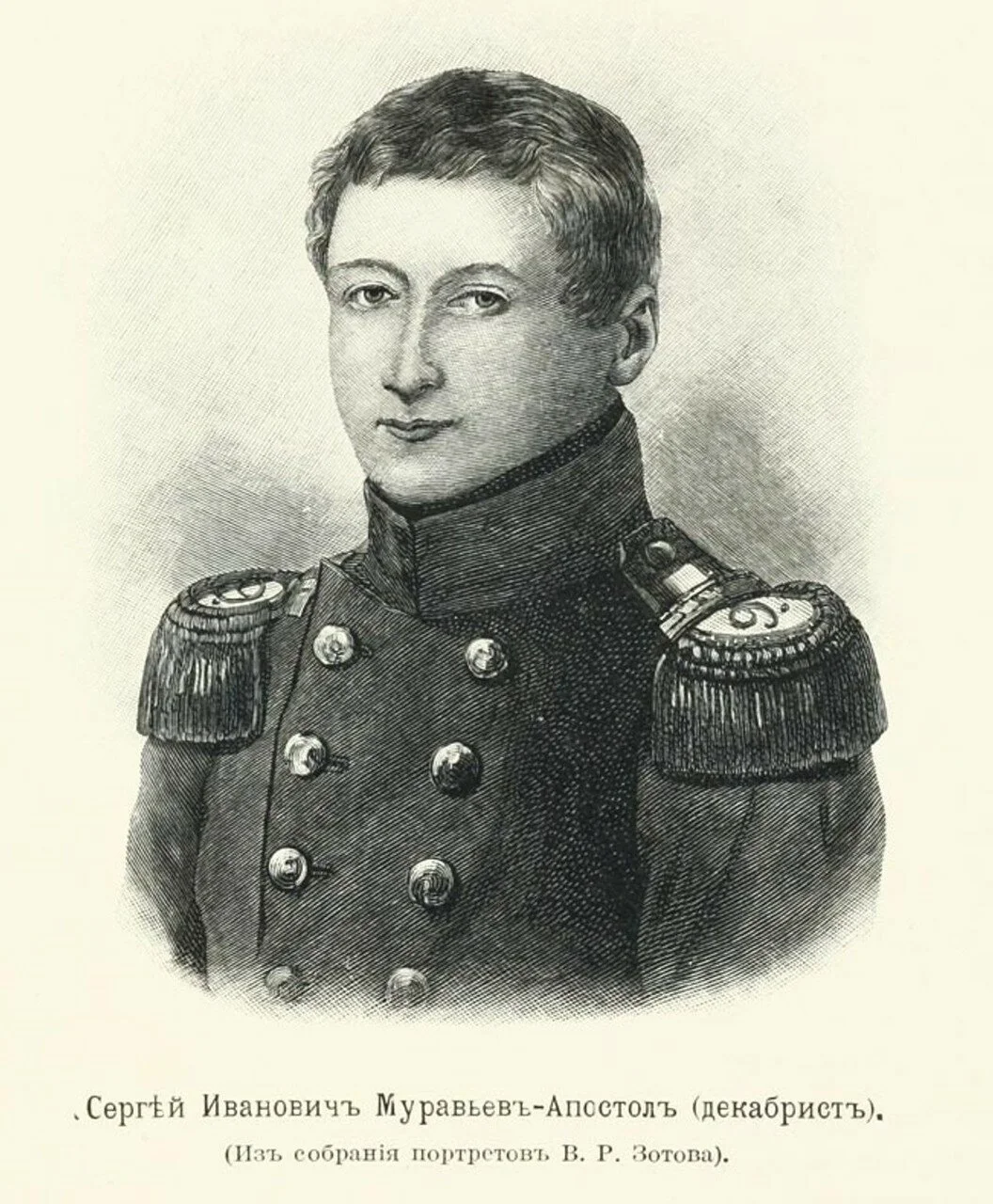
More precisely, at first there was a “sacred artel”, which consisted of more than three dozen (!) Former and current students of the Muravyovskoye column -made school. Among them are several more relatives of Muravyov, including two ant-apostles. Almost everyone then became the Decembrists, passing through the "Union of Salvation" and the "Union of Blagificness"
It seems like in 1820 Mikhail Nikolaevich cooled to secret societies and revolutions. This happened, according to the later memories of the "Monitor" itself, after the uprising of the Life Guards of the Semenovsky regiment.
Recall that until 1822 not only to participate, but also to create secret societies in Russia was legal activities. More precisely, in no way adjustable.
After the uprising on the Senate Square of the Muravyov - it seems, as if more than five years ago untied with the conspirators - was arrested in the Decembrist case and spent several months in the Peter and Paul Fortress. He testified in the spirit of the fact that the “Union of Welfare” “was simply engaged in the spread of good customs and education.” At the same time, he pointed to other participants, but only those who were already arrested, as well as to Vasily Perovsky, who managed to go abroad, and Mikhail Novikov, who passed away.
True, all this again according to the official version based on the words of Mikhail Nikolaevich himself. Whether it could have been that he did not give out anymore and how he did not receive a term for perjury - let's leave this with a matter of reflection.
The fact is that
Mikhail Muravyov was not only not sent to hard labor with his brother, but left the dungeon with a promotion.
By personal order of Nicholas I, Muravyov was justified and received the rank of state adviser (in the army this is similar to the brigade general).
After a short service at the Ministry of Internal Affairs, where he developed anti-corruption initiatives, he was appointed vice-governor in Vitebsk.
Having visited the underground, Mikhail Nikolayevich for life remembered not only the experience of conspiracy work, but also a persistent conviction that conspiracies are not only likely, but most or most of all, they are constantly preparing.
And also decided that fighting the regime is unproductive and simply dangerous. Better to serve.
What he did.
Technocrat
Well, the embezzle at the same time. It is so established that these concepts in Russian bureaucracy, like Siamese twins.
The entire bureaucratic track record of Muravyov-lover does not make sense in detail, it is important to note: Mikhail Nikolaevich turned out to be extremely versatile.
After a short "internship" in Vitebsk received a promotion to the governor - in Mogilev, in 1828.
In 1830–31 On the same lands of the former Commonwealth as a Politzmaster General, the reserve (internal) army of Count Peter Tolstoy participated in the suppression of the Polish uprising. It was then that he became a “hanger” - not only figuratively, of course.
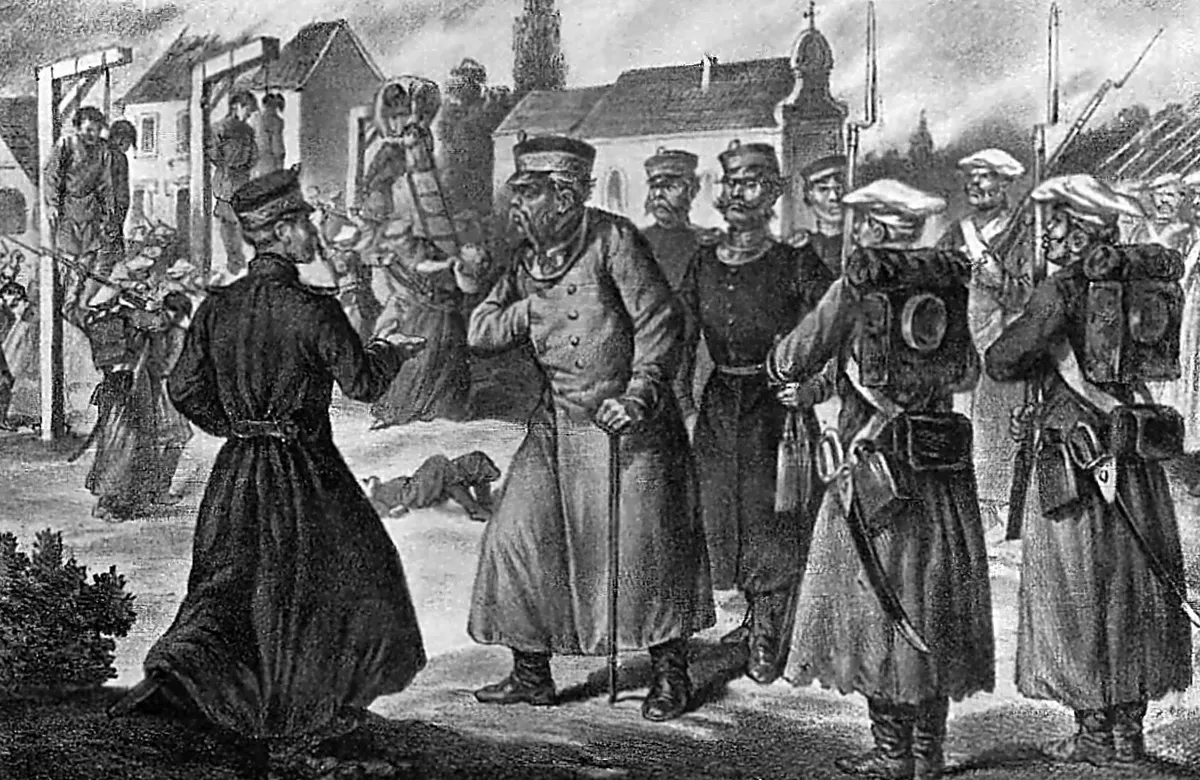
From the memoirs of Mikhail Muravyov
“I used this measure due to the fact that the Panas intercepted and hung our Cossacks sent by me with the dispatches to the provinces subordinate to me. It was customary for me to be a rule for each hanged Cossack to hang one of the inhabitants of the village closest to the crime scene. This measure acted the best: soon the hung of the Cossacks completely stopped, and the Poles called me a hanger. "
That is, he did not punish the perpetrators in crimes, but simply arranged terror: he arbitrarily killed the "inhabitants", so that others, as they say, were disgraced.
Since 1831 - Governor in Grodno. There he launched the total Russification of the region: he reformatted and even closed schools, seminary and monasteries, sent several priests, as well as a large Volyn landowner of Prince Roman Sangushko. The Grodno gymnasium through the efforts of the governor from the Dominicanian became secular, and Polish teachers were completely replaced by the Russians.
In 1839, when Muravyov led the Kursk province for several years, in Grodno, it was with his participation that the culmination of the depolonization of the lands, which we now call the Belarusian: Bishop Iosif Semashko, canceled the Brest Union of 1596 (it is still operating in Ukraine, the parishioners are commonly called Greek Catholics), and millions of Litvinovs) (Belarusians) moved to Orthodoxy.
Such zeal was evaluated in St. Petersburg and Muravyov-Sveta was taken to the capital to work in the central bodies: the director of the Department of taxes and various fees, the manager of the boundary corps, the chairman of the Department of Dolov, a member of the State Council, and since 1857-the Minister of State Property.
What allowed Muravyov to make a brilliant career? The willingness to take on any responsibility in any volume.
Of course, with complete reverence. Muravyov extremely clearly shared the hierarchical situation - what is called, who is the boss and who is the “fool”. Thus, the memoirs of the legendary general and a fighter with the corruption of Ivan Liprandi about the dialogue with Minister Muravyov were preserved. Liprandi had no formal posts by that time, and Mikhail Nikolaevich allowed himself to speak with the senior in military rank and age (quote from Ivan Petrovich himself) “in the dog-primary tone”.
But with representatives of the imperial surname, he has always been more than teaching. As with the chairman of the State Council Orlov. Muravyov also provided services to the latter: in particular, he helped the brightest prince sell the house in the treasury, which was previously granted by Orlov ... by decree of the emperor, that is, from the treasury!
The ants reacked such skills perfectly, however, he was not convicted personally in bribery. But he was not shy, taking at the same time three or four positions, to receive a salary of all departments. Come on, only a salary!
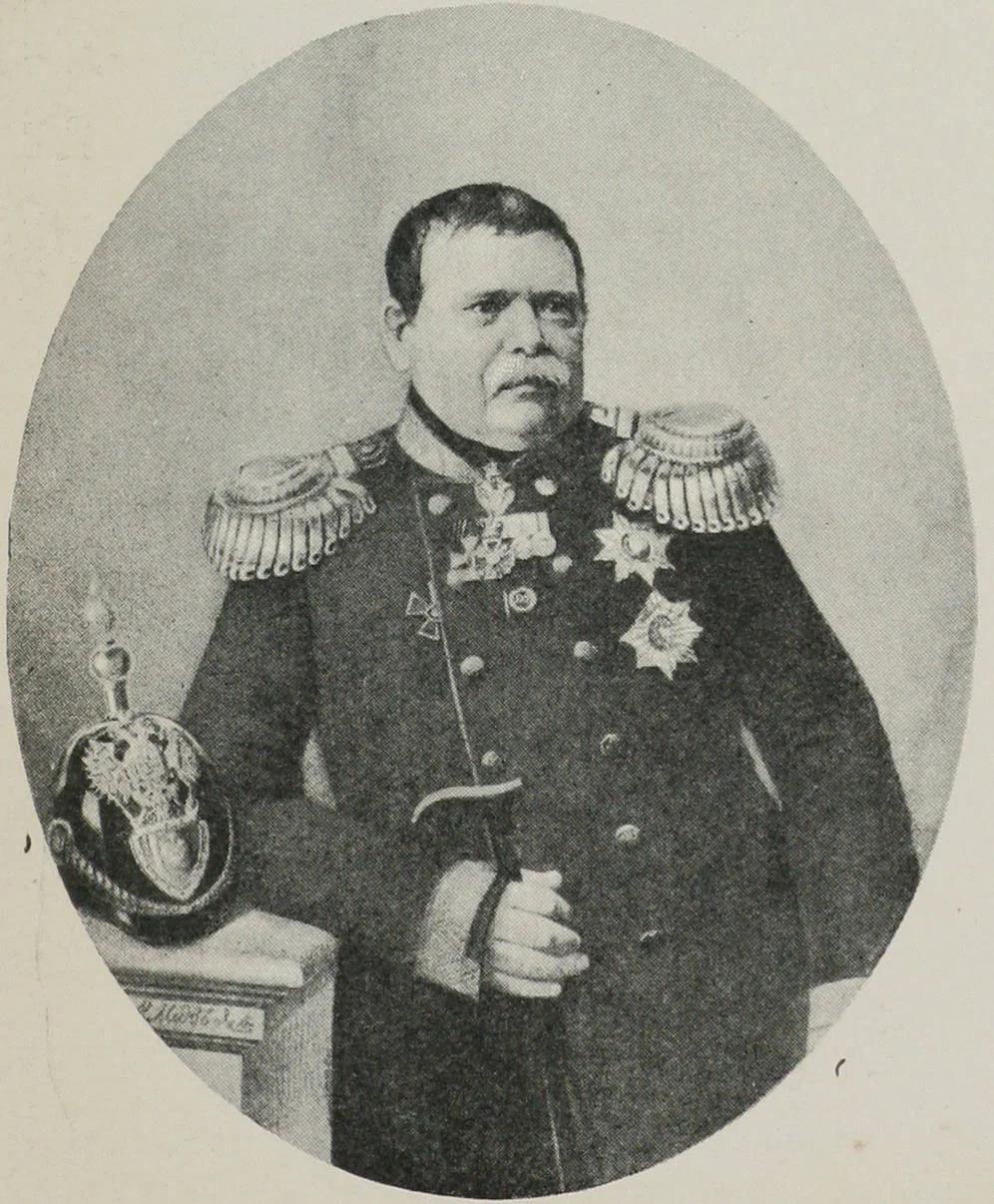
In 1858, in St. Petersburg it was bouted that Muravyov, going on a trip to Russia, took at once runs (travel) at once in three departments: property, specific and landlord.
But Muravyov was not a poor person from birth, and also received from the emperor in a salary of large lands (over 22 thousand hectares) along with peasants in the Samara province.
At the same time, the “three -car” ants perfectly knew how to place his people everywhere. As a rule, former colleagues, or even relatives.
He was able to attach his eldest son Nikolai (Muravyov-Kovensky) to the Vyatka governor . In 1856, the Forest Department, who was under the leadership of the Muravyev-Sweeter, awarded two governors for the “full assistance of the protection” of those very forests-the Vyatka governor Nikolai Muravyov and the Nizhny Novgorod Governor Alexander Muravyov (the very oldest decabrist brother). After several years of exile, Alexander Nikolaevich returned to the civil service, and passed sequentially the Ministry of Internal Affairs, the General Staff and the boundary department. True, formally without working anywhere at the same time with his brother.
Muravyov’s cousin Major General Alexander Lashkarev was a Perm governor , and during the peasant reform participated (together with the uncle) in the development of the provision of societies and public administration among workers of state-owned factories, actually making the Ural workers by industrial serfs of the provincial authorities.
Until now, historians are debating whether Muravyov himself was the opponent of the liberation of the peasants in principle or proposed a different model of this procedure. Even evidence has been preserved that on the State Committee on the peasant question, he exclaimed: "Ten years later, we will blush at the thought that we had serfs!" But it was precisely because of these disagreements with Alexander II that he resigned. The faithful soldier of the empire could not argue with the emperor.
But very soon, he again needed Russia: the famous conservative publicist Mikhail Katkov convinced the sovereign that it was the Muravyov-Smell who should again pacify the lands of the former Principality of Lithuania, where the new uprising flared up.
Fighter for the happiness of the Western "Russian"
So he most likely appreciated himself, Mikhail Nikolaevich himself.
From Muravyov’s appeal to the emperor
“Always unconditionally submitting to the will of your Imperial Majesty, I remained in that land, and my first care was to approve the well -being of the rural population, withdrawn from serfdom and most of the Polish Pan, who did not even know all its rights that your imperial majesty granted the situation on February 19, 1861. Even in the midst of the rebellion, I recognized it necessary to ensure the life of the rural population, mainly Russian and Orthodox, driven, morally and financially destroyed by the Polish oppression and Latin propaganda. ”
Yes, yes, the enemies of Russia began to invent non-existent identity even then.
Muravyov was not forgiven for this. Belarusian historiography, even in Soviet times, unequivocally characterizes it as an executioner and a strangler of freedoms. This is an assessment of not only his methods, but the most historical role, the meaning of Muravyov’s activity in the “West Russian” lands.
The apologists of the Governor-Light from modern statesmen love to cite data, according to which, during the suppression of the Polish (more precisely, Polish-Belarusian) uprising of 1863–64. Muravyov executed only 128 people. In fact, this is the only documented figure, and it concerns only convicted by the official court. Among them were 8 Catholic priests, several rural elders, including not only supporters of the restoration of Poland, but fighters for the rights of local (Belarusian) peasants. And especially revered in modern Belarus as a national hero - Konstantin "Castus" Kalinovsky.
In general, during the “counter -terrorist” operation under the leadership of Muravyov, from 23 to 31 thousand rebels were killed.
Another 13 thousand were exiled to Siberia (about 800 people - to hard labor). Among them, at least 5 thousand people were sent as part of measures, as Muravyov said, “leaving the ordinary category” - their villages were burned entirely. For example, Javorki near Bialystok (now Poland).
The rebels, of course, were not innocent. Они убили около 4 тыс. русских солдат и администраторов и не менее 500 человек местного населения, заподозренных в излишней лояльности центральной власти.
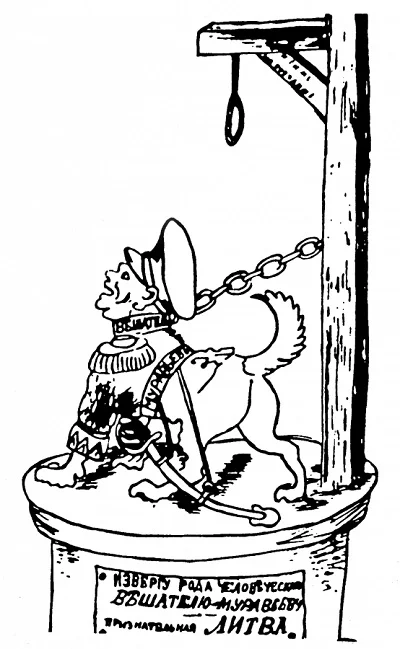
Методы Муравьева возымели действие.
А сам он на короткий период стал героем общества.
Даже представители интеллигенции, что прежде его клеймили, пытались выказать свое восхищение этим сильным сатрапом, воплощением тиранической силы настоящего русского государственника.
Впрочем, большинство из этих реакций выглядели неуклюже вплоть до аляповатости. Венцом такого творчества стало стихотворение «Бокал заздравный поднимая…» Николая Некрасова.
*Пускай клеймят тебя позором
Надменный Запад и враги;
Ты мощен Руси приговором,
Ея ты славу береги!
Мятеж прошёл, крамола ляжет,
В Литве и Жмуди мир взойдет;
Тогда и самый враг твой скажет:
Велик твой подвиг… и вздохнет.
Вздохнет, что, ставши сумасбродом,
Забыв присягу, свой позор,
Затеял с доблестным народом
Поднять давно решённый спор.*
And so on. Бытовало даже мнение, что это писал не Некрасов. На самом деле таким незамысловатым способом писатель пытался спасти от закрытия журнал «Современник».
Истинное отношение Некрасова к Муравьеву и всей государевой системе, держащейся на множестве муравьевых поменьше, прекрасно известно. Основой для знаменитых «Размышлений у парадного подъезда» стали наблюдения именно за подъездом Михаила Николаевича Муравьева. С 1864 года известного уже не просто как «вешатель», а Муравьев-Виленский.
Forgotten
Пройдет полвека, и десятки тысяч польских и белорусских (литвинских) добровольцев — фактически внуков тех, чье стремление к свободе задавил Муравьев, — будут сражаться против России в составе легионов Австро-Венгрии. Во главе с уроженцем Виленского края Юзефом Пилсудским, будущим главой независимой Польши.
Уже в 1915-м поляки займут Вильно, где к тому времени 10 лет будет стоять первый и до сей поры последний памятник Муравьеву-вешателю.
Памятник исчезнет без следа. В 1920-м на его месте устроят … общественный туалет.
В 1919–21 гг. вторая польская республика во главе с Пилсудским победит конгломерат советских республик (СССР образуется чуть позже). По результатам этой войны (и до сентября 1939-го) в состав Польши вернется Западная Белоруссия, включая Брест. Тот самый, где в 1918-м Советская Россия заключила «похабный мир» по итогам Первой мировой.
Гигантская восточная держава едва не победила (как, к слову, всегда было в истории, если Россия выступала в союзничестве с англичанами), но сгнила изнутри, рухнув в череду революций и гражданской войны.
До сих пор не вполне прояснен вопрос, какую роль в разрушении страны сыграли многочисленные муравьевы, ради личного благополучия выполнявшие любые абсурдные поручения свыше? Например, защищавшие безумную идею вылепить из огромной империи унитарное государство с единством не только управления, но и идентификации.
Случилась ли вообще революция, если бы не указ все того же Александра II о запрете украинского языка (малороського наречия), не отмена привилегий Финляндии и Польши, жестокое подавление восстания кыргызов и т.д.?
Интересно, что тот самый указ об употреблении, точнее, неупотреблении украинского языка — запрещалось книгоиздание, за исключением литературы, которую царские цензоры соизволят признать «изящной литературой» (в 1864–1881 гг. не издано ни одной книги, и это при жизни Леси Украинки и недавней памяти Тараса Шевченко, до 1905 г. ограничения оставались формально, но изредка нарушались), — несомненно, вызрел из циркуляра министра внутренних дел Петра Валуева.
Из циркуляра министра Петра Валуева
«Большинство малороссов сами весьма основательно доказывают, что никакого особенного малороссийского языка не было, нет и быть не может и что наречие их, употребляемое простонародьем, есть тот же русский язык, испорченный влиянием на него Польши».
В общем, за 160 лет в великодержавной риторике фактически ничего не изменилось.
Почему на этом «наречии» поголовно говорили жители Полтавщины, которая в составе Речи Посполитой была от силы 75–80 лет, а в значительной степени и Слобожанщины, что «под Польшей» вообще никогда не ходила, Валуев едва ли интересовался. Он же не филолог какой-то, а государев человек.
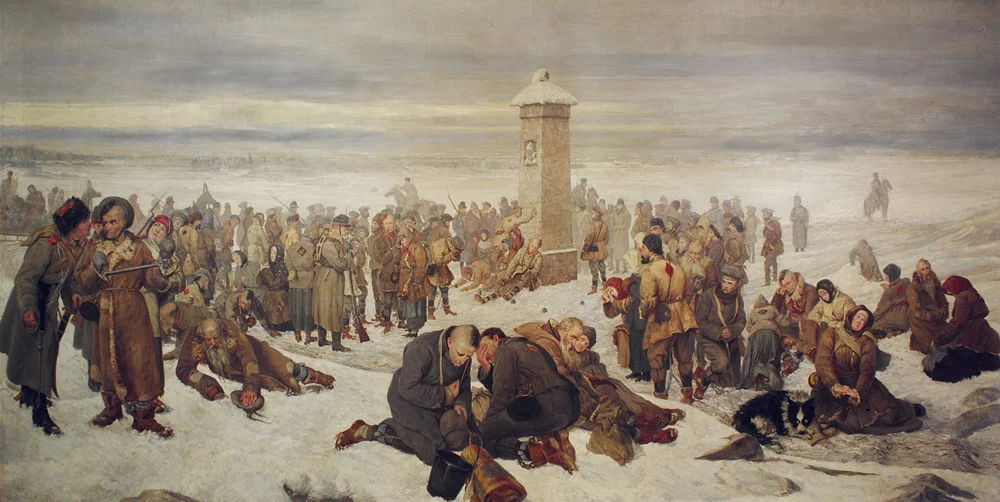
Муравьев-Виленский в своей оценке культурных особенностей белорусов был еще более определенный. Слово «белорус» в его мемуарных «Записках», опубликованных после смерти, не используется ни разу, а «литвин» — очень ограниченно, означая собственно литовцев и белорусов, исповедующих католичество. Все прочие — это люди русские. Они просто забыли это под вражеским гнетом, спасибо императору и его верноподданному генералу — пришли, растолковали.
Циркуляр Валуева вышел как раз в разгар восстания 1863 года. Тогда же безо всякого официального документа было запрещено употребление слов «белорус» и «Беларусь». Негласный запрет перестал действовать только в начале следующего века.
Муравьев уже перед самой смертью успел поучаствовать еще в одном судьбоносном для России событии — суде над Дмитрием Каракозовым, первым, кто открыто покушался на императора.
Негативная оценка Муравьева-Виленского не только Герценом, но и белорусской интеллигенцией надолго определила отношение к крупной исторической фигуре.
Его заслуги были забыты, самого стали путать с многочисленными родственниками и даже советским полководцем Михаилом Муравьевым, который был крестьянского происхождения.
И только в последнее десятилетие в России возобновился интерес к этой фигуре. Как и к упомянутому тут же Каткову, например.
Запрос на консерваторов без страха и упрека, готовых выполнить любой указ царя и насильно записать в «наши» даже тех, кто таковыми быть никак не хочет, стал расти.
В Белоруссии, где состоялись основные деяния Муравьева-Виленского, никто и никогда даже не предлагал подумать о памятнике этому человеку.
А Калининграду/Кёнигсбергу, выходит, все равно?